A timeline of US strikes on boats that have killed at least 227

Daftar Isi
Over Two Hundred Dead: The Human Toll of America’s Maritime Anti-Drug Campaign
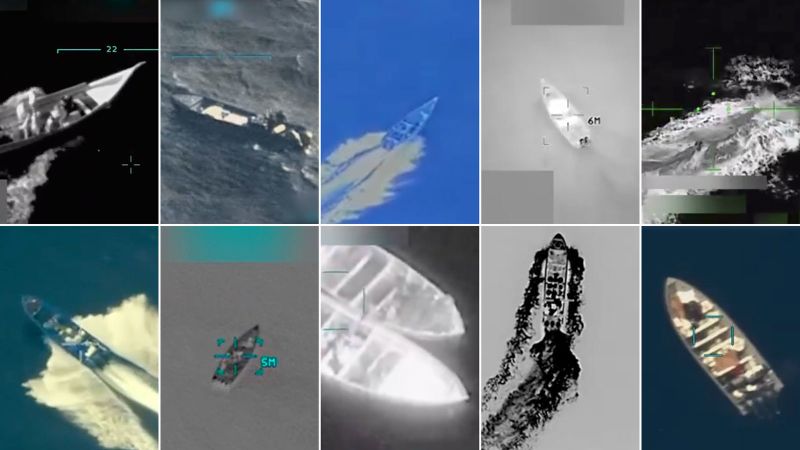
Activelifezero.com – Seventy-five boats have been sunk. At least 227 people have died. Those are the numbers emerging from a sweeping military operation in the Caribbean and eastern Pacific that the White House frames as a necessary measure to choke off the pipeline of narcotics flowing into American communities. The strikes, carried out under the authority of US Southern Command, represent one of the most aggressive maritime enforcement campaigns in recent decades — and one that has drawn sharp questions about how far executive power can stretch when it comes to killing people at sea without trial, without public evidence, and without judicial oversight.
The Strikes and Their Aftermath
The campaign opened on September 2, 2025, with the first of what has since become a sustained series of lethal attacks on small vessels operating in international waters. Each strike has been described by Washington as targeting boats linked to drug-trafficking networks. The most recent action, on September 7, destroyed an alleged refueling vessel in the eastern Pacific — the fifth time a boat identified as a support craft for trafficking operations has been targeted. No fatalities were reported from that particular sinking.
In several earlier incidents, the US Coast Guard initiated search-and-rescue operations immediately after explosions tore through hulls. Naval authorities in neighboring countries were also notified and asked to assist in locating anyone still afloat. The outcome, in many cases, has been grim: roughly 23 individuals remain presumed dead after exhaustive searches failed to find them in the water.
At least 26 people survived the strikes. Of those, a minimum of three were taken into temporary custody by American forces before being handed back to their home governments. US Southern Command stated that in some instances it removed crew members from vessels prior to sinking them, and that those individuals would be transferred to Ecuador for processing.
The Legal Architecture: “Armed Conflict” and Its Consequences
The administration has formally informed Congress that the United States is now engaged in an “armed conflict” against drug cartels, a designation that began with the September 2 strike. Under that framework, every person killed aboard a targeted vessel is classified as an “unlawful combatant” — a label that carries profound legal weight. It means, in the government’s telling, that lethal force may be applied without the need for arrest, indictment, or trial.
The administration claims the authority to carry out lethal strikes without judicial review, citing a classified finding issued by the Department of Justice.
That finding has not been made public. Its contents remain sealed, and no briefing document explaining its reasoning has been released to lawmakers or the general public. The practical effect is that a person aboard a small boat in the Caribbean or Pacific can be killed by a US military strike, and the legal basis for that killing rests on a document no one outside the executive branch has read.
Criticism and the Question of Prosecution
Members of Congress from both parties, along with a range of human rights organizations, have pushed back on the armed-conflict designation. Their central argument is straightforward: individuals suspected of drug trafficking should be captured, brought before a court, and prosecuted — the same approach that guided American maritime interdiction policy for years before President Donald Trump took office. Under the prior framework, boats were stopped, cargo was inspected, and suspects were turned over to prosecutors. The current approach skips every step between detection and death.
Compounding the controversy, the administration has not released public evidence showing that narcotics were aboard any of the 75 vessels struck, nor has it demonstrated the specific cartel affiliation of the crews. The justification for each strike rests on intelligence assessments that have not been shared with Congress in open session or with the public at all.
What Has Not Happened
Military officials have confirmed that no US service members have been killed or wounded in the course of the strikes. The operation, in other words, has been one-directional: American firepower applied to foreign vessels, with no reciprocal risk to American personnel. That asymmetry has intensified scrutiny over whether the campaign functions less like a conventional military engagement and more like an extrajudicial enforcement action dressed in the language of war.
Broader Implications
The campaign sits at the intersection of several long-running debates: the scope of executive war powers, the rights of non-citizens in international waters, the role of the judiciary in reviewing military action, and the question of whether drug trafficking constitutes a conflict sufficient to justify killing without trial. If the armed-conflict designation holds, it sets a precedent that could extend well beyond the Caribbean and Pacific. If it does not, the administration will need to explain how 227 deaths were lawful under ordinary criminal-law standards — a standard that has never before been applied to maritime interdiction at this scale.
For now, the boats are gone, the water has been searched, and the survivors who were detained have been returned. The 23 presumed dead remain unaccounted for. And the next vessel, according to the logic of the campaign, is already being tracked.
Related Reading
Frequently Asked Questions
What is A timeline of US strikes on boats?
A timeline of US strikes on boats is the main topic of this guide. The article explains the context, practical details, and next steps readers should understand.
Why does A timeline of US strikes on boats matter?
A timeline of US strikes on boats matters because readers are looking for a useful answer, not just a short summary. Good content should match search intent and help them decide what to do next.