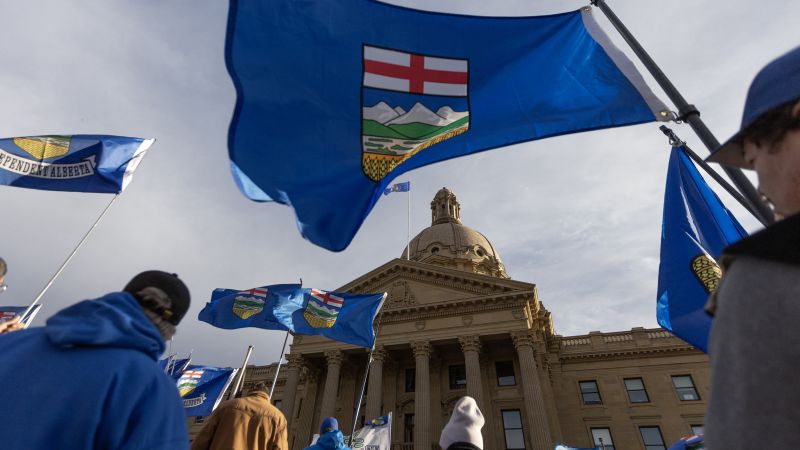
Canada won’t see Alberta seceding anytime soon. But what to do with the people who wanted to leave?

Daftar Isi
Alberta’s Secession Vote Fails, but Its Supporters Remain a Political Force
Activelifezero.com – Alberta voters delivered a decisive verdict against breaking away from Canada, rejecting a proposed path toward independence by roughly three votes to one. The preliminary result means there will be no second, binding referendum on secession, closing the immediate route envisioned by activists who wanted the province to become its own country.
Yet the result does not erase the movement. More than 500,000 Albertans, about one-quarter of those who voted, supported holding another vote on independence. That bloc is large enough to remain relevant in provincial politics, even after the campaign’s central goal was rejected.
Jeffrey Rath, a separatist activist, portrayed the outcome as progress rather than defeat. Speaking the morning after the vote, he argued that a young movement had demonstrated it could organize substantial support.
“We don’t see this as a setback,” Rath said Tuesday. “For a fledgling political movement, it was a major accomplishment and a hell of a victory.”
A movement likely to change focus
For Dr. Jared Wesley, a political scientist at the University of Alberta who advocated for Alberta to remain in Canada during the campaign, the more important question is where those voters turn next. The supporters of a binding independence vote are not disappearing simply because the referendum failed.
“Separatism may have been rejected in Alberta, but they’ll move onto something else,” Wesley said. “Alberta separatism is only one element of a much broader, far-right populist movement in Canada.”
The ballot offered several possible directions. Alongside the secession question, Albertans considered five separate non-binding questions involving immigration. They included proposals about giving the provincial government “increased control” and requiring proof of citizenship to vote. Preliminary results indicated that all of those measures passed.
Those questions may now become a more immediate organizing point for activists who had concentrated on independence. Immigration, voting requirements and the division of power between Alberta and the federal government can all remain active political issues even without another secession referendum on the horizon.
“Alberta separatists have far more in common with the MAGA movement than they do with secessionist movements across the globe,” Wesley said. “They may lose on one issue, but they don’t go away. They adapt. They find another issue, and they seem to have found one on immigration.”
US ties became a difficult issue
The campaign was also shaped by the movement’s connections to prominent right-wing figures in the United States. US Treasury Secretary Scott Bessent and SpaceX founder Elon Musk were among the high-profile voices encouraging Alberta separatists.
Some activists, including Rath, travelled to Washington to seek support from members of the Trump administration. The outreach was intended to build relationships in case Alberta ever achieved independence. But for some voters, the meetings may have deepened unease at a moment when Canada’s relationship with the United States was already under pressure.
Cory Morgan, who established the Alberta Independence Party in 2000, said the referendum showed that a majority of Albertans are not prepared to leave Canada.
“The movement just isn’t ready, to be blunt,” Morgan said.
Morgan also said the separatist campaign struggled to compete with the wider anxiety created by the trade war with the United States and President Donald Trump’s threats to annex Canada. In that environment, appeals for Alberta to separate from Canada could be viewed less as an assertion of provincial independence and more as an additional source of uncertainty.
“It led to mistrust,” Morgan said. “I think that factor really did hinder the movement’s growth this year.”
Rath rejected that interpretation. He maintained that his contacts with the Trump administration had helped prepare for a possible independent Alberta and said critics were overreacting to the movement’s interactions with US officials.
“Do people have a lot of ‘Trump derangement syndrome’ in Canada? Yeah,” Rath said. “What can I say? It doesn’t take a lot to trigger them, and I’ll be frank – I’ve almost gone out of my way to trigger a lot of them.”
Annexation fears reshape separatist politics
Alberta was not the only place where Canadian separatist politics collided with concern about the United States. In Quebec, the Parti Quebecois won control of the provincial legislature with just under one-third of the vote. Even so, the party has said it will not hold an independence referendum while Trump remains president.
That decision reflects how fears of US annexation have altered the political setting for movements that seek greater autonomy or outright independence. A referendum asks voters to accept a major constitutional change, and the prospect of a more threatening or uncertain relationship with Canada’s southern neighbor can make that choice appear riskier.
“Fear of United States annexation placed a huge cap on people’s willingness to take a chance at dividing Canada,” Wesley said. “The relationship with the United States was front and center in people’s minds as they were voting.”
The Alberta result therefore settles one question without ending the larger debate over the province’s political direction. The proposal for a binding independence vote was clearly defeated, but the hundreds of thousands who supported it represent a meaningful constituency. Their influence may be felt most clearly in future disputes over immigration, provincial authority and Alberta’s relationship with Ottawa.
Morgan sees the referendum total as a foundation rather than a final measure of the movement’s potential.
“This was a solid base that said they’re ready to look at that option,” Morgan said. “And it’s not going away.”
Related Reading
Frequently Asked Questions
What is Canada won t see Alberta seceding?
Canada won t see Alberta seceding is the main topic of this guide. The article explains the context, practical details, and next steps readers should understand.
Why does Canada won t see Alberta seceding matter?
Canada won t see Alberta seceding matters because readers are looking for a useful answer, not just a short summary. Good content should match search intent and help them decide what to do next.