Inside BYU’s unique surge to the top of college football

BYU’s Rise Is Built on a Clear Identity
Activelifezero.com – Before one of the most significant home games in recent Brigham Young University football history, Kalani Sitake set an unexpected tone: he danced. As dawn broke over the Wasatch Range, BYU’s head coach joined Cosmo the Cougar during ESPN’s “College GameDay,” blending movements rooted in Tongan tradition with an exuberant, loose celebration.
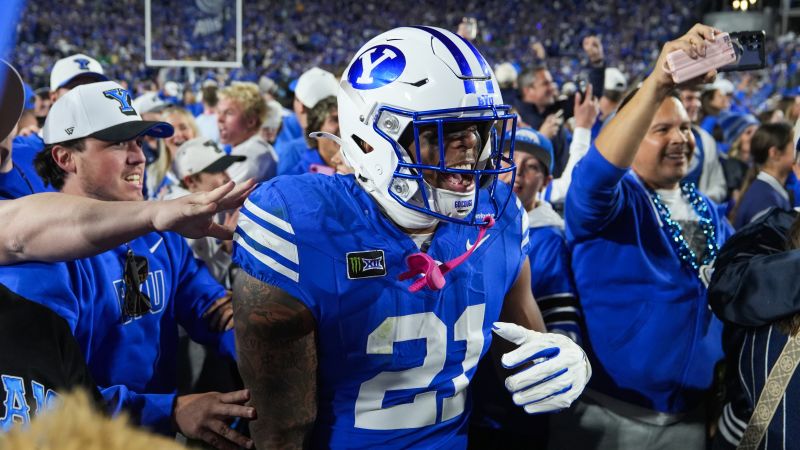
Hours later, the stakes were unmistakable. No. 2 Notre Dame had arrived in Provo for its first visit since 2004, bringing a rare level of national attention to a campus already energized by its football team’s ascent. BYU defeated the Irish and stood at No. 2 nationally, a remarkable position for a program operating within constraints unlike almost any other in major college football.
“My hat’s off to you. You’re up here dancing before a game. I was so nervous before a big game, I couldn’t even spit.”
That reaction from Nick Saban captured the contrast. Sitake appeared relaxed before a game that might once have overwhelmed a program facing one of the sport’s most famous opponents. Yet BYU’s confidence is not simply a product of a single victory. It reflects a football culture that has long tried to turn its distinctive circumstances into an advantage.
A Program With a Different Set of Rules
BYU is owned and operated by The Church of Jesus Christ of Latter-Day Saints, whose teachings emphasize self-reliance and living within one’s means. Those values are especially notable in an era when name, image and likeness compensation has reshaped recruiting and roster building across college athletics.
Players at BYU must also follow the university’s honor code, which prohibits premarital sex, alcohol, tobacco, coffee and cursing. In a sport increasingly defined by quick transfers and rapidly changing commitments, that environment can narrow the pool of athletes willing to enroll. But it can also create a more deliberate fit between the school, its players and its football program.
The Cougars’ roster and leadership challenge easy assumptions about the university. BYU’s undergraduate population is 98% Mormon, and much of the school’s diversity is geographical. Still, its quarterback was raised Catholic and has a Thai mother who named him Bear. After the win over Notre Dame, his blunt assessment of the team’s approach drew attention.
“We put our balls on the chopping block.”
That mix of faith-based institutional culture, national football ambition and individual personalities is central to BYU’s current moment. The school is not attempting to become interchangeable with every other powerhouse. Its strongest argument may be that its differences offer clarity when much of college football is still trying to define its new economics and priorities.
History Gives the Cougars a Foundation
BYU is not an overnight football success. LaVell Edwards, whose influence on passing offenses remains significant, established the program as a national force and helped shape what later became widely known as the air raid approach. The Cougars have remained relevant through multiple conference affiliations and a period as an independent program.
That heritage matters now because it gives BYU more than a temporary ranking. The school has experience operating with a national profile, attracting players to Provo and using football as a visible part of its broader identity. A marquee home game against Notre Dame therefore represented both a major event and a continuation of a long-running tradition.
Steve Young, the three-time Super Bowl champion who graduated from BYU in 1984, sees the school’s limitations as a source of direction rather than a reason for retreat.
“We’re willing to be something unique. The complexity is really the beauty of it.”
His point goes beyond football. In a landscape where many programs are weighing how far to stretch financially or culturally to compete, BYU’s institutional boundaries are already defined. The challenge is to recruit, develop and retain players who see those boundaries as part of the opportunity.
Ryan Smith Represents a New Era of Support
BYU’s momentum also has a powerful advocate in Ryan Smith, who began attending Cougars games as a child while his father, Scott, taught marketing research at the university. Football Saturdays in Provo were a regular part of family life.
Smith later left BYU during his undergraduate years to help his father develop what became Qualtrics after Scott Smith was diagnosed with throat cancer. In 2018, a German company purchased Qualtrics for $8 billion. Ryan Smith subsequently bought the NBA’s Utah Jazz, moved the Arizona Coyotes and helped establish Utah’s first NHL franchise, the Mammoth. He has also been involved with Salt Lake’s MLS team and helped the city secure the 2034 Winter Olympics.
His profile fits the evolving image of BYU: he wears a backward baseball cap, ranks No. 1,285 on Forbes’ billionaire list and remains committed to the principles of his church. During the “GameDay” broadcast, Smith added $1 million to the incentive available to a student kicker.
That kind of support illustrates the tension and possibility surrounding BYU athletics. The program competes in a sport fueled by unprecedented money, yet it represents an institution with explicit values around financial restraint and personal conduct. BYU’s current success suggests those ideas do not have to be mutually exclusive.
For the Cougars, the bigger question is not whether they can imitate everyone else. Their surge has come from embracing the fact that they cannot—and perhaps should not—try. With Sitake leading a team comfortable in its own skin, BYU has become one of college football’s most compelling examples of how a firmly defined identity can still thrive on the national stage.
Related Reading
Frequently Asked Questions
What is Inside BYU s unique surge?
Inside BYU s unique surge is the main topic of this guide. The article explains the context, practical details, and next steps readers should understand.
Why does Inside BYU s unique surge matter?
Inside BYU s unique surge matters because readers are looking for a useful answer, not just a short summary. Good content should match search intent and help them decide what to do next.