USPS whistleblower describes new plans for voting by mail hidden from the public

USPS Whistleblower Reveals Hidden Ballot Portal Plans
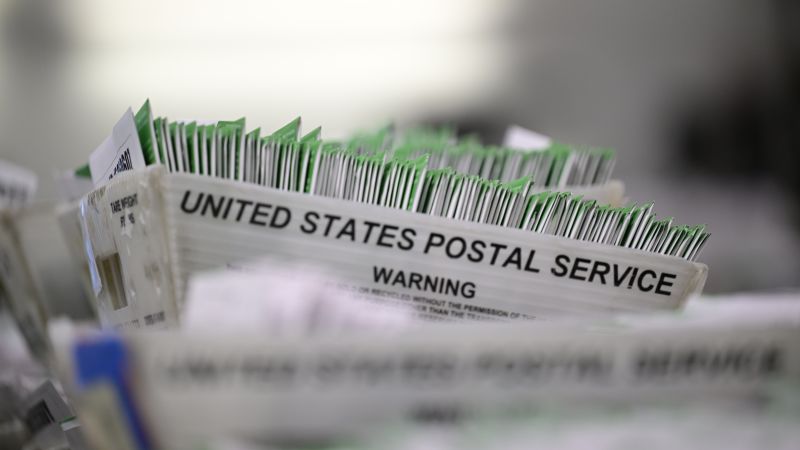
Activelifezero.com – A USPS whistleblower describes new plans that would give the federal postal service a gatekeeping role over state mail-ballot delivery, according to an internal filing made public this week. The document, prepared by attorneys for an unnamed employee and delivered to Connecticut Senator Richard Blumenthal, outlines a rushed build toward a September 1 deadline, weekly-shifting requirements, compressed testing windows, and leadership that allegedly dismissed engineer warnings.
The stakes extend far beyond internal IT friction. Under a March executive order signed by President Donald Trump, the Postal Service received an unprecedented screening authority over state-run mail-ballot programs. In practice, the order would require every state to transmit its roster of registered mail-in voters to a new USPS portal before the agency would agree to deliver those ballots. If voter data embedded in the postal system fails to match what agency scanners read off the envelope, the ballot would not be delivered. For millions of Americans who depend on mail voting—especially in states where nearly every ballot arrives by post—such a mismatch could mean a vote that never reaches a tabulation center.
What the Filing Alleges
The report, released Tuesday, details what the whistleblower characterizes as a chaotic development cycle. Internal plans for the portal, the filing says, were “constantly changing” from the project’s inception. Development staff were never handed a stable, written specification of what the system was supposed to do. When engineers raised concerns about scope creep and missing documentation, leadership reportedly insisted the requirements were self-evident and that there was simply no time to commit them to paper.
The electoral calendar compounds the problem. Because North Carolina begins mailing ballots this week and additional states follow later in the month, IT teams had less than a week of end-to-end testing once the build was nominally complete. Multiple insiders, per the whistleblower, used the phrase “sh*t show” to characterize the final stretch of validation work. The report further describes a haphazard, piecemeal approach to testing individual components as they were finished, rather than a coherent integration pass.
“USPS leadership, it appears, has discarded all best practices as they speed the project to be ready for a September 1 implementation – raising questions about whether catastrophic failure would be a feature rather than a bug.”
It remains unclear whether the portal actually went live on Tuesday, the date the whistleblower identifies as the intended launch window.
Courtroom Battles Over State Sovereignty
The proposal is already entangled in litigation. Several federal courts are weighing whether the executive order’s compulsion mechanism—forcing states to hand over voter lists as a condition of postal delivery—survives constitutional scrutiny. Last week, one judge issued a freeze: states could not be required to use the system if they wished USPS to deliver their ballots. The ruling carved out a narrow exception, however, allowing the agency to offer the portal voluntarily to any state that chose to upload its mail-voter information. The Department of Justice has filed an appeal.
The constitutional question sits at the heart of American election administration. The Constitution assigns the conduct of elections to the states; the federal government’s role is limited to overseeing congressional races and, through the Postal Service, providing a delivery mechanism. Critics argue that conditioning ballot delivery on data submission effectively converts a logistical service into a supervisory checkpoint over state voter rolls.
USPS Response and State Pushback
A Postal Service spokesperson, speaking in a written statement later Tuesday, said the agency was “carefully reviewing” the concerns raised by the whistleblower and by Senator Blumenthal. The spokesperson framed the project as a months-long effort to build what the agency calls the “U.S. Federal Ballot Mail Portal,” described as a tool giving election officials “a simple, secure, and efficient way to share lists of individuals receiving ballots by mail in their respective states.”
“This work has at all times been conducted in a manner consistent with court orders.”
“Regardless of political party or perspective, we share a common goal: ensuring that Americans can have confidence that their election mail will be handled securely and delivered reliably.”
FAQ
What is the U.S. Federal Ballot Mail Portal? It is a centralized digital system the Postal Service is building to verify that voter data on mail ballots matches state-registered voter rosters before delivery. The USPS whistleblower describes new plans centered on this verification step, which was mandated by a March executive order.
When was the portal supposed to launch? The whistleblower filing identifies September 1 as the intended go-live date, though it remains unclear whether the system actually went live on that day.
What happened in court? A federal judge issued a temporary freeze preventing states from being compelled to use the portal as a condition of ballot delivery. The Department of Justice has appealed the ruling.
Who filed the whistleblower report? An unnamed USPS employee, represented by attorneys, submitted the filing to Senator Richard Blument