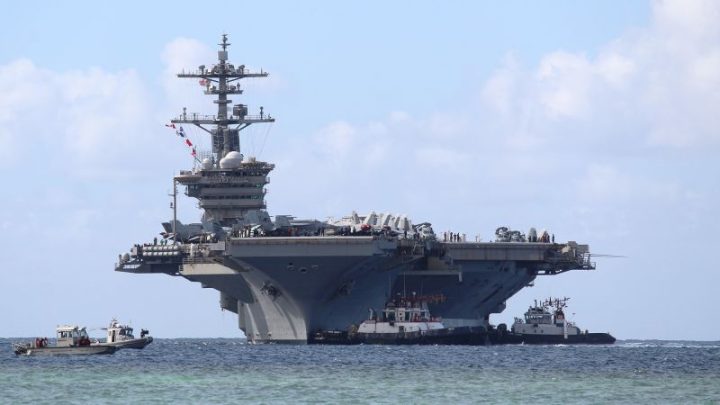
More than 750 US service members wounded since start of Iran War


Daftar Isi
US Military Casualties in Iran Conflict Surpass 750 Wounded as Diplomatic Talks Stall
Activelifezero.com – The toll of American service members injured in the ongoing war with Iran has now crossed the 750 threshold, a figure confirmed by the Pentagon’s own casualty tracking system. The Department of Defense refreshed its public database on Wednesday, adding more than 50 new wounded entries to the running tally. The update lands at a particularly tense moment: formal negotiations between Washington and Tehran aimed at ending hostilities have ground to a halt, leaving both sides locked in a standoff with no visible path toward de-escalation.
What the Numbers Show
When the totals recorded under the Defense Casualty Analysis System’s “Overseas Operations” heading are merged with those logged under Operation Epic Fury, the combined picture reveals 18 American service members killed and 757 wounded since the United States opened military operations against Iran on February 28. That span of roughly five and a half months of active conflict has produced a casualty curve that continues to climb, even as the diplomatic track has frozen.
The “Overseas Operations” label itself is a recent addition. The Pentagon established that category within the DCAS framework last month, designating it for personnel killed or wounded beginning July 7. Officials have not elaborated on what specific operations or engagements fall under that heading, nor have they named the conflict to which those entries pertain. The July 7 date, however, corresponds precisely to the day the Trump administration delivered a formal notification to Congress under the War Powers Act, informing lawmakers that a new armed confrontation with Iran had commenced. That alignment suggests the category was created to capture casualties from a distinct operational phase, though the Department of Defense has declined to confirm or clarify the distinction publicly.
A Pattern of Data Confusion
Wednesday’s revised figures arrive in the shadow of an earlier controversy that drew sharp criticism from journalists and members of Congress. Several weeks ago, the DCAS totals appeared to shrink while Iranian strikes continued unabated. Four recorded deaths and dozens of injury entries vanished from the public database before being quietly restored in a subsequent update. At the time, the Department of Defense issued a brief social-media statement attributing the discrepancy to “temporary data disruptions,” a characterization that satisfied few observers.
The episode fed a broader concern that the Pentagon has been reluctant to release wounded-troop figures in a timely manner throughout the conflict. Officials have cited operational security requirements as the reason for delays, arguing that rapid disclosure of injury counts could reveal unit locations, deployment patterns, or the tempo of engagements. Critics, however, have questioned whether the pace of reporting meets the transparency standards expected of a wartime government, particularly when the numbers in question concern families awaiting word about their loved ones.
Diplomatic Stalemate and the Strait of Hormuz
Even as the casualty ledger grows, the political leadership in Washington has struck a notably optimistic tone. President Donald Trump stated earlier on Wednesday that the situation with Iran is “so good” at present, a characterization that sits in stark tension with the frozen state of formal talks. US negotiators have paused their engagement with Tehran, and no new round of discussions has been scheduled. Meanwhile, the Strait of Hormuz — the narrow waterway through which roughly one-fifth of the world’s daily oil supply transits — remains the principal flashpoint of the ongoing war, with both navies maintaining heavy presences and periodic standoffs reported in the corridor.
“So good” — President Donald Trump, describing the state of affairs with Iran, Wednesday.
The Strait’s strategic importance amplifies every escalation. A closure or sustained disruption of Hormuz traffic would send shockwaves through global energy markets, raise shipping insurance premiums sharply, and force allied navies into direct confrontation with Iranian forces. For that reason, the impasse in talks carries implications well beyond the two capitals: it touches the cost of fuel in Europe, the price of freight in Asia, and the readiness posture of every nation that depends on uninterrupted maritime commerce through the Gulf.
What Comes Next
The Pentagon’s Wednesday update, adding more than 50 wounded entries in a single revision, underscores that the operational tempo has not slowed despite the diplomatic freeze. Each new figure in the database represents a service member returning from treatment, a family receiving a notification, and a unit absorbing the loss of a trained member. With negotiations suspended and the Strait of Hormuz still contested, the trajectory of the casualty count appears likely to continue upward unless a diplomatic breakthrough reopens a channel for de-escalation. The question now facing both governments — and the American public watching the numbers tick upward — is whether the impasse will resolve through renewed dialogue or through further escalation on the water and in the air.
Related Reading
Frequently Asked Questions
What is More than 750 US service members?
More than 750 US service members is the main topic of this guide. The article explains the context, practical details, and next steps readers should understand.
Why does More than 750 US service members matter?
More than 750 US service members matters because readers are looking for a useful answer, not just a short summary. Good content should match search intent and help them decide what to do next.