A mission to stop a space observatory from falling to Earth has failed. Here’s what happens next

A Mission to Stop Swift’s Fall Has Failed
Activelifezero.com – A mission to stop a space observatory from burning up over Earth has run out of runway. NASA confirmed Wednesday that its experimental rescue satellite, LINK, will not complete the capture-and-boost maneuver designed to extend the scientific life of the Neil Gehrels Swift Observatory. The agency cited “ongoing attitude control issues” as the reason, effectively ending a nearly 22-year run for one of the most versatile rapid-response instruments ever placed in low-Earth orbit. Swift will now decay into the atmosphere later this year as solar activity thickens the upper atmosphere and accelerates drag.
How the Rescue Plan Unraveled
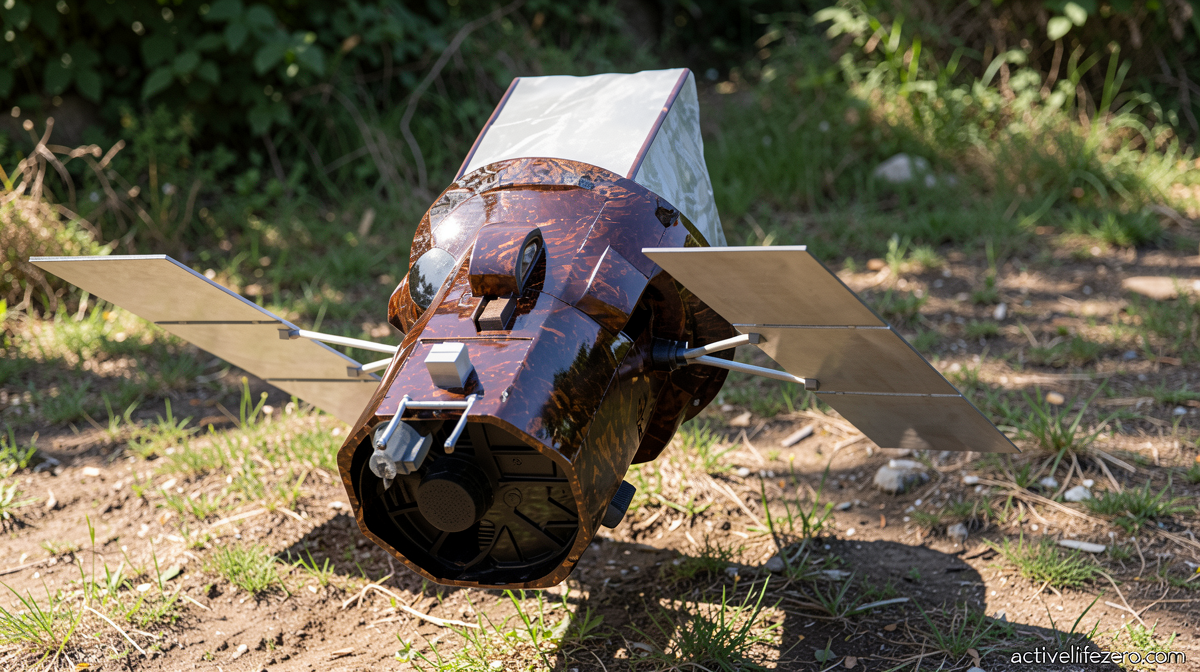
LINK was built by Arizona-based Katalyst Space Technologies and lifted off on July 3 aboard a Northrop Grumman Pegasus XL rocket, released midair from the company’s modified L-1011 aircraft, Stargazer. The entire concept-to-launch cycle compressed roughly nine months of design, engineering, testing, and flight — a schedule that left almost no buffer for anomalies. Weeks after its debut, the spacecraft began spinning uncontrollably in late July. Engineers at Katalyst recovered command authority, but the episode burned through critical mission weeks and pushed the planned rendezvous with Swift back by approximately one month.
The delay alone might have been absorbed. What proved decisive was that the attitude-control instability never fully cleared. NASA and Katalyst jointly announced that LINK would proceed to a proximity demonstration with the observatory but would skip the actual grappling and orbital-boost step. Swift, already losing altitude, will cross the roughly 185-mile (300-kilometer) threshold below which reentry becomes unavoidable.
Why Swift’s Loss Matters and What Comes Next
Swift launched in 2004 as a gamma-ray burst detector and rapidly evolved into a rapid-response astrophysics platform, pivoting within minutes to track supernovae, tidal-disruption events, and other transient cosmic phenomena. No dedicated successor currently sits in a launch queue to fill the gap its demise will create. NASA said it will lean on its remaining active fleet for rapid-response coverage while continuing to search for new options to react swiftly to cosmic events.
The LINK effort was also a technology demonstration for a capability the agency expects to need repeatedly as its constellation of aging satellites grows harder to replace. Even in failure, the mission generated operational data on proximity operations, autonomous rendezvous, and the practical limits of attitude control under a compressed development cycle.
LINK’s story does not end with the cancellation of the boost. The mission team will still fly the satellite to a rendezvous with Swift, but the objective shifts from rescue to observation: surveying the observatory’s exterior, identifying potential grappling points, and collecting proximity-operations data. The timing of that demonstration has not yet been fixed.
“NASA should be willing to move quickly and take smart risks when the potential return is worth it, and that is exactly what we did with this mission. This is not the outcome we were working toward, but it does not change why this mission was worth attempting.” — NASA Administrator Jared Isaacman
“Katalyst designed, developed, and launched an experimental spacecraft to go after an ambitious mission on an aggressive timeline. We have already learned a tremendous amount, and now our job is to turn those lessons into something durable — building a repeatable playbook to inform future rendezvous and proximity operations and satellite servicing.” — Ghonhee Lee, CEO, Katalyst Space Technologies
For Katalyst, the experience validates both the company’s ability to deliver a spacecraft on a nine-month clock and the hard lessons of operating one in orbit. Lee characterized the effort as a high-risk, high-reward challenge and pledged to convert the operational data into a repeatable playbook for future servicing missions.
Frequently Asked Questions
When will Swift re-enter Earth’s atmosphere? NASA has not published an exact date, but the agency indicated the observatory will burn up later this year once its altitude drops below roughly 185 miles (300 km) and atmospheric drag becomes irreversible.
Will LINK still fly to Swift? Yes. The proximity demonstration remains on the books. LINK will approach the observatory to survey its exterior, identify grappling points, and gather data — but it will not attempt the physical capture or orbital boost.
Is there a replacement for Swift in the pipeline? NASA stated that no dedicated successor observatory currently sits in a launch queue. The agency will rely on its remaining active fleet for rapid-response coverage while exploring new options.
What was the original purpose of the LINK mission? LINK was conceived as both a rescue vehicle for Swift and a technology demonstration for in-space satellite servicing — a capability NASA expects to need repeatedly as its aging constellation grows harder to replace.