Putin wants Africa on his side. African leaders are playing their own game

Daftar Isi
African Leaders Balance Moscow’s Outreach With Their Own Interests
Activelifezero.com – Vladimir Putin used this week’s Russia-Africa Summit in Moscow to present his country as a more respectful partner for African states than Western powers. Yet the gathering also highlighted a broader reality: many African governments are engaging Russia without treating the relationship as an exclusive political choice.
As Russia’s war in Ukraine continues and Western sanctions intensify, Moscow has strong reasons to show it still has international partners. Delegations from 48 of Africa’s 54 countries attended the two-day summit. Kremlin aide Yury Ushakov said 22 countries sent heads of state, up from 17 at the 2023 event and 43 at the inaugural summit in 2019.
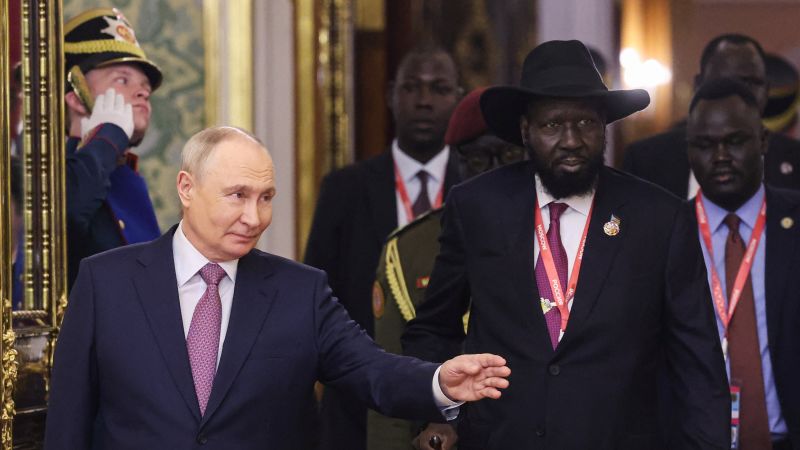
For Russia, photographs of Putin meeting African leaders carry diplomatic value beyond the agreements reached in conference rooms. They offer a visible answer to claims that Moscow has become isolated internationally and can be used to project influence across Africa and the wider Global South.
Will Brown, an Africa policy specialist at the European Council on Foreign Relations, has argued that the summit’s narrative may be more consequential than its formal outcomes. Images of senior African officials alongside Putin can become material for Russian influence campaigns and reinforce Moscow’s preferred message of global partnership.
Russia’s Case Against the West
Putin’s speech relied heavily on a familiar argument. He accused Western countries of extracting Africa’s wealth, retaining a colonial mindset and using debt in ways that obstruct development. Russia, he said, offers a relationship based on trade, technology and mutual benefit.
“Our business does not engage in the predatory, neo-colonial exploitation of natural and human resources,” Putin said.
He added that Russian businesses contribute to employment and tax income in the countries where they operate. The message was designed to place Russia in contrast with former colonial powers and to appeal to longstanding concerns over unequal economic relationships.
But African participation should not be read simply as an endorsement of Moscow’s position or a rejection of Western partners. Tighisti Amare, director of the Africa Program at Chatham House, describes the approach as “diversified non-alignment.” Rather than joining one geopolitical camp, governments seek working relationships with several competing powers.
That strategy reflects a practical calculation. Individual states may seek military assistance, food and agricultural supplies, energy projects, investment, technology or diplomatic support. Maintaining options can give leaders more room to negotiate and may encourage outside partners to make stronger offers.
Security Ties in the Sahel
Russia’s most visible gains have come in parts of the Sahel, especially Mali, Burkina Faso and Niger. Military-led governments in those countries moved closer to Moscow after their relations with Western partners deteriorated. Russia has stepped into the resulting security space, though its record is mixed and serious instability remains.
The Africa Corps has become central to that effort. The force took over much of the role previously played by Wagner after the mercenary organization’s 2023 mutiny against the Kremlin. The change was not merely a rebranding exercise. Africa Corps operates more openly under Russia’s Defense Ministry and military intelligence structures.
Many of its members previously served with Wagner, but its stated activities place greater emphasis on training local forces, advising governments and guarding strategic locations. This gives Moscow a more direct line of control over an overseas security network that had once been closely linked to a private military company.
The Sahel’s importance stems from both its geography and its security challenges. Stretching across the semi-arid region south of the Sahara, it has faced persistent armed violence, political upheaval and strained state institutions. Those conditions have created openings for foreign actors offering military support.
Anna Ida Rock, a researcher at the Swedish Defense Research Agency, says Africa Corps has a reported presence in Burkina Faso, the Central African Republic, Equatorial Guinea, Libya, Mali and Niger. Russian military instructors have also been reported in the Republic of Congo, Madagascar and Togo, although the claims involving Togo remain disputed.
Moscow is also pursuing a possible naval facility in Sudan, a move that would give Russia a strategic foothold on the Red Sea. Such access would matter beyond Sudan itself, connecting Russia’s Africa policy to a major maritime route between the Mediterranean, the Middle East and the Indian Ocean.
Influence Does Not Guarantee Stability
Russian support has produced different results in different countries. In Mali, Russian forces assisted the government in retaking Kidal, a north-eastern city of major strategic and symbolic importance. At the same time, insecurity has worsened and Africa Corps has sustained substantial losses.
In Burkina Faso, Russian personnel have concentrated on protecting the government during periods of political uncertainty. Their role in Niger has been more limited. In the Central African Republic, Russian forces have helped the government remain in power, yet insecurity continues and many civilians have not experienced a meaningful improvement in their daily safety.
These outcomes underline a central limit of Moscow’s security offer. Protecting governments, training troops or securing key sites can strengthen a ruling authority, but those measures do not automatically resolve the deeper conflicts that fuel violence. Political legitimacy, civilian protection and durable state institutions remain essential to long-term stability.
A Relationship Shaped by Competition
Russia’s expanding political and military role is not matched by equally large commercial ties. Trade between Russia and Africa was estimated at $27 billion, a comparatively modest figure for a continent of Africa’s size and economic potential. That gap raises questions about how far Moscow can turn diplomatic visibility into broad-based economic influence.
For African leaders, however, Russia does not need to replace every other partner to be useful. Engagement with Moscow can create leverage in dealings with Europe, the United States, China, Gulf states and other outside powers. Competition among those actors may help governments seek better terms, more investment or greater attention to domestic priorities.
The Moscow summit therefore reflects two agendas operating at once. Putin wants evidence that Russia retains influence despite sanctions and the prolonged war in Ukraine. African governments are pursuing a more flexible objective: securing benefits from multiple partners while preserving room to make decisions on their own terms.
Related Reading
Frequently Asked Questions
What is Putin wants Africa on his side?
Putin wants Africa on his side is the main topic of this guide. The article explains the context, practical details, and next steps readers should understand.
Why does Putin wants Africa on his side matter?
Putin wants Africa on his side matters because readers are looking for a useful answer, not just a short summary. Good content should match search intent and help them decide what to do next.