Everyone hates data centers. Lawyers love them

Daftar Isi
Data Center Boom Turns Local Disputes Into a Major Legal Business
Activelifezero.com – Across the United States, the rapid expansion of data centers is transforming once-routine development approvals into high-stakes legal battles. Projects built to support artificial intelligence, cloud computing and digital services are attracting enormous investment, but they are also drawing increasingly organized resistance from nearby residents, local officials and advocacy groups.
For attorneys, the conflict has created a fast-growing specialty. Lawyers representing developers, technology companies and investors are navigating land-use rules, environmental concerns, utility issues and permit fights. At the same time, plaintiffs’ attorneys are bringing nuisance claims and helping communities challenge projects before construction can move forward.
From Easy Approvals to Difficult Cases
Jason Morris, a land-use attorney in the Phoenix area, previously spent much of his career helping housing, office and industrial projects navigate local opposition and regulatory requirements. Data centers were once a relatively uncomplicated part of that work. Municipalities often viewed the facilities favorably because they looked similar to office buildings and generated relatively little vehicle traffic.
That calculation changed as the Phoenix region became a major center for data infrastructure serving the AI boom. Morris now spends roughly 70% of his time on data center matters, compared with about 10% in the past. His work includes representing developers, operators and technology companies in disputes involving sound, water use and construction permits.
“These cases are my single most difficult. Every legal tool is being used,” he said.
The disputes reflect a broader shift in how communities view the facilities. Earlier generations of data centers were generally smaller, while hyperscale projects designed for AI can require far more electricity and water. Local governments are increasingly confronting the question of whether the tax revenue and investment justify the demands placed on infrastructure and surrounding neighborhoods.
Moratoriums and Challenges Spread Nationwide
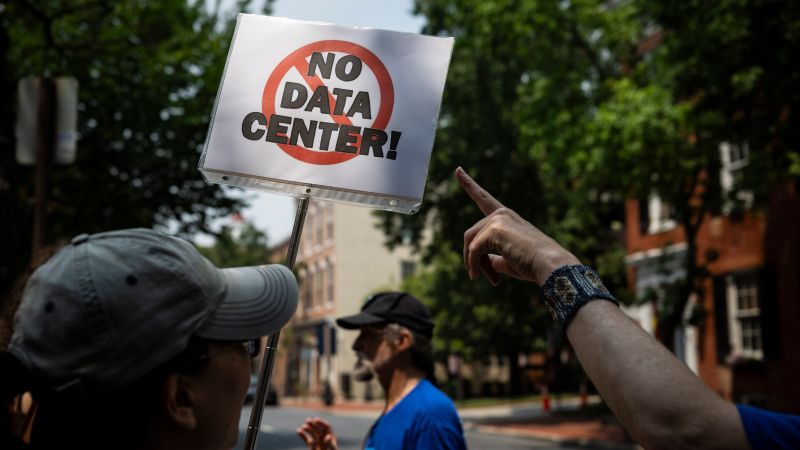
Data center development has become a frequent subject of local debate, appearing in social media discussions, town council meetings and election advertising. More than 300 jurisdictions in 44 states have adopted moratoriums aimed at halting or slowing data center construction.
Those restrictions have created a broader market for legal services. Major firms including Latham & Watkins, Perkins Coie and WilmerHale advertise specialized support for data center clients. Firms of many sizes are also building teams that combine real estate, energy, regulatory and litigation experience.
About one-third of large law firms now have a dedicated data center team or practice group, a Bloomberg Law survey released in June found. The staffing reflects the reality that a single large project can involve overlapping questions about zoning, power supply, environmental review, water access, construction impacts and local permitting.
Morris said the visibility of these practices illustrates the opportunity the industry has created for law firms.
“When you start to see law firms large and small putting data centers on their websites, it tells you everything you need to know about the potential for business,” Morris said.
Power Demand Reshapes Energy Law
Energy lawyers have become particularly important to the data center expansion. The facilities’ electricity needs can be immense, placing energy compliance and infrastructure planning near the center of development decisions.
Tyler O’Connor, an energy litigator at Crowell & Moring in Washington, DC, advises data center developers on energy infrastructure and compliance matters. He said data centers have become a defining influence on legal work in the energy sector.
During the Biden administration, clean-energy projects were a central focus for many in the industry. More recently, the drive to build data centers has overtaken that work as a primary source of activity.
“Even when we’re not working for those clients, almost all of the work we do now is informed by the emergence of data centers,” he said.
For communities, the energy question is not merely technical. A proposed facility may prompt residents and elected officials to ask whether the regional power system can support additional demand, how costs may be allocated and what new infrastructure is needed. Those debates can influence a project’s timetable long before a building is complete.
Neighbors Turn to Nuisance Claims
Opposition is also creating new work for plaintiffs’ firms. Some lawyers are using social media to reach people living near data centers, while class actions and other lawsuits seek to hold operators accountable for alleged neighborhood impacts.
Laura Sheets, a Detroit attorney, recently filed one of the first nuisance cases in the country against a data center operator in Michigan. She said residents began reaching out as facilities became more common near homes.
“When these facilities started popping up everywhere, we were contacted by people who were upset,” Sheets said.
Sheets has filed four nuisance complaints involving data centers in four states and is preparing additional cases. The lawsuits argue that persistent sound from cooling equipment and backup generators can materially interfere with neighbors’ ability to use and enjoy their property. That interference is a key element of a private-nuisance claim. The complaints also contend that nearby home values have fallen.
These cases rely on arguments long used in disputes over industrial facilities. Michael Pollack, a Cardozo School of Law professor focused on land-use law, has said courts are likely to apply familiar environmental and zoning principles to data center conflicts.
A Fight That Could Reach Washington
The legal boom may not last indefinitely in its current form. If litigation and local restrictions substantially delay construction, the industry could seek federal legislation limiting the authority of municipalities to stop new projects. Such a move could shift the balance of power away from local governments and redefine the future of data center approvals.
For now, however, the industry’s expansion is producing a patchwork of local rules and contested projects. Developers face longer approval processes and more sophisticated opposition, while communities are testing how existing laws apply to one of the fastest-growing forms of infrastructure in the AI economy.
Related Reading
Frequently Asked Questions
What is Everyone hates data centers Lawyers love?
Everyone hates data centers Lawyers love is the main topic of this guide. The article explains the context, practical details, and next steps readers should understand.
Why does Everyone hates data centers Lawyers love matter?
Everyone hates data centers Lawyers love matters because readers are looking for a useful answer, not just a short summary. Good content should match search intent and help them decide what to do next.