Red lights are flashing in energy markets

Daftar Isi
The Fuel Crunch Hiding Behind the Headline Oil Numbers
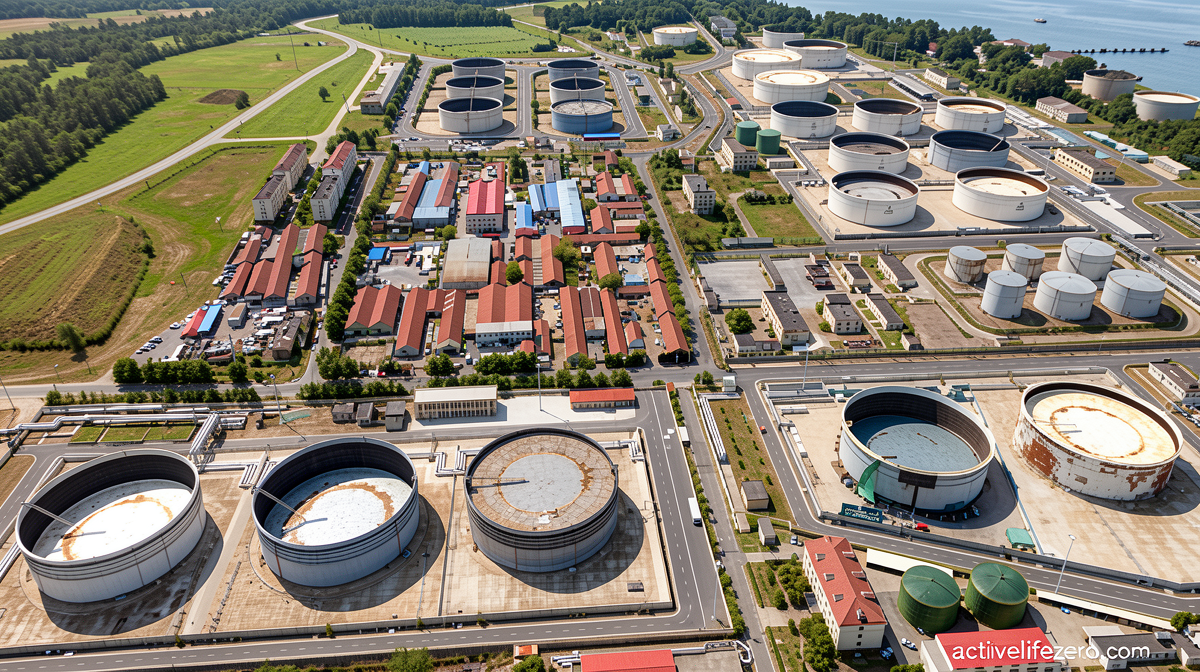
Activelifezero.com – Headlines this week have fixated on crude oil trading at elevated levels, yet the more consequential disruption is unfolding one step downstream, at the refinery gate. What started as a straightforward supply shock when the Strait of Hormuz was effectively closed to tanker traffic has quietly metastasized into something far harder to fix: a global shortage of finished fuels. Gasoline, jet fuel, and diesel — the three liquids that keep economies turning — are becoming scarce not because there is no crude in the ground, but because the machinery that converts crude into usable fuel is being systematically knocked offline across three continents simultaneously.
The signal that the situation has crossed a threshold came on Monday, when the diesel crack spread — the industry’s primary gauge of refining profitability, measured in dollars earned per barrel of crude converted into diesel — punched through $102 for the first time in recorded history. That figure represents nearly a threefold jump from pre-war levels and signals that refiners are capturing margins so extreme they border on the unprecedented.
“This is man-bites-dog news. The market is screaming that we’re short,” Bob McNally, founder and president of Rapidan Energy Group, told CNN.
McNally, who served as an energy adviser to President George W. Bush, has spent decades watching fuel markets cycle through tightness. Even by his standards, the current configuration of shocks is extraordinary.
Three of Four Refining Hubs Under Fire
The global refining landscape is dominated by four geographic clusters, and three of them are now operating under severe constraint. The fourth — the United States Gulf Coast — is running at maximum capacity to fill the gap, but that single point of concentration creates its own vulnerabilities.
The Middle East: Direct Strikes and Shipping Lockdown
Refineries across the Persian Gulf region have taken direct hits during the ongoing Iran war. Facilities that survived physical damage nonetheless face a second problem: getting their product to market. The standoff between Iran and the United States in the Strait of Hormuz — the narrow waterway through which roughly a fifth of the world’s oil transits — means that even intact refineries cannot reliably load tankers. The result is a double squeeze on both crude intake and finished-fuel export.
Russia: Drone Campaigns and Export Bans
Thousands of miles away, Ukrainian drone strikes have systematically degraded Russia’s refining infrastructure. Research firm Capital Economics estimates that roughly 40 percent of Russian refining capacity is now offline, which translates to approximately 3 percent of total global refining throughput. Moscow, confronting domestic fuel shortages of its own making, has prohibited exports of gasoline and diesel through the end of January 2027 — effectively removing a major supplier from the international market for at least the coming year.
China: Import Cuts and Export Restraints
Beijing has played a stabilizing role on the crude side of the ledger, slashing oil imports by far more than most forecasters anticipated and thereby preventing benchmark prices from spiking toward $150 a barrel. Yet the same policy logic that protected Chinese consumers from crude-price spikes has led the government to restrict its own fuel exports. A country that normally ships significant volumes of refined products to Southeast Asia and beyond has pulled back, further tightening the global fuel pool.
The Gulf Coast Gambles
With three of the four major refining regions impaired, American refineries along the Gulf Coast have become, in McNally’s phrasing, “the only game in town.” They are running at full throttle to capture margins that have not existed in decades.
“Refiners are going all-out. This is Christmas come early and come big,” McNally said.
The financial rewards are visible in equity markets. Shares of Marathon Petroleum and Valero Energy have more than doubled year to date, while Phillips 66 stock has climbed nearly 90 percent. Upstream supermajors are reaping windfalls as well: ExxonMobil alone generated $160 million in profit per day during its most recent reported quarter, and Chevron has posted similarly outsized earnings.
Analysts at Bank of America warned last week that the market is about to enter its strongest seasonal demand window — summer driving, peak agricultural activity, and elevated industrial throughput — with “very little margin for error.” In other words, any additional disruption, however small, could tip an already stretched system into outright shortage.
What Consumers Are Feeling at the Pump and the Gate
The national average price for regular gasoline reached $4.07 per gallon on Tuesday, a 30 percent increase over the same date last year. Diesel, the workhorse fuel for freight trucks, rail networks, and agricultural machinery, is running 48 percent above its year-ago level. Jet fuel has surged by more than 70 percent over the trailing twelve months.
The diesel increase functions as a stealth tax on nearly every consumer good. Because diesel powers the trucks and trains that move food, building materials, and manufactured products, businesses absorb at least a portion of the higher fuel cost and pass it through in the form of elevated retail prices. Research from Brown University’s Climate Solutions Lab estimates that higher diesel prices have already cost American households close to $40 billion since the war began.
Airlines, buoyed by resilient travel demand and the May shutdown of budget carrier Spirit, have responded to the jet-fuel spike by raising airfares, increasing baggage fees, and pruning lower-yield routes.
“The consumer-facing impact is showing up at the pump and at the airport, and that is where the pressure is going to build from here,” Rystad Energy analysts wrote in a report last week.
The Next Two Months: Hurricanes and Maintenance Windows
The Gulf Coast’s all-out operating posture is not without seasonal risk. Hurricane season peaks in late August and September, and major storms have historically forced multi-week shutdowns of coastal refineries. Additionally, the autumn maintenance window — when refineries normally slow or halt operations for scheduled turnarounds — will arrive just as demand remains elevated. If a Category 3 or stronger storm strikes the Texas or Louisiana coast during that overlap, the already razor-thin fuel surplus could evaporate overnight.
The macroeconomic stakes are straightforward: prolonged fuel-price elevation feeds directly into headline inflation, complicating central-bank policy and squeezing household budgets already strained by a year of elevated energy costs. Until the supply disruptions in the Middle East, Russia, and China are resolved, diesel and gasoline prices carry a structural floor that makes a quick return to pre-war levels unlikely.
Related Reading
Frequently Asked Questions
What is Red lights are flashing in energy?
Red lights are flashing in energy is the main topic of this guide. The article explains the context, practical details, and next steps readers should understand.
Why does Red lights are flashing in energy matter?
Red lights are flashing in energy matters because readers are looking for a useful answer, not just a short summary. Good content should match search intent and help them decide what to do next.