Trump found an unusual solution to his Venezuela problem

Daftar Isi
A 100-Year Lease and a 55% Stake: How Washington Locked In Venezuela’s Oil
Activelifezero.com – The White House dropped a bombshell on Friday: the United States will assume a controlling 55% interest in a newly formed joint-venture oil company operating alongside a private Venezuelan energy operator. The arrangement carries a century-long field lease and, if fully realized, would assemble the second-largest oil enterprise on the planet by proven reserves — trailing only Saudi Aramco. For a president who spent months publicly pressuring American executives to commit capital to Caracas, the move represents a structural workaround to a problem that neither threats nor bilateral negotiations with Delcy Rodríguez had solved.
Why the Deal Matters to American Refineries
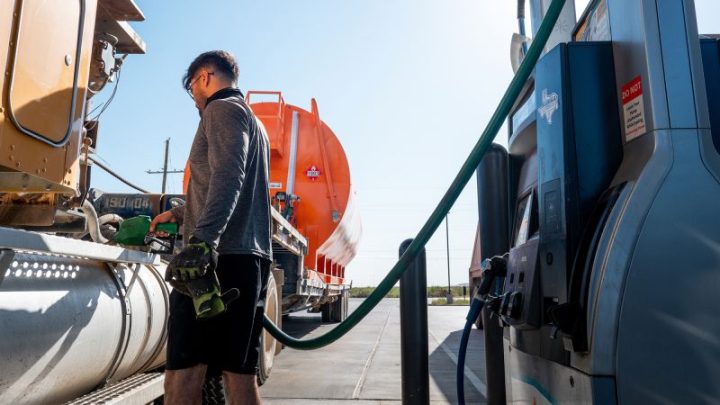
Understanding the stakes requires looking at what happens inside a refinery. American crude is predominantly light and sweet — ideal feedstock for gasoline, but poorly suited to producing diesel, jet fuel, asphalt, or industrial lubricants. Venezuelan crude is the opposite: heavy, sour, and dense. Decades of US refining infrastructure, much of it erected during the 1970s when Caracas supplied a large share of American imports, was engineered specifically to crack that heavier slate into transportation fuels and petrochemicals.
That mismatch has practical consequences. With the Iran conflict disrupting roughly one-fifth of global oil supply, Washington has become a supplier of last resort for nations that can no longer count on Middle Eastern jet fuel or diesel flows. Simultaneously, the Strategic Petroleum Reserve has been drawn down to levels last seen in 1982, when the Reagan administration was still filling it. A reliable, long-term pipeline of heavy Venezuelan crude would ease refinery utilization, help replenish the SPR, and reduce dependence on a single geographic corridor for critical fuel types.
The Numbers Behind the Announcement
Venezuela holds an estimated 303 billion barrels of proven oil reserves. The new joint venture would control approximately 65 billion of those barrels. By comparison, the United States already manages around 46 billion barrels domestically, per the Energy Information Administration. Folding the Venezuelan share into a single corporate structure more than doubles that figure and places the combined entity just behind Aramco in the global reserves hierarchy.
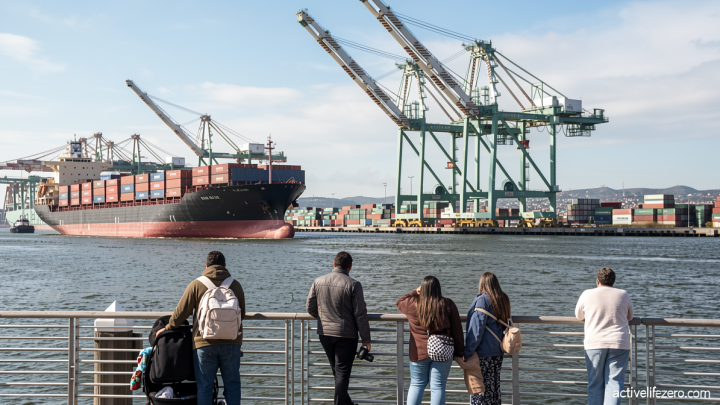
Import volumes have already surged. US crude purchases from Venezuela have more than quadrupled year-over-year, climbing to roughly 600,000 barrels per day — the highest flow since the first Trump administration imposed sweeping sanctions in 2019. Caracas now ranks as the second-largest source of imported crude for American refineries, behind only Canada, according to EIA data.
From Capture to Contract: A Bumpy Road
The path to Friday’s announcement was anything but smooth. After the United States seized Nicolás Maduro in a complex military operation in January and placed him under arrest on conspiracy charges, Washington expected American majors to pour capital into the country’s oil sector almost immediately. Public rebukes of executives who hesitated produced little. Parallel negotiations with Rodríguez — who had previously headed Venezuela’s own oil ministry — to restructure the industry also stalled.
The joint-venture structure sidesteps the question of whether a foreign company should simply buy barrels at market prices. Instead, it embeds American capital directly into the ownership of the fields themselves, for a century. That long horizon is precisely what risk-averse boards had been demanding: a guarantee that political reversals, expropriation threats, or regulatory whiplash would not erase their investment within a single election cycle.
Production Gains and a Decade-Long Rebuild
Venezuela’s output has climbed since Maduro’s removal. The country is now pumping approximately 1.2 million barrels per day, an increase of roughly 150,000 barrels over the figure at the start of the year, according to Luisa Palacios, former chair of Citgo and current managing director of Columbia University’s Center on Global Energy Policy.
“To restore Venezuela’s oil operation to its former output, billions of dollars of foreign investment over at least a decade will be necessary,” Palacios said.
The benchmark she references is stark: before the socialist nationalization of the late 1990s under Hugo Chávez, Venezuela was producing around 3.5 million barrels per day. Two decades of deferred maintenance under the Chávez and Maduro governments left pipelines, separators, and processing facilities in a state of severe decay. Rebuilding that infrastructure is not a quarterly capital-expenditure line item; it is a generational engineering project.
Trust, Corruption, and the Investment Climate
Even with a century-long lease and majority US ownership, the operating environment remains fraught. Chevron stands as the sole American supermajor that has maintained a continuous Venezuelan presence through multiple administrations. No other US energy company has committed meaningful resources to the country in recent decades.
Governance concerns persist. The state’s response to a recent devastating earthquake that killed thousands drew widespread criticism and underscored institutional fragility. Crime rates remain high, and the political trajectory under Rodríguez’s government has not yet settled into a predictable pattern. For boards of directors in Houston and New York, those variables will continue to shape the pace at which capital actually flows into the fields, regardless of how attractive the lease terms appear on paper.
What Comes Next
If the joint venture matures as envisioned, the implications extend well beyond a single bilateral trade line. American refineries would regain access to the heavy feedstock their chemistry was designed to process. The SPR would gain a replenishment pathway independent of Gulf-of-Mexico or North Sea flows. And Venezuela’s economy, long starved of foreign capital, would receive the scale of investment its infrastructure requires — provided the political and security environment allows that investment to survive contact with reality.
For now, the announcement marks a shift from persuasion to structure. Washington no longer needs to convince a board of directors to take a bet on Caracas. It has, in effect, taken the bet itself — and handed the keys to the fields to a partner that cannot walk away for a hundred years.
Related Reading
Frequently Asked Questions
What is Trump found an unusual solution to his?
Trump found an unusual solution to his is the main topic of this guide. The article explains the context, practical details, and next steps readers should understand.
Why does Trump found an unusual solution to his matter?
Trump found an unusual solution to his matters because readers are looking for a useful answer, not just a short summary. Good content should match search intent and help them decide what to do next.