Tornado and hail hits northern Italian city, injuring dozens of people

Daftar Isi
Cremona’s Historic Skyline Altered as Rare Tornado and Hailstorm Strike the Heart of Italy’s Musical Heritage
Activelifezero.com – A violent tornado threaded through the streets of Cremona, one of northern Italy’s most culturally significant cities, leaving dozens of residents wounded and inflicting what local officials expect will be a multi-million-euro bill in structural destruction. The storm arrived without any prior meteorological alert, catching the city mid-festival and transforming its medieval skyline within minutes. Among the most visible scars: a spire torn free from one of the towers of the city’s principal cathedral, a landmark that has defined the Cremona horizon for centuries.
A City of Instruments Under Siege
Cremona has long been synonymous with the craft of stringed-instrument making, home to the workshops that produced the instruments bearing the name Stradivari. That identity made the storm’s aftermath particularly acute. The city was in the middle of a local festival when the tornado and accompanying hailstorm struck, and pavilions set up for the event were flattened or shredded. Francesca Co, who directs the city’s emergency services, described the scene as one of near-simultaneous mass casualties arriving at medical facilities.
“We found ourselves managing the arrival of over forty people almost simultaneously, and the emergency system responded promptly.”
Co added that the majority of those treated had already been released from care by the time of her statement, with one patient still under observation and four trauma cases requiring full hospitalization.
The Scale of Destruction
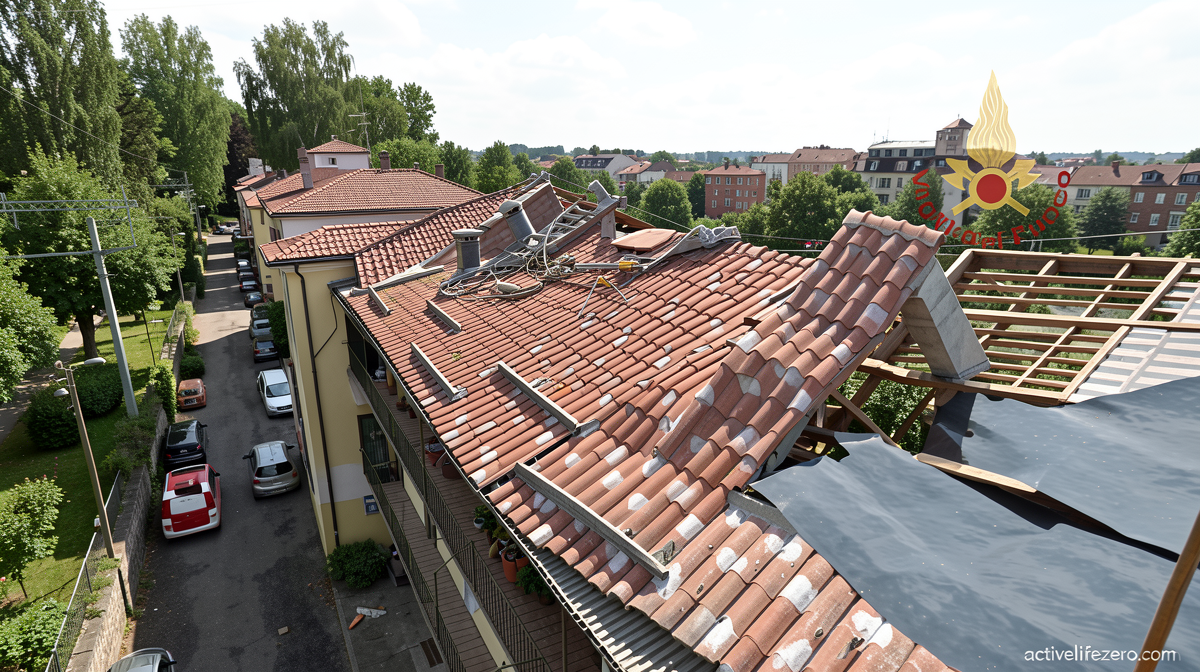
The fire brigade logged more than five hundred emergency calls within hours of the event. Ten churches sustained damage, including the cathedral itself, whose windows and skylights in neighboring historic buildings were shattered or blown out. Twelve families were pulled from their homes after roofs collapsed or flying debris made structures unsafe. Hundreds of trees were uprooted or snapped across the urban and rural perimeter, and several barns in the surrounding agricultural belt took heavy structural hits. Low-lying roads turned into temporary waterways as flooding followed the storm’s passage.
The vehicular toll was staggering: roughly ten thousand cars were damaged by the combination of large hailstones and falling timber. The city government projected that total repair and reconstruction costs would climb into the millions of euros, a figure that will strain municipal budgets already stretched by years of climate-related infrastructure strain.
No Warning, No Watch
Tornados remain comparatively uncommon across Italy, and the country’s civil protection agency confirmed that no tornado watches or warnings had been issued before the event. Residents and festival-goers received no advance notice. The absence of a forecast signal meant that emergency planners could not pre-position resources, and the response was reactive rather than anticipatory. On the following Saturday, fire-brigade crews and civil-defense teams moved through the affected zones conducting building-by-building structural inspections. Multiple road segments were closed pending clearance of debris and assessment of hidden damage.
Separately, the regional forestry department began surveying the so-called “violin forests” — the managed stands of spruce, maple, and other hardwoods from which Cremona’s luthiers source their tonewood. Any storm-related damage to those stands could ripple through the instrument-making supply chain for seasons to come, given the slow growth rates of the specific tree species and grain patterns the craft demands.
A Fifth Heatwave and a Continent Under Pressure
The tornado did not arrive in isolation. Italy was already enduring its fifth heatwave of the summer, part of a broader pattern of extreme-weather episodes sweeping across Europe. Prolonged thermal stress dries out vegetation, destabilizes atmospheric layers, and can sharpen the convective conditions under which tornadoes form. While the city’s immediate crisis is one of structural repair and medical triage, the wider meteorological backdrop suggests that such events will grow harder to predict and more frequent in frequency, placing sustained pressure on civil-protection infrastructure that was not originally designed for this cadence of compound disasters.
For Cremona, the challenge ahead is twofold: restoring the physical fabric of a city whose medieval and Renaissance architecture is itself a protected cultural asset, and safeguarding the living tradition of instrument-making that depends on both stable infrastructure and undisturbed access to its raw materials. The fallen spire above the cathedral will be replaced, but the weeks of inspection, road closure, and budget negotiation that follow will define how quickly the city returns to its daily rhythm.
Related Reading
Frequently Asked Questions
What is Tornado and hail hits northern Italian?
Tornado and hail hits northern Italian is the main topic of this guide. The article explains the context, practical details, and next steps readers should understand.
Why does Tornado and hail hits northern Italian matter?
Tornado and hail hits northern Italian matters because readers are looking for a useful answer, not just a short summary. Good content should match search intent and help them decide what to do next.