Trump admin pick to oversee a conspiracy investigation into president’s foes resigns after DOJ clashes

Daftar Isi
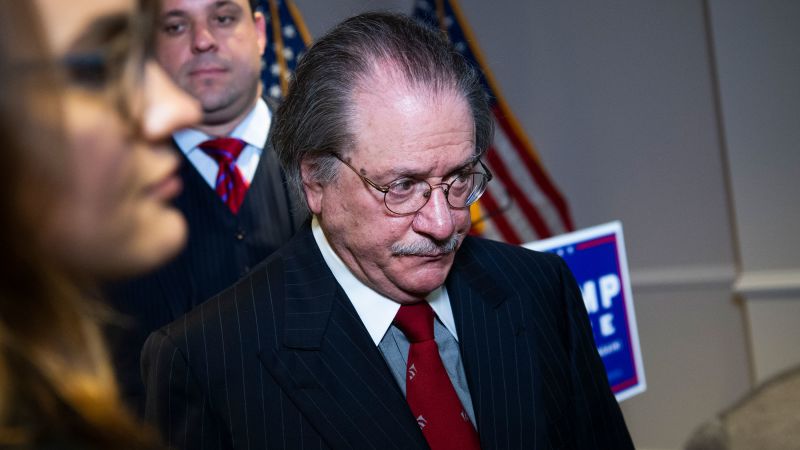
Joe diGenova Leaves Justice Department Role Amid Internal Disputes
Activelifezero.com – Joe diGenova, the Trump administration lawyer selected to direct a wide-ranging Justice Department inquiry into alleged misconduct by the president’s political opponents, has resigned after mounting friction with senior department officials.
DiGenova had been overseeing the south Florida-based investigation, which is examining possible crimes connected to government inquiries involving Donald Trump. The assignment placed him at the center of an effort reaching back to the 2016 investigation into Russian election interference and extending through the federal January 6 Capitol riot and Mar-a-Lago classified documents cases.
His exit follows repeated disputes over the direction and speed of the investigation. Department leaders had become concerned that the probe was not advancing toward charging decisions as quickly or as clearly as expected. In one recent confrontation, diGenova was told that he no longer had the confidence of his superiors.
“It was an honor and privilege to serve the president and the department,”
DiGenova said in a brief telephone interview. He declined to discuss the internal disagreements that preceded his resignation.
A Leadership Change That Did Not Settle the Investigation
The departure is another major disruption for the investigation, which diGenova assumed in April. He replaced Maria Medetis Long, an experienced career prosecutor who had previously led the matter. Medetis Long had resisted pressure to move rapidly toward charges.
Upon taking control, diGenova said he could produce charges within 30 days. He was also appointed counselor to the attorney general. In the months that followed, the investigation increased its witness activity, including interviews and recent grand jury testimony.
Even so, the case remained unfinished despite expectations within Justice Department headquarters that potential charges could arrive as early as September. The gap between those expectations and the status of the investigation became a central source of tension.
The inquiry has examined the conduct of former CIA Director John Brennan, former FBI Director James Comey, and other former government officials. Its broad premise is that actions taken during multiple investigations involving Trump may have included criminal conduct.
Initially, prosecutors appeared to be considering a more limited approach centered on possible false statements by Brennan in congressional testimony. That path could have offered a narrower and more manageable starting point. Instead, diGenova pushed for a far larger investigation involving additional people and possible theories of wrongdoing.
Concerns Over Scope and Strategy
People familiar with the matter described an investigation that increasingly lacked a unified focus. More than a dozen prosecutors were assigned to pursue separate targets, but the team had little concrete progress to demonstrate for the effort.
“Joe came in pretty hot,”
one person familiar with the probe said, adding that diGenova had numerous issues he wanted examined.
That expansive approach created concerns that investigators were pursuing too many avenues at once. One person briefed on the inquiry characterized the strategy as “going down 900 rabbit holes.” Another said diGenova was failing to focus on the larger picture.
“He was missing the forest the trees,”
the person said.
The internal strain extended beyond disagreement over legal strategy. Career lawyers assigned to the matter were at times subjected to angry outbursts from diGenova and were occasionally pushed aside, one person familiar with the investigation said.
DiGenova largely worked from an office in Fort Pierce, Florida. The location reflected the investigation’s south Florida base, but it also placed its day-to-day leadership outside Justice Department headquarters in Washington at a time when senior officials were pressing for clearer results.
Pressure on the South Florida U.S. Attorney’s Office
Senior department officials also grew dissatisfied with Jason Reding Quiñones, the Senate-confirmed U.S. attorney for the district. Quiñones had repeatedly indicated since last year that charges would be brought in the investigation, but those charging decisions had not materialized.
Justice Department leadership had expected Quiñones to remain responsible for supervising the inquiry because he was the district’s top federal prosecutor. DiGenova’s appointment was widely viewed inside the department as evidence that senior officials doubted whether Quiñones could deliver the anticipated outcome.
During a recent dispute with top Justice Department figures, Quiñones sought to distance himself from responsibility for the investigation’s setbacks. The episode highlighted the uncertainty surrounding who held practical control over a case with significant political consequences.
DiGenova brings a lengthy Washington legal career to the matter. He previously served as the U.S. attorney in Washington, DC, and briefly represented Trump during one of the earlier Justice Department investigations now included within the broader conspiracy inquiry.
His resignation leaves the case facing another transition at a critical point. The investigation has accumulated witness interviews, grand jury activity, competing theories, and political expectations, yet it has not produced the charging decisions that some officials had anticipated.
The next leadership choice will determine whether prosecutors narrow the inquiry, continue pursuing its many potential targets, or reassess how the case should proceed. For now, the investigation remains active but unsettled, with its future direction uncertain after its second major leadership change in a matter of months.
Related Reading
Frequently Asked Questions
What is Trump admin pick to oversee a conspiracy?
Trump admin pick to oversee a conspiracy is the main topic of this guide. The article explains the context, practical details, and next steps readers should understand.
Why does Trump admin pick to oversee a conspiracy matter?
Trump admin pick to oversee a conspiracy matters because readers are looking for a useful answer, not just a short summary. Good content should match search intent and help them decide what to do next.