John Roberts draws a line with Trump — over history

Daftar Isi
Roberts Breaks Ranks Over White House Ballroom, Citing Century-Old Architectural Precedent
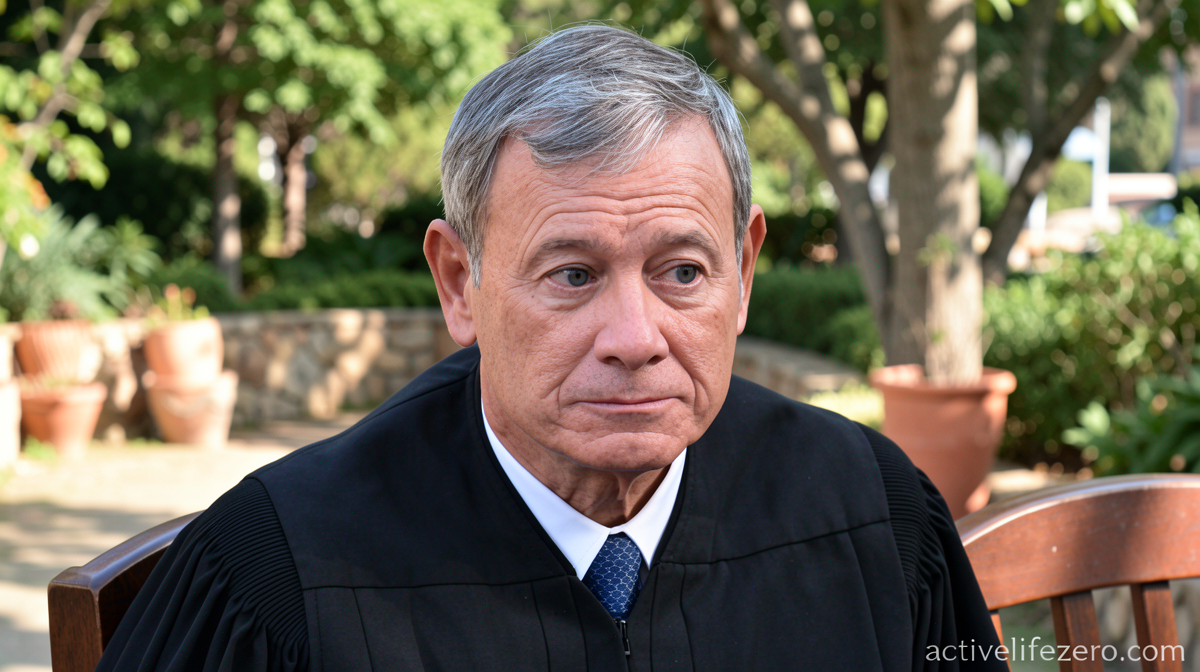
Activelifezero.com – On Monday, Chief Justice John Roberts filed a six-page dissenting statement that placed him squarely at odds with President Donald Trump and four of his conservative colleagues on the Supreme Court. The dispute centers on a massive ballroom and security structure being erected behind the White House East Wing — a project that has been under construction for roughly a year and is now approaching completion. Roberts, who has repeatedly endorsed expansive readings of presidential power during this administration, chose this moment to draw what he framed as a line rooted in history, architecture, and institutional continuity.
A Dissent Laced with Roosevelt and Churchill
The statement reads less like a conventional legal brief and more like a lecture on American civic memory. Roberts invoked Theodore Roosevelt’s 1902 remarks to Congress, in which the former president acknowledged appropriations for the East and West wing additions while praising “the stately simplicity” of the original White House architecture. Roosevelt, in that address, urged preservation of “such buildings as historic monuments which keep alive our sense of continuing with the Nation’s past.”
Roberts also reached across the Atlantic and across time, quoting Winston Churchill’s 1943 wartime speech:
“We shape our buildings, and afterwards our buildings shape us.”
He appended his own gloss to the Churchill passage: “All the more reason to ensure that those responsible follow the rules in deciding what to tear down and what to build up at the People’s House.” The chief justice, who has told audiences on multiple occasions that he once contemplated a doctoral program in history at Harvard before ultimately pursuing his law degree, clearly regards the capital’s built environment as inseparable from the republic’s identity.
The Legal Mechanics: Standing, Per Curiam, and the Emergency Docket
The suit was filed by the National Trust for Historic Preservation, which argued that tearing down portions of the East Wing and erecting a 90,000-square-foot ballroom and associated security structure required explicit congressional authorization. Lower federal courts had preliminarily agreed with the Trust, finding that the organization possessed standing to sue because it demonstrated a concrete injury. Central to that finding was the testimony of Alison Hoagland, an architectural historian and longtime Trust leader and member, who stated that her personal enjoyment of the White House’s exterior had been diminished by the demolition.
The Supreme Court majority rejected that theory of injury. Writing per curiam — the Latin shorthand meaning “by the court,” typically employed for decisions arriving via the emergency docket — the justices held that “mere offense, disagreement, or distaste does not qualify as a concrete and particularized injury” sufficient to confer standing. The opinion, attributed collectively rather than to a single justice, cleared the path for construction to continue.
Roberts’ Record in the Trump Era
The dissent lands against a backdrop that makes it all the more striking. Over the past two terms, Roberts has authored or joined opinions granting sweeping executive latitude. Among the most consequential: the 2024 decision conferring criminal-prosecution immunity on the president, and last June’s ruling authorizing Trump to remove the heads of independent agencies at will. Those opinions, together with a string of “emergency” victories on the court’s docket, have defined much of the Roberts Court’s final chapter.
Yet the chief justice did not vote uniformly in the administration’s favor. Last session he dissented from two landmark rulings: one upholding sweeping tariffs imposed on imported goods without congressional approval, and another attempting to curtail birthright citizenship — the centuries-old constitutional practice under which any child born on U.S. soil acquires American citizenship automatically. Those two votes, combined with Monday’s architectural dissent, sketch a more textured portrait of a jurist navigating between institutional loyalty and personal conviction.
The Smithsonian Thread and Washington’s Transformation
Roberts’ role as chancellor of the Smithsonian Institution, a position he holds by virtue of his seat as chief justice, adds another layer. Though largely ceremonial, the chancellery has placed him in the room where the Trump administration has pushed to reshape the nation’s principal public museums. His Monday opinion thus resonates beyond a single building dispute; it speaks to a broader question about who controls the physical narrative of American governance.
That question is not hypothetical. The administration has moved to inscribe Trump’s name on the John F. Kennedy Center for the Performing Arts and to construct a 250-foot triumphal arch at the traffic circle between the Arlington National Cemetery entrance and the Lincoln Memorial. Each proposal has drawn criticism from preservation groups and members of Congress, and each underscores the scale of the transformation now underway in the capital’s most symbolically charged geography.
For Roberts, the cost of Monday’s dissent was, in practical terms, zero. Five conservative colleagues formed a majority, and the ballroom will be finished. But the statement enters the record as a marker — a chief justice who, even while presiding over a court that has largely validated his president’s agenda, still believes the rules of the game matter, and that the buildings a nation keeps are not merely walls but arguments about what the republic is supposed to be.
Related Reading
Frequently Asked Questions
What is John Roberts draws a line?
John Roberts draws a line is the main topic of this guide. The article explains the context, practical details, and next steps readers should understand.
Why does John Roberts draws a line matter?
John Roberts draws a line matters because readers are looking for a useful answer, not just a short summary. Good content should match search intent and help them decide what to do next.