Tehran threatens vessels in Bahrain, Kuwait after US strikes Iranian tankers near Kharg Island

Tehran Threatens Bahrain Vessels After US Tanker Strikes
Activelifezero.com – Two American military officials confirmed on Tuesday that US forces struck multiple Iranian oil tankers in waters surrounding Kharg Island, an action that immediately prompted Tehran to threaten vessels in Bahrain and Kuwait with further attacks. The strikes, aimed at ships linked to the Islamic Revolutionary Guards Corps, came in direct response to what Washington described as an attempted missile launch at a US Navy warship operating in the region. The episode marks the sharpest escalation yet in a naval confrontation that has been tightening around the Strait of Hormuz for weeks.
The Strikes and the Broader Naval Campaign
Pentagon officials framed the Tuesday operations as part of what they called a “full court press” strategy — a sustained, multi-axis campaign intended to squeeze Iran’s economy by simultaneously disabling export targets, escorting commercial convoys through the strait, and enforcing a blockade on Iranian ports. Each element reinforces the others, compressing the regime’s ability to move crude oil to market and fund its war apparatus.
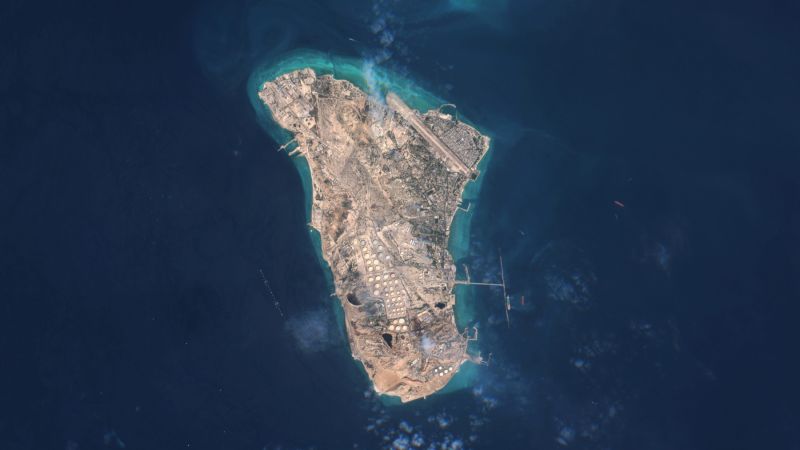
Kharg Island, a small landmass in the northern Persian Gulf, serves as the principal loading terminal for Iran’s petroleum exports. According to Iran’s semi-official Tasnim News Agency, one of the struck tankers was hit just four miles from the island’s coast, placing American firepower within striking range of the very infrastructure through which the majority of Iranian crude passes before heading south through the strait. A second tanker was damaged off Jask, a port on Iran’s southeastern coast along the Gulf of Oman. State broadcaster IRIB reported that crews from both vessels were being transferred to shore in lifeboats; no casualty figures had been released at the time of reporting.
The Tuesday attacks were not an isolated event. Over the preceding weekend, US forces had already targeted an Iranian tanker roughly six miles from Kharg Island, according to the same officials. The repetition within days signals a deliberate operational tempo — strike, observe reaction, strike again — each cycle widening the geographic and functional scope of American engagement and further compressing the window in which Iranian tankers can transit safely.
The Warning Aimed at Gulf Ports
In direct response to the strikes, the IRGC issued a statement quoted by IRIB that extended the conflict’s reach well beyond the immediate waters around Kharg Island:
“We warn all crews aboard oil tankers in the vicinity of ports in Kuwait and Bahrain — which host these (American) terrorists and are partners in their hostile actions — to immediately leave their vessels, whether they are at anchor or docked at the ports, as the vessels will be targeted.”
The statement carries three distinct implications. It expands the theater of operations to the home ports of two Gulf Cooperation Council states that host significant US naval and air assets. It recasts the American basing presence not as a bilateral arrangement but as complicity in aggression, a rhetorical pressure tactic aimed at those host nations. And the explicit instruction for crews to abandon ships — at anchor or alongside a berth — signals an intent to strike vessels in port, a scenario with severe economic and diplomatic consequences for Kuwait and Bahrain alike.
For the roughly twenty percent of the world’s traded oil that transits the Strait of Hormuz daily, the operational picture has grown markedly more hazardous. Commercial operators now face a corridor in which both sides are actively firing at ships, escort convoys have become standard, and the threat of missile or drone attack on any vessel has moved from theoretical to demonstrated. Insurance premiums, transit times, and routing decisions for tankers, container ships, and LNG carriers are all adjusting in response.
Frequently Asked Questions
Where exactly were the Iranian tankers struck? One tanker was hit approximately four miles from Kharg Island’s coast in the northern Persian Gulf; a second was damaged off Jask on Iran’s southeastern coastline along the Gulf of Oman.
What did the IRGC tell crews in Bahrain and Kuwait to do? The IRGC, speaking through state broadcaster IRIB, instructed all tanker crews in the vicinity of ports in Kuwait and Bahrain to leave their vessels immediately, whether at anchor or docked, warning that the ships would be targeted.
How much of global oil trade is affected by the Strait of Hormuz? Approximately twenty percent of the world’s traded oil normally passes through the strait each day, making any sustained disruption a major factor in global energy markets.
Were there confirmed casualties from the Tuesday strikes? No casualty figures had been released at the time of reporting. IRIB confirmed that crews from both damaged vessels were being moved to shore in lifeboats.