Netanyahu faces backlash over report he was warned of Hamas attack days before October 7

Daftar Isi
UAE Warning Allegation Ignites Fresh Firestorm Around Netanyahu Ahead of October Vote
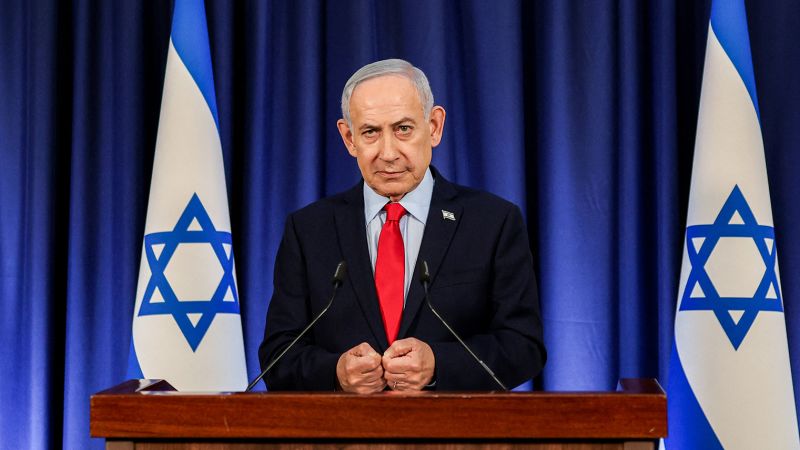
Activelifezero.com – With Israel’s next general election now fewer than sixty days away, Prime Minister Benjamin Netanyahu found himself at the center of a new political inferno on Tuesday. A detailed account, drawn from research for a forthcoming book by Israeli journalists Shlomi Eldar and Ruti Yuval, alleged that the president of the United Arab Emirates had telephoned Netanyahu roughly ten days before the October 7, 2023 Hamas assault and cautioned him that a large-scale operation was being prepared. The Prime Minister’s Office rejected the account outright, branding it an “absolute lie.” Yet the timing of the disclosure — weeks before voters head to the polls — gave Netanyahu’s opponents a potent new weapon in an already vicious campaign.
The Alleged Call and Its Contents
According to the account, Sheikh Mohammed bin Zayed, president of the UAE, spent approximately forty-five minutes on the phone with Netanyahu. During that conversation, the UAE leader relayed intelligence suggesting that Yahya Sinwar, Hamas’s chief in Gaza, was preparing a significant military move against Israel — one that could trigger widespread bloodshed and destabilize the broader region. The warning, the account noted, traced back to a message Sinwar had transmitted in mid-September 2023 through a Palestinian intermediary to both the UAE and Israeli channels, describing an impending “earthquake.”
The account further described Netanyahu’s demeanor during the call as “relatively calm,” with the prime minister reportedly assuring bin Zayed that Israel stood ready for any scenario. That characterization, if accurate, would deepen the question of why no visible operational changes followed the conversation.
Opposition Leaders Unite in Rare Joint Attack
Within hours of the story surfacing, four opposition party leaders — Gadi Eisenkot, Naftali Bennett, Avigdor Lieberman, and Yair Golan — broke from their usual rivalries to issue a single, coordinated statement. They demanded “an immediate and thorough investigation” into what they characterized as Netanyahu’s “failures and malfunctioning” in the run-up to the deadliest day in modern Israeli history.
“The Israeli public is entitled to know: What did Netanyahu know, when did he know, why he didn’t update the security establishment, and why he didn’t act to protect Israeli civilians?”
Former prime minister Naftali Bennett went further than his colleagues, declaring on the social platform X that the account was “true” and that Netanyahu’s supposed dismissal of the intelligence amounted to “criminal negligence.” His political ally, former prime minister Yair Lapid, pointed out that he himself had issued public warnings before October 7, as had senior Israeli security figures and Egyptian officials.
“If Netanyahu had fulfilled his role, the massacre would have been prevented,” Lapid stated.
Abu Dhabi’s Careful Non-Denial
The UAE Foreign Ministry released a brief statement on Tuesday evening. It said the ministry “does not comment on media stories or speculation regarding conversations between government leaders,” a formulation that stopped short of confirming the call but also stopped short of denying it. The ministry added that “when necessary, all relevant intelligence has been and continues to be communicated between the relevant entities.”
An Israeli source familiar with the matter indicated that Netanyahu’s office had attempted to persuade the UAE to issue a flat denial of the account. Abu Dhabi, the source said, declined that request and settled instead on the measured intelligence-sharing language.
The Prime Minister’s Office, meanwhile, issued its own emphatic rebuttal, stating that Netanyahu “did not speak with the president of the United Arab Emirates during the period in question and did not receive any warning from him.”
Accountability, Elections, and the Long Shadow of October 7
The dispute lands at a moment when Netanyahu’s rivals are working to make accountability for October 7 — the day more than 1,200 Israelis were killed and over 250 were seized and taken into Gaza — the defining issue of the upcoming campaign. Nearly three years have passed since the attack, and Netanyahu has outlasted virtually every member of the senior security leadership that was in place that morning. The defense minister, the chief of staff, and the heads of military intelligence, the Mossad, and the Shin Bet have all departed their posts through resignation, dismissal, or the natural end of their terms.
Gadi Eisenkot, who currently polls as Netanyahu’s closest challenger, seized on the new account to argue that the prime minister “led Israel blindly” into the catastrophe. He reiterated his campaign pledge to establish a state commission of inquiry should he win the election.
For nearly three years, Netanyahu has resisted calls from bereaved families and survivors to convene an independent investigative body. His camp has instead advanced a counter-narrative: that the night before October 7, intelligence indicators pointed to an imminent Hamas offensive, yet security chiefs failed to rouse the prime minister. Last month, his wife, Sara Netanyahu, went a step further in an interview on the pro-government Channel 14, suggesting that Yair Golan — a retired major general and leader of the left-wing Democrats party who independently drove to the Gaza border on October 7 to help rescue survivors — had possessed advance knowledge of the attack. She questioned how Golan was “already dressed and ready” at dawn to head south, “while others knew nothing.”
The UAE warning allegation, whether ultimately verified or not, injects yet another layer into a debate that has consumed Israeli public life since late 2023: whether the prime minister bore personal responsibility for the intelligence and operational failures that allowed Hamas to breach the border, overrun kibbutzim, and carry out the largest single-day killing of Jews since the Holocaust. With polls opening in October, that question will now be answered — or at least framed — by voters rather than by any commission.
Related Reading
Frequently Asked Questions
What is Netanyahu faces backlash over report he was?
Netanyahu faces backlash over report he was is the main topic of this guide. The article explains the context, practical details, and next steps readers should understand.
Why does Netanyahu faces backlash over report he was matter?
Netanyahu faces backlash over report he was matters because readers are looking for a useful answer, not just a short summary. Good content should match search intent and help them decide what to do next.