There’s an old-school newspaper war brewing in DC — and we all stand to benefit

Daftar Isi
Washington’s News Landscape Is Growing More Competitive Again
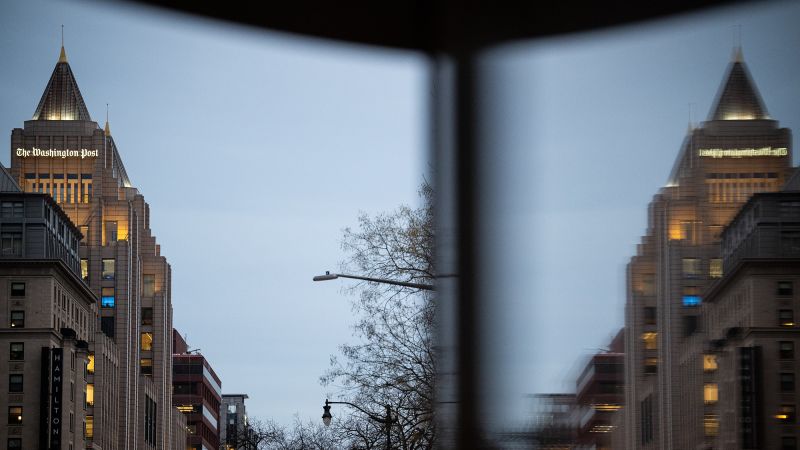
Activelifezero.com – For an industry more accustomed to contraction than expansion, Washington is offering an unusual development: a serious contest for readers, subscribers and influence between two major local news operations. The Washington Post, a long-established institution, and the newly renamed Washington Sun are entering a period of sharper rivalry that could give residents more choices in coverage of politics, weather, sports and civic life.
The format is different from the newspaper battles of earlier generations. The Sun operates entirely online, while the Post remains largely digital despite its print legacy. Yet the dynamic feels familiar. One newsroom is working to strengthen a historic franchise after difficult years, while the other is building scale and seeking openings created by upheaval in the media business.
That kind of competition matters beyond the companies involved. When multiple newsrooms pursue the same stories, public officials face more scrutiny, readers have more reporting to compare, and underserved subjects can receive renewed attention. Washington has not had a meaningful two-newspaper environment since the Washington Star closed in 1981.
The Post Sees a Route Back to Stability
On Wednesday, the Jeff Bezos-owned Washington Post said it had made encouraging progress after years marked by financial losses, staff reductions and repeated restructuring. A spokesperson said the organization is approaching a key business milestone.
The Post is on track to break even, ending 2026 on its closest path to profitability in five years.
The company also said it has sold more than 300,000 individual subscriptions so far this year. While it did not provide further financial specifics, reaching break-even would represent an important reversal for an organization that has endured considerable turmoil.
Jeff D’Onofrio, who had been serving as acting publisher and chief executive since February, was formally appointed to both positions. He took over after Will Lewis, whose tenure drew significant criticism, left the role abruptly.
In a memo to employees, D’Onofrio placed the Post’s immediate business work alongside its longer institutional history. The newspaper will turn 150 next year, an anniversary that raises the stakes for decisions being made now about its audience, revenue and newsroom capacity.
The Washington Post will celebrate its 150th anniversary next year. It is our collective responsibility to ensure that we position it for the next 150 years, and I will be working with all of you to do just that.
D’Onofrio said news and opinion will remain central to the organization’s purpose, while signaling a push to develop additional revenue sources that can support future reporting.
News and Opinions are at our gravitational center, and our mission doesn’t change. What will change is that we will build a modern media company with new revenue streams that move us from breakeven to profitability, so we can reinvest in our journalism.
NOTUS Becomes the Washington Sun
Earlier the same day, NOTUS, short for News of the United States, introduced its new identity as the Washington Sun. The change comes as owner Robert Allbritton expands the operation in the capital. Allbritton previously founded Politico, and the Sun is positioning itself as a significant presence in a city where national government reporting and local reporting often overlap.
Editor Tim Grieve framed the launch as a response to a broader transformation in Washington journalism.
Washington journalism is in a moment of generational change. We’re rising to meet it.
The Sun has roughly 110 staff members, substantially fewer than the Post’s approximately 500 newsroom employees. Still, its strategy is not simply to match the larger competitor everywhere. It is selecting areas where it believes focused coverage can quickly build an audience and make the city’s media market more robust.
Weather is one such area. The Post was long associated with the Capital Weather Gang, and the Sun will now publish forecasts under that familiar brand. For local readers, dependable weather coverage is not a minor add-on: it is a daily service that affects commuting, school schedules, outdoor plans and severe-weather preparation.
Sports is another priority. The Post closed its sports desk earlier this year, leaving room for another newsroom to place greater emphasis on local teams and the communities that follow them. The Sun has said it wants to distinguish itself in that coverage.
Hiring, Losses and a Chance to Rebuild
The Sun’s expansion has been shaped in part by cuts elsewhere. Earlier this year, when the Post eliminated hundreds of jobs—about one-third of its workforce—NOTUS hired aggressively. Other national outlets, including The Atlantic and The New York Times, have also recruited former Post employees.
Dana Milbank, now a political columnist for the Sun, spent 26 years at the Post. He described much of that time as an era of declining resources, reduced coverage, closed bureaus, buyouts and layoffs. His view reflects a wider industry reality: traditional newspaper employment has fallen steeply for decades as advertising models and reader habits changed.
Milbank compared those job losses to the employment decline experienced by the steel industry during its collapse from the 1970s through the 1990s. Against that backdrop, the effort by Allbritton and Grieve to build a larger newsroom carries significance beyond one publication’s rebrand.
The goal is not to recreate the old newspaper economics that left many local institutions unable to sustain their reporting. Instead, the Sun plans to grow with a digital-first model and begin introducing subscriptions later this month, while retaining free access to some of its work.
The Post, meanwhile, can still point to its scale, investigations, exclusive reporting and deep experience covering the federal government. Its renewed subscription momentum gives it a foundation from which to address the consequences of recent decisions and rebuild reader confidence.
Why Readers May Gain From the Rivalry
Washington’s residents and the people who depend on coverage from the capital may benefit most if both organizations succeed. Competitive reporting can prompt newsrooms to move faster, invest more carefully in distinctive expertise and make clearer choices about what their communities need.
The contest will not erase the difficult economics facing journalism. A profitable digital future remains uncertain for many publishers, and neither newsroom is immune to changing audience behavior. But a city with two ambitious news organizations has more potential for accountability reporting, more opportunities for journalists and more reasons for readers to engage with local news.
For now, the Washington Post is trying to convert signs of business recovery into long-term durability. The Washington Sun is trying to prove that a newer, leaner operation can take advantage of an unsettled market. Their rivalry may be digital, but the public value at stake is as old as the newspaper business itself: more reporting, more competition and a better-informed city.
Related Reading
Frequently Asked Questions
What is There s an old school newspaper?
There s an old school newspaper is the main topic of this guide. The article explains the context, practical details, and next steps readers should understand.
Why does There s an old school newspaper matter?
There s an old school newspaper matters because readers are looking for a useful answer, not just a short summary. Good content should match search intent and help them decide what to do next.