This ‘perfect invader’ is spreading across the world. It’s costing economies billions

Daftar Isi
Stellenbosch’s Ancient Oaks Face Extinction as Tiny Beetle Wages War
Activelifezero.com – For nearly three and a half centuries, Stellenbosch has earned its reputation as the City of Oaks. Nestled against the dramatic Western Cape mountains, this picturesque South African town once featured streets and homesteads lined with magnificent English oaks and other towering urban trees. Today, that heritage stands on precarious ground. Thousands of these stately trees have vanished entirely, while many remaining specimens bear the telltale signs of a slow, inexorable decline.
The evidence of their impending death appears as scores of microscopic perforations beneath the bark—tiny holes no thicker than a ballpoint pen mark. These are the calling cards of the polyphagous shot-hole borer, an invasive beetle species that has launched a devastating assault on tree populations throughout South Africa and continues its march across the globe.
A Global Conqueror in Disguise
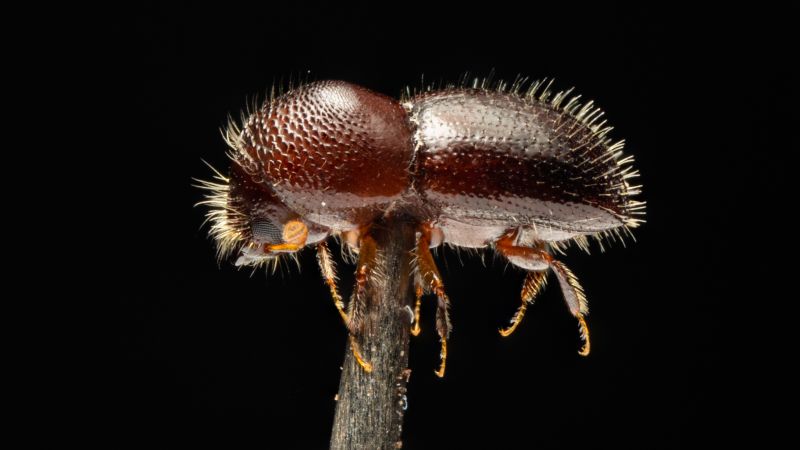
Despite measuring no larger than a sesame seed, this beetle has achieved remarkable ecological and economic dominance. Originally native to southeast Asia, the insect has now colonized every continent except Antarctica, according to research published in the Journal of Pest Science during June. The beetle typically arrives in new territories concealed within wood products, live plants, and packaging materials.
A comprehensive July review published in the Forests journal documented that approximately 680 tree and woody plant species have already fallen victim to this relentless pest. While the beetle’s reach is worldwide, few nations have experienced its impact as profoundly as South Africa.
The insect first appeared in the eastern KwaZulu-Natal province in 2012, though the initial official documentation occurred five years later in 2017. Since then, researchers have confirmed its presence in eight of South Africa’s nine provinces. The final province, Limpopo, may already harbor the beetle—scientists simply have not yet spotted it there.
The Perfect Invader
Francois Roets, a professor specializing in conservation ecology and entomology at Stellenbosch University, has witnessed the beetle’s devastation firsthand. He has coined a fitting epithet for this tiny destroyer.
“I used to have a course for undergraduates where we asked students to design an invasive species based on all the kinds of characteristics that they have,” Roets explained to CNN. “This little beetle has all of those things rolled into one.”
The beetle’s success stems from a sophisticated biological partnership. When the polyphagous shot-hole borer enters a host tree, it never arrives alone. The insect drills intricate tunnels to establish breeding galleries, and tucked within pouches behind its mandibles travel spores of a particular fungus.
As the beetle chews through wood, it releases these fungal spores, initiating a symbiotic relationship that proves devastating for the tree. The fungus provides the beetle and its larvae with essential nourishment and protection. Simultaneously, it blocks the tree’s vascular tissue, preventing the host’s natural defense mechanisms from reaching the invading insect.
The consequences extend beyond simple obstruction. The fungal blockage severely restricts water and nutrient flow throughout the tree. This condition, known as fusarium dieback, produces drought-like symptoms that frequently culminate in severe damage and eventual death.
Reproductive Superpower
What makes this beetle particularly dangerous is its extraordinary reproductive capability. Unlike most insects, the polyphagous shot-hole borer does not require a male partner to produce offspring. A virgin female can lay unfertilized eggs that develop into males, which she then mates with to establish new colonies—a reproductive system called haplodiploidy.
While males remain wingless and females can only fly short distances, this reproductive efficiency, combined with the insect’s diminutive size and preference for hiding within wood, has accelerated its expansion across South Africa at an alarming rate.
Tree survival times vary considerably by species. Oak trees typically perish within four years of infestation, whereas box elders often fail to survive beyond their first twelve months. Remarkably, a single beetle can initiate an epidemic.
Billions in the Balance
By 2022, satellite imagery captured the dramatic transformation of Johannesburg’s suburban streets, revealing vast strips of trees that had vanished from urban landscapes. This visual evidence underscored the urgency of the situation and highlighted the primary response strategy: removing infected or dead trees before beetles could transfer to healthy hosts.
However, this approach carries substantial financial consequences. A 2022 study conducted by economists and ecologists at Stellenbosch and Pretoria universities calculated that the beetle could impose a potential economic burden of 275 billion rand—approximately $18.5 billion at the time—over the following decade. This figure represents roughly 0.66 percent of South Africa’s entire gross domestic product.
Among all expenses associated with urban tree loss, the costs of removal, replacement, and economic disruption from reduced property values and increased maintenance demands continue to accumulate. As the beetle’s range expands and its host list grows, the financial toll shows no signs of diminishing.
For Stellenbosch, a town whose identity has been intertwined with its majestic oaks for centuries, the question is no longer whether the beetle will arrive, but whether the city can save what remains before the perfect invader claims everything.
Related Reading
Frequently Asked Questions
What is This perfect invader is spreading across?
This perfect invader is spreading across is the main topic of this guide. The article explains the context, practical details, and next steps readers should understand.
Why does This perfect invader is spreading across matter?
This perfect invader is spreading across matters because readers are looking for a useful answer, not just a short summary. Good content should match search intent and help them decide what to do next.