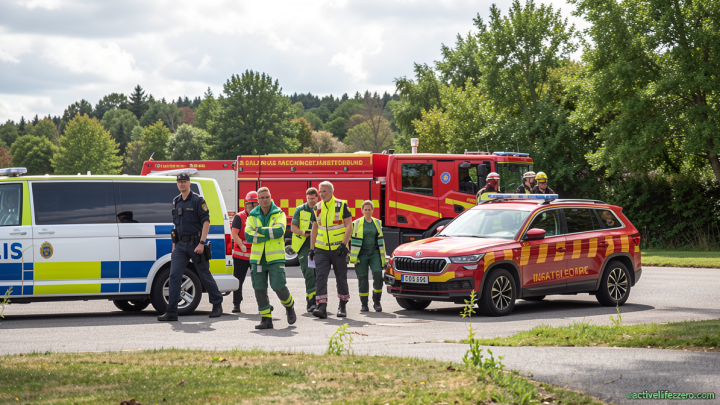
Frustration and exhaustion deepen as some Indiana residents endure weeklong power outages after deadly storms


Daftar Isi
Weeklong Blackouts Grip Northwest Indiana as Storm Recovery Enters Its Longest Stretch
Activelifezero.com – More than seven days after a violent storm system tore through northwest Indiana on August 11, tens of thousands of residents across the region still sit in darkness. Trees snapped across highways, power lines snapped across neighborhoods, and the cascading damage has turned what began as a single evening of chaos into a grinding, multi-week infrastructure crisis. Northern Indiana Public Service Co. (NIPSCO) reported that roughly 75,000 customers remained without electricity as of late afternoon on the most recent update, with the heaviest concentration of outages in Lake County, the stretch of land pressed directly against the Illinois state line.
The Scale of the Damage
The storm that triggered the crisis carried sustained winds measured at 99 mph (159 kilometers per hour), a force strong enough to uproot mature hardwoods and shear through utility infrastructure in minutes. In its initial sweep, the event knocked out service for approximately 300,000 customers across the footprint of NIPSCO’s service territory. Melody Birmingham, an executive at NIPSCO’s parent company, described the event as a “historic storm” and cautioned that the repair effort would not resemble a routine outage response.
“These aren’t simple repairs,” Birmingham said at a news conference. “These are systems that are being rebuilt.”
In Gary alone, the city’s storm damage inventory includes roughly 300 distribution poles and 44 high-voltage transmission poles that must be either repaired or replaced entirely. NIPSCO told residents that full restoration in Gary is not anticipated before August 25, meaning many households will face at least two more weeks of intermittent or total power loss.
Life on the Other Side of the Switch
For residents who depend on electricity for medical needs, the outage has become a daily logistical scramble. Jeremy Spurrier, 51, lives in Portage, a suburb roughly 40 miles (64 kilometers) southwest of Chicago. His home survived the storm, but the grid did not. A portable generator keeps his lights on and his refrigerator running, yet the fuel bill is punishing: about $75 of gasoline per day. His family has shifted to shelf-stable staples — canned soup, crackers, dry goods — and Spurrier makes repeated trips across the state line into Illinois to buy blocks of ice, which he uses to keep his insulin cold.
“If I run out of ice, that’s several hundred dollars of insulin just ruined,” he said.
In Whiting, Myra Carden, 74, described a different kind of frustration. Her house took no visible damage from the wind — “not even a chair was blown over in the yard,” she recalled — yet she endured a blackout lasting more than two days the previous week, followed by a second outage that began Tuesday and was still unresolved as of Wednesday. Carden, who works as a paralegal, said she filed multiple outage reports through the utility’s customer channels and received only automated confirmations that a ticket already existed.
“All I get back is, ‘You already put in a report.’ Well, what do you want me to do? … This doesn’t make sense. Of course I’m not a lineman; I’m a paralegal.”
Carden runs a small generator to keep her refrigerator cycling, but only when a family member is present to watch over the fuel tank and exhaust vent. In her garage sits a deep-freezer chest packed with beef and chicken from earlier months of stockpiling.
“I’m sure everything will be thrown away,” she said.
Community Hubs and the Gary Question
With more than 20,000 customers still dark in Gary, residents have returned nightly to community centers for hot meals, phone-charging stations, and a measure of warmth. The city, which is majority-Black, has become the emotional center of the recovery debate. Some residents voiced the perception that their neighborhoods were being deprioritized relative to wealthier suburbs. Birmingham, who is herself Black, pushed back against that framing at the press briefing, attributing the uneven restoration timeline to geography rather than demographics.
“We have areas that are probably affluent where we still have customers out as well. … This has nothing to do with race or any type of division,” she said. “It’s really a matter of where the storm hit.”
She also pointed to social-media posts that, in her assessment, amplified the sense of neglect beyond what the repair schedule actually reflected. Gary Mayor Eddie Melton acknowledged that residents were “frustrated and exhausted” but emphasized that more than 600 linemen were deployed within the city limits at peak staffing.
“I want to reiterate this is clearly not just a Gary situation. It is a northwest Indiana situation,” Melton said.
Toll and Broader Context
The storms that began on August 11 have claimed at least seven lives in the state, according to Liz Woods, a spokesperson for the Indiana Department of Homeland Security. Among the dead are a 4-year-old boy, three men, and three women. Deaths in extreme-weather events of this kind often trace back to carbon monoxide from unventilated generators, falls from damaged structures, or medical complications when refrigerated medications lose their cold chain — a risk that Spurrier’s insulin situation illustrates in real time.
For utilities operating across rural and suburban grids, a storm of this magnitude can overwhelm repair capacity for days or weeks. Transmission poles, once felled, require crane trucks, concrete crews, and often new steel sections fabricated off-site; distribution poles, while smaller, still demand excavation, anchoring, and re-stringing of overhead conductors. When hundreds of poles across a single city are in the queue, the restoration curve flattens, and the gap between “power restored” and actual service delivery widens. That structural reality is what Birmingham meant when she described the work as rebuilding systems rather than patching lines — and it is why the August 25 target for Gary, while concrete, still represents a long stretch of darkness for thousands of households in the region.
Related Reading
Frequently Asked Questions
What is Frustration and exhaustion deepen as some?
Frustration and exhaustion deepen as some is the main topic of this guide. The article explains the context, practical details, and next steps readers should understand.
Why does Frustration and exhaustion deepen as some matter?
Frustration and exhaustion deepen as some matters because readers are looking for a useful answer, not just a short summary. Good content should match search intent and help them decide what to do next.