Blanche declines to pledge independence from the White House

Daftar Isi
Attorney General Blanche Resists Formal Independence Pledge, Sparks Fresh Debate Over DOJ Autonomy
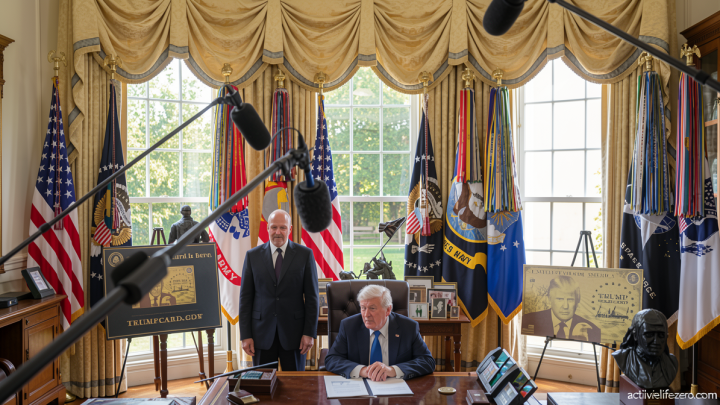
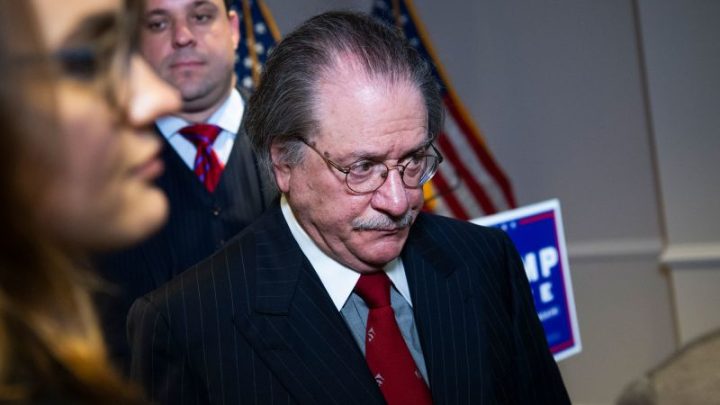
Activelifezero.com – In a move that has intensified long-standing anxieties about the separation between executive politics and federal law enforcement, Attorney General Todd Blanche publicly refused on Sunday to guarantee that he would always act independently of the White House. Speaking on NBC’s “Meet the Press,” Blanche told host Kristen Welker that no attorney general should ever make such a categorical commitment, framing the question itself as somewhat misplaced.
“No, I’m not going to pledge that, and no attorney general should ever pledge that,” Blanche said.
The remark landed in the context of a Justice Department that critics say has increasingly functioned as an instrument of President Donald Trump’s political objectives. Blanche, who previously served as Trump’s personal defense counsel, was confirmed by the Senate just days earlier after occupying the role in an acting capacity since April. His confirmation followed a contentious process, and his Sunday interviews — spanning both “Meet the Press” and a separate appearance on “Fox News Sunday” — offered his first substantive post-confirmation commentary on how he intends to run the department.
The Independence Question and Its Historical Weight
The role of attorney general has long carried an implicit expectation of institutional independence. Since the department’s founding in 1870, successive AGs have been understood to owe their primary loyalty to the law rather than to the president’s political preferences. Blanche’s refusal to codify that expectation in a single public sentence has drawn immediate scrutiny from legal scholars and oversight advocates, who argue that the very framing of the question — whether independence must be “pledged” — signals a shift in how the office conceives its obligations.
Blanche pushed back against the premise, asserting that Trump has not asked him to cross any legal or ethical boundary and that the department will “prosecute without fear or any sort of favor.” Yet he went further, suggesting that the president’s personal views might factor into individual case decisions.
“Every American has a voice in prosecutions… So whether President Trump should have a, quote, voice, it depends, but yes,” Blanche said.
He was pressed on this point in light of Trump’s public call to revisit the Reflecting Pool vandalism case, which the U.S. Attorney for the District of Columbia had recently dismissed. Blanche responded that he would naturally consider the president’s perspective on matters before the department.
“Will I take the president of the United States’ view on something into consideration? Yes, of course. And I hope every attorney general in history would not answer that question differently,” Blanche added.
Political Indictments and the Perception Problem
The department’s recent track record has fueled the independence debate. Indictments — and attempted indictments — against figures widely perceived as Trump’s political adversaries, including former FBI Director James Comey and New York Attorney General Letitia James, have led opponents to characterize the DOJ as a prosecutorial arm of the White House. Blanche acknowledged the tension but insisted he retains the capacity to disagree with the president.
“The president loves disagreement,” Blanche told Fox. “He wants to get counsel from all of his leaders that is just that – counsel. It doesn’t mean you’re saying yes to him.”
He added that Trump would “expect” him to voice honest disagreement, even when the two men reached opposite conclusions on a legal question. Blanche dismissed the popular caricature of a president phoning his attorney general each morning with a prosecution directive.
“There’s that misnomer about President Trump – which is that he wakes up in the morning, calls me up, and says ‘Todd, go prosecute this.’ That’s absolutely not the case.”
The Reflecting Pool Case and Jeanine Pirro
On the specific matter of the Reflecting Pool case, Blanche declined to state whether DC U.S. Attorney Jeanine Pirro should reopen the dismissed prosecution, despite Trump’s repeated public demands that she do so. He said he supports Pirro and noted that Trump also supports her, even though the president had at one point considered dismissing her from the post.
“I absolutely support US attorney Pirro, as does President Trump. Now that’s different than whether the president is extraordinarily frustrated at what happened in that case, and I don’t in any way fault him for that.”
Blanche further defended Pirro’s broader record, describing her as “doing a phenomenal job” and arguing that evaluating her performance on a single dismissed case, given the evidentiary record available, would be unfair.
Election Integrity and the Voter-Rolls Litigation
Turning to a priority of Trump’s second term, Blanche indicated the administration may petition the Supreme Court to resolve its ongoing effort to compel states to hand over unredacted voter rolls ahead of this year’s midterm elections. Trump has demanded that states surrender voter rolls and other sensitive electoral data, a campaign rooted in his longstanding — and repeatedly unsubstantiated — claims that the 2020 election was stolen from him.
The administration has filed suits against roughly 30 states that have resisted opening their rolls to federal scrutiny, but has frequently lost in lower courts. Asked whether he would appeal those defeats to the nation’s highest court, Blanche called it a “possibility.”
“Absolutely, it’s a possibility,” Blanche told Welker. “Election integrity is something that President Trump ran on, and the American people elected him. It’s something that every American should care about.”
The Anti-Weaponization Fund and January 6 Claims
Blanche also addressed the so-called “anti-weaponization” fund, a compensation mechanism that had threatened to derail his Senate confirmation. He declared the fund “dead,” but noted that existing legal processes remain available for individuals who believe they were wronged by the government and wish to seek monetary relief. He declined to confirm or deny whether January 6, 2021, rioters could use those channels.
“Well, anybody can file a claim against the federal government, not just anybody associated with January 6,” Blanche said. “I’m not going to sit here and say on a news program whether a litigation that may or may not happen will result in money. I can’t do that. So, what I will say is that there’s a process in place for decades where”
The ambiguity of that final statement — left deliberately open — underscores the broader question Blanche’s Sunday interviews raised: how much latitude will the new attorney general allow the White House to shape the department’s day-to-day decisions, and whether the institutional safeguards that once separated political ambition from prosecutorial judgment remain intact under his watch.
Related Reading
Frequently Asked Questions
What is Blanche declines to pledge independence?
Blanche declines to pledge independence is the main topic of this guide. The article explains the context, practical details, and next steps readers should understand.
Why does Blanche declines to pledge independence matter?
Blanche declines to pledge independence matters because readers are looking for a useful answer, not just a short summary. Good content should match search intent and help them decide what to do next.