Supreme Court backs Trump’s order to curb mail ballots

Daftar Isi
Supreme Court Clears Path for Trump’s Mail-Ballot Restrictions, but Legal Battles Are Far From Over
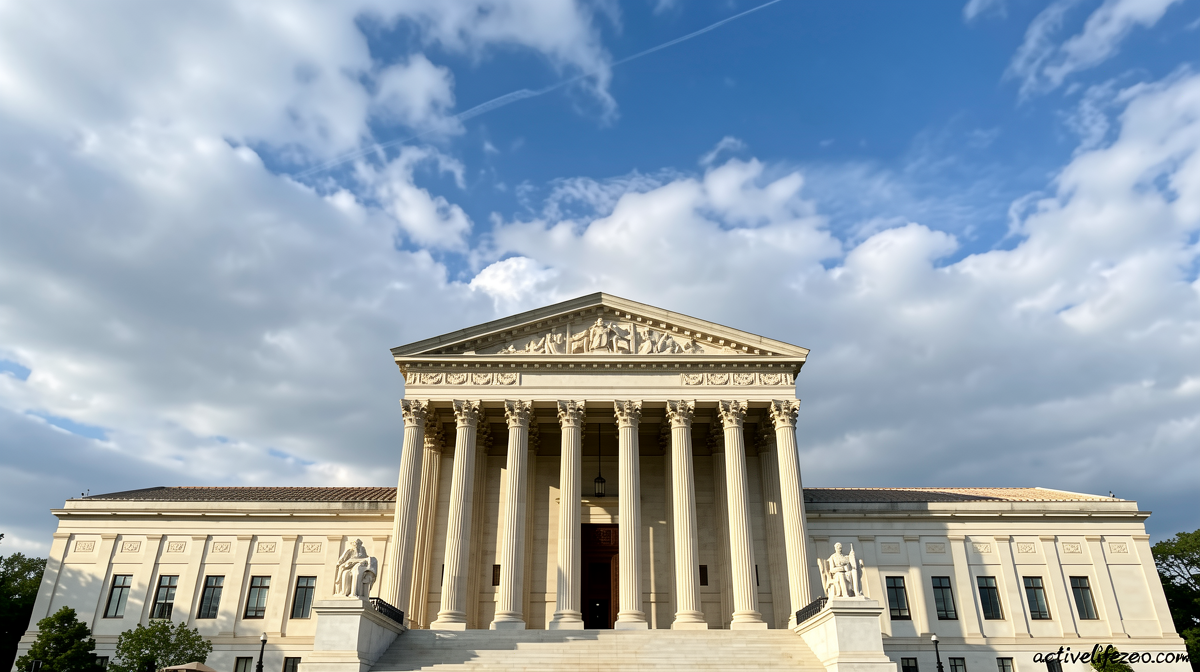
Activelifezero.com – With roughly three months separating voters from the November 2026 midterm elections, the nation’s highest court issued a ruling on Monday that hands President Donald Trump a partial green light to enforce elements of his March executive order aimed at reshaping how mail ballots are administered across the country. Yet the decision, while a tactical victory for the White House, leaves the core question untouched: whether the president possesses any constitutional or statutory authority to dictate the mechanics of state-run elections in the first place.
The 10-page unsigned opinion, delivered over the objections of the court’s three liberal justices, stops short of endorsing the substance of Trump’s directives. Instead, it addresses only the procedural timing of the challenge brought by a coalition of Democratic-led states. In practical terms, the ruling permits the administration to begin executing certain components of the order while signaling that further litigation will almost certainly intervene before the November vote.
What the Court Actually Decided — and What It Left Alone
The justices made clear they were not adjudicating the merits of the executive order. The opinion states plainly that its disposition “does not mean that any measure taken by the government to implement the order will necessarily be lawful,” adding, “On that score, time will tell.” That language preserves the possibility that every downstream action taken under the order remains subject to fresh judicial review.
The court also noted that if the Postal Service’s final rule “harms the states, they may challenge that rule,” effectively inviting another round of litigation the moment a concrete regulation takes effect.
The DHS Voter-Eligibility Lists
One pillar of the March order tasks the Department of Homeland Security with compiling state-by-state rosters of individuals the agency believes are eligible to cast ballots. The Monday ruling allows the administration to proceed with that proposal in the Democratic-led states that had sued to block the plan. For those states, the immediate consequence is a diversion of staff, funding, and planning capacity away from ordinary election preparation and toward mounting yet another legal defense.
The USPS Tracking Mandate and the Lower-Court Roadblock
A second component of the order directs the United States Postal Service to impose new conditions on any state wishing to deliver ballots by mail. Under the scheme, states would be required to furnish their own voter-eligibility lists to the agency and to embed tracking information on ballot envelopes so that each mailed ballot can be followed through the delivery pipeline. The Supreme Court gave the Postal Service the nod to implement that portion of the plan.
However, a separate lower-court proceeding has already enjoined the USPS effort nationwide. That means the agency cannot simply activate the tracking requirement without first clearing another judicial hurdle. The likely next step is an emergency appeal back to the Supreme Court, potentially within days, which underscores that Monday’s ruling will not be the final chapter in this dispute.
Dissenting Voices and the Broader Election-Case Landscape
Election disputes have grown unusually combative at the Court this term, producing sharply divided opinions from both ideological camps. In late April, the 6-3 conservative majority struck down key provisions of the Voting Rights Act in a ruling concerning Louisiana’s congressional districts, a decision the liberal justices dissented from.
Justice Sonia Sotomayor, joined by Justice Elena Kagan, argued that lower courts possessed the authority to rule in favor of the Democratic states immediately, and emphasized that the majority had not weighed the legality of Trump’s directives on the merits.
“Today’s decision does not address whether the President’s attempts to interfere with States’ administration of the November 2026 elections are lawful. Nor does it suggest that the Executive Branch has any constitutional or statutory authority to implement the President’s directives,” Sotomayor wrote. “Instead, today’s decision merely postpones adjudication of those challenges.”
Justice Ketanji Brown Jackson authored her own extended dissent, employing more pointed language to criticize what she characterized as an inconsistent approach by the conservative majority regarding when election-related challenges may be heard. She warned that the ruling “needlessly injects chaos and uncertainty into the upcoming midterm elections.”
What Comes Next for States and Voters
Steve Vladeck, a Supreme Court analyst and professor at Georgetown University Law Center, framed the decision as a temporary tactical gain rather than a permanent clearance.
“The ruling is a win for Trump for the moment, but it doesn’t fully clear the way for his effort to limit mail-in ballots to go into effect,” Vladeck said. “As soon as tomorrow, a Massachusetts district court may block the underlying USPS rule at issue — which is the real thing to watch heading into November.”
For voters in the affected states, the practical upshot is a compressed timeline of uncertainty. State election officials must now plan for the possibility that federal agencies will attempt to interject themselves into ballot processing weeks before Election Day, while simultaneously preparing for the next wave of emergency appeals that could reach the Supreme Court on an expedited schedule. The March order, which granted the Postal Service and Homeland Security roles in election administration that neither agency has historically held, remains the central flashpoint. Until a court rules definitively on whether the president may commandeer those functions, every mailed ballot in the contested states carries an added layer of legal risk that did not exist in prior election cycles.
Trump has spent years publicly asserting that mail voting is rife with fraud, claims that independent audits and state-level investigations have repeatedly failed to substantiate. The executive order translates those long-standing assertions into concrete administrative mandates, and the Supreme Court’s Monday ruling, while stopping short of validating those mandates, removes one procedural barrier to their attempted implementation. The remaining barriers, however, are substantial, and the next several weeks will determine whether the November 2026 midterms proceed under state-administered rules or under a hybrid federal-state framework that has no clear precedent in American electoral history.
Related Reading
Frequently Asked Questions
What is Supreme Court backs Trump s order?
Supreme Court backs Trump s order is the main topic of this guide. The article explains the context, practical details, and next steps readers should understand.
Why does Supreme Court backs Trump s order matter?
Supreme Court backs Trump s order matters because readers are looking for a useful answer, not just a short summary. Good content should match search intent and help them decide what to do next.