Aboard the USS Abraham Lincoln, where hardship and resilience share quarters

Daftar Isi
Nine Months at Sea: Life Inside the USS Abraham Lincoln as the Iran Conflict Grinds On
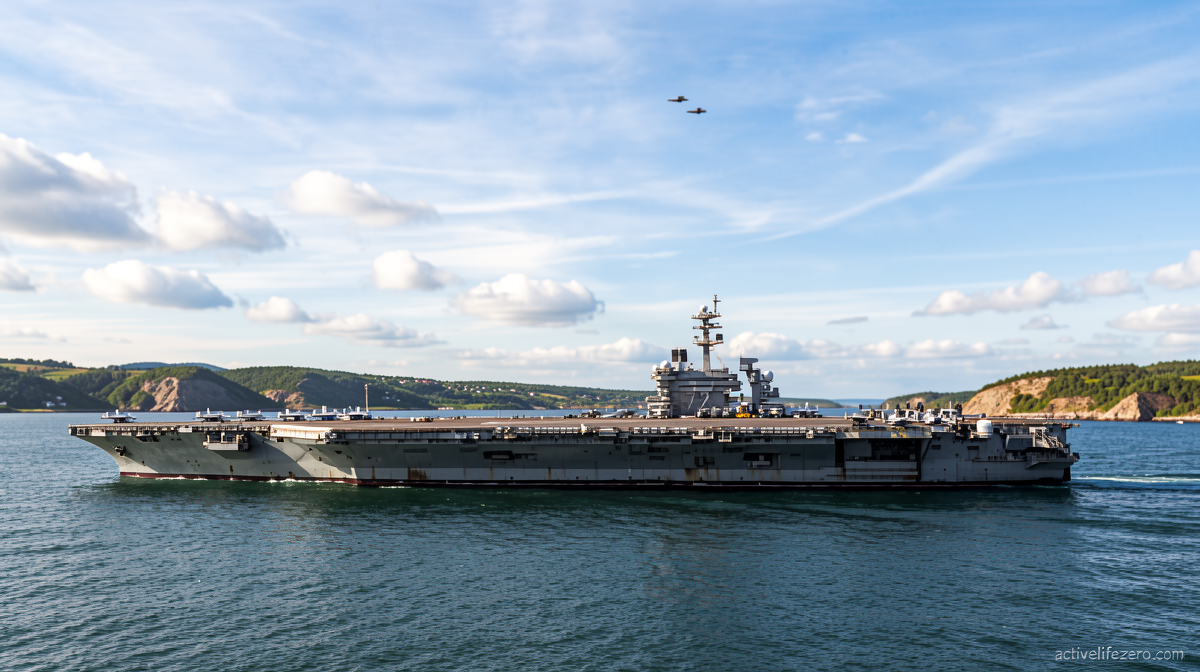
Activelifezero.com – The aircraft carrier USS Abraham Lincoln has spent nearly nine months away from its home port, a stretch that may set a record for the longest continuous deployment of any American carrier. As of mid-August 2026, the ship remains stationed in the waters off Oman, where it has become a central node in the ongoing military confrontation with Iran. The deployment, which began in February, has already claimed the lives of 18 U.S. service members and pushed the crew through repeated cycles of escalation and stand-down that have worn down morale in ways that extend well beyond the obvious.
A Supply Chain Under Fire
One of the most tangible hardships aboard has been food. Early in the conflict, Iranian strikes disrupted the logistics corridor running through Bahrain, the primary resupply route for carriers operating in the region. The result was a rationing period that sailors still describe in vivid, sometimes darkly humorous detail. For a stretch of weeks, daily meals collapsed into canned tuna stirred into noodles or corn dogs pulled from a freezer. Multiple crew members told visitors they lost meaningful amounts of weight during that window.
By the time of a recent three-day visit to the ship, conditions had improved. Breakfast in the mess deck — the cafeteria where roughly 5,000 sailors eat in staggered shifts — featured fresh fruit and vegetables, a direct result of a brief port call at Duqm, Oman, on July 7. The ship now serves between 17,000 and 18,000 meals daily, drawn largely from frozen stock and organized around a 14-day rotation that crew members memorize by name: “pizza day,” “burger day,” and periodic ice cream socials designed to lift spirits.
The improvement is real but modest. Young enlisted sailors still queue for up to an hour before each meal, a daily grind that compounds fatigue. Many spoke openly about what they most look forward to eating once they finally come home: a plate of Chinese takeout, a Chipotle burrito, a mother’s homemade bolognese. One sailor, reaching out by message after the visit ended, summed up the situation with characteristic understatement:
“Food has slightly increased in edibility, if I was asked a few months ago I would say a lot of people were losing weight due to the food.”
The Navy acknowledged the disruption in a written statement, explaining that the carrier is “operating in a highly contested environment where traditional supply hubs in the Middle East were disrupted by combat actions” and that leadership “prioritized mission-critical supplies: first food, then hygiene items, then mail.” The statement frames the episode as a logistics problem solved in sequence. For the sailors living through it, the sequence mattered less than the months spent waiting.
Calm in the Mess Deck
What surprised visitors most was not the hardship but the composure. On the morning after boarding — a designated “no fly day” that gave the crew a rare window of downtime following the port visit — top enlisted sailors sat at breakfast at 6 a.m. with an almost studied indifference to the news. Most had not been following headlines, despite the availability of Wi-Fi aboard. They had watched this particular cycle, escalation followed by de-escalation, enough times that the latest spike felt procedural rather than alarming.
That calm coexisted, however, with genuine strain. The deployment has prompted concerns from family members back home, and reports of suicide ideation among crew members, as well as incidents in which sailors were pulled from the water, have circulated in Navy channels. The ship’s guest section, where visitors sleep beneath the near-constant rumble of jet launches, offers a visceral sense of the environment: communal bathrooms with hot water that still needed a thorough scrub, backed-up toilets in some quarters, and the omnipresent vibration of a warship at work.
Political Soundbites vs. Deck-Level Reality
The deployment has drawn commentary from the highest levels of government. Defense Secretary Pete Hegseth has characterized the conditions aboard as “completely misrepresented,” while President Donald Trump declared last week that the ship’s time at sea has been “not nearly long enough.” That remark landed poorly with many of the sailors in regular contact with journalists and advocacy groups, who see their own exhaustion reflected in a soundbite that dismisses it.
The reality, as assembled from dozens of conversations with both officers and enlisted personnel over three days of free movement across the deck (permitted by the Navy with an escort), resists a single narrative. Hardship and resilience appear side by side, sometimes in the same individual, sometimes in the same sentence. A sailor can describe losing fifteen pounds on corn dogs and then, in the next breath, talk about the brotherhood of the watch section and the reason he signed up in the first place.
The carrier’s next move depends on a fragile and repeatedly tested peace framework between Washington and Tehran. On July 7, the day visitors stepped aboard at Duqm, Iran struck a third tanker in the Strait of Hormuz, and U.S. Central Command — the theater command executing the Pentagon’s war strategy — began preparing a response. Within an hour of boarding, visitors watched their first live shot from the flight deck. The message that followed from an official was brief: “Your timing is impeccable.”
For the 5,000 people who live on the Lincoln, timing is not a matter of journalistic convenience. It is the difference between another week of frozen meals and a return to a kitchen where someone else cooks dinner. The ship will keep sailing until the conflict allows it to stop, and the crew will keep eating whatever the supply chain delivers, one fourteen-day rotation at a time.
Related Reading
Frequently Asked Questions
What is Aboard the USS Abraham Lincoln where?
Aboard the USS Abraham Lincoln where is the main topic of this guide. The article explains the context, practical details, and next steps readers should understand.
Why does Aboard the USS Abraham Lincoln where matter?
Aboard the USS Abraham Lincoln where matters because readers are looking for a useful answer, not just a short summary. Good content should match search intent and help them decide what to do next.