Trump says US will reduce military exercises with South Korea, citing lack of help with Iran

Trump Says US Will Reduce Korea Drills
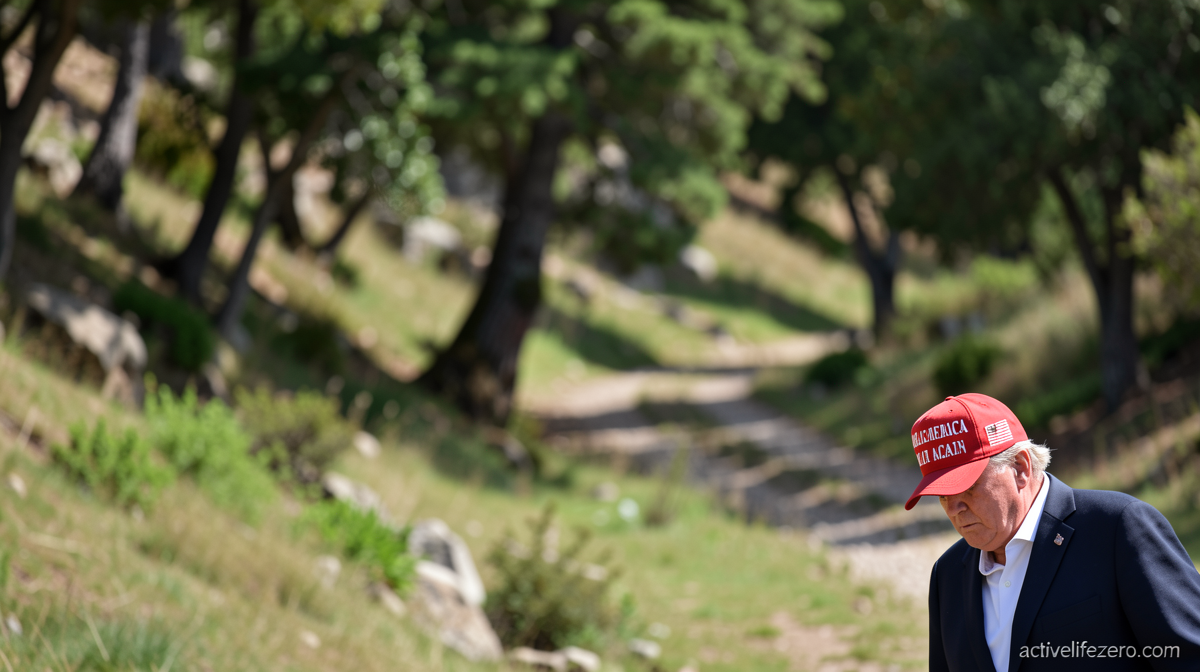
Activelifezero.com – Trump says US will reduce its role in the annual Ulchi Freedom Shield exercise, a decision announced on Truth Social just hours before the ten-day training was set to begin across the Korean Peninsula. President Donald Trump cited two grievances in his Sunday post: what he called a warm personal relationship with North Korea’s leader, and what he framed as Seoul’s flat refusal to contribute to the American military campaign against Iran. The abrupt intervention left regional officials scrambling to determine whether the full program would proceed or be quietly trimmed.
“Based on my very good relationship with Kim Jong Un, of North Korea, we are not happy with the fact that the United States has, long ago, agreed to participate in Joint Military Exercises with South Korea.”
In the same post, the president characterized the drills as costly and diplomatically provocative toward a neighbor that, in his telling, has behaved “unthreatening and respectful” throughout his presidency. He appended a parenthetical jab — “(as usual!)” — when noting that American taxpayers shoulder the bulk of the expense.
A Seven-Decade Alliance Tested
The mutual defense compact between Washington and Seoul stretches back more than seventy years, originally forged to shield the peninsula’s southern half from a northern neighbor that has since become a nuclear-armed state capable of firing intercontinental ballistic missiles. Camp Humphreys, the largest American military installation outside the continental United States, hosts tens of thousands of US service members, their dependents, and Korean civilian personnel.
Ulchi Freedom Shield was slated to run for ten days beginning Monday. A joint statement released the prior week outlined its purpose: rehearsing responses to North Korea’s evolving force structure, including counter-drone tactics, GPS-denial scenarios, and cyber-attack contingencies. Local authorities indicated at least 18,000 South Korean soldiers were slated to participate alongside American units and major equipment.
A regional source familiar with the situation told CNN that the exercises commenced “as planned” on Monday morning. What remained uncertain in the hours that followed was whether the scope had been quietly trimmed or whether the full program proceeded despite the president’s public pronouncement.
Pyongyang’s Decades-Long Objection
North Korea has spent decades denouncing the combined drills. Its foreign ministry, speaking the week before the scheduled start, labeled the planned exercises “a rehearsal for an aggressive war” and a “grave threat” to its national security. For Pyongyang, the mere presence of allied forces running large-scale scenarios on the peninsula constitutes a de facto act of hostility, regardless of whether any shots are fired.
The Iran Grievance
Beyond peninsula dynamics, Trump wove in a second complaint: South Korea’s decision not to join the American war effort against Iran. In the same Truth Social post, he wrote:
“While somewhat unrelated (?), I recently asked the President of South Korea if they would like to join us in the Denuclearization of the Islamic Republic of Iran, and they said, ‘No thanks!'”
The president has repeatedly pressed allies to contribute forces or resources to the Iran campaign and has publicly rebuked those who decline. Seoul’s refusal, in his framing, compounded his dissatisfaction with the exercise arrangement.
A Pattern From the First Term
This is not the first time the exercise question has been wielded as leverage in dealings with Pyongyang. During his initial term, the White House and Seoul agreed to scale back joint operations as part of a broader effort to lower tensions while nuclear talks were underway. In 2018, the president declared it “inappropriate to have war games” on the peninsula during negotiations. Then, in March 2019 — after the second summit in Hanoi collapsed without a deal — the two governments announced that the traditional large-scale annual drills would be restructured into smaller, less conspicuous events.
“The reason I do not want military drills with South Korea is to save hundreds of millions of dollars for the U.S. for which we are not reimbursed.”
That 2019 post echoed the cost argument repeated on Sunday, nearly eight years later.
Frequently Asked Questions
What exercise did Trump say would be reduced?
The annual Ulchi Freedom Shield drill, a ten-day combined training event involving US and South Korean forces, was the exercise targeted by the president’s Sunday announcement.
Why did Trump say US will reduce participation?
He cited two reasons: his stated personal rapport with Kim Jong Un, which he argued made large-scale drills diplomatically unnecessary, and South Korea’s refusal to contribute forces or resources to the American campaign against Iran.
Did the exercise actually take place?
A regional source told CNN the drills commenced “as planned” on Monday morning, though whether the scope was trimmed remained unclear in the hours that followed.
Is this the first time Trump has used drills as leverage?
No. During his first term, joint operations were scaled back in 2018 and restructured into smaller events in March 2019 after the Hanoi summit failed.