Election Day storm could impact voter turnout in key midterm races in the central US

Daftar Isi
Election Day Storm Could Impact Voters Across Central US
Activelifezero.com – An Election Day storm could impact travel to polling places across parts of the central United States, bringing rain, strong winds and a limited risk of severe thunderstorms. The system may be an added challenge for voters who have not already cast an early ballot in several closely watched midterm races.
More than 43 million ballots have already been submitted through early voting, but millions more people are expected to vote in person Tuesday. Across the storm’s broad path, wet roads, gusty conditions and occasional thunderstorms could make trips to polling locations less convenient.
Rain Spreads From the Great Lakes to the Gulf Coast
Rain is expected from the Great Lakes and Upper Midwest through the Plains and south toward the western Gulf Coast. Iowa, Kansas, Michigan and eastern Texas are among the areas where unsettled weather could coincide with Election Day voting.
Widespread flash flooding is not expected, though rain could still cause localized travel issues. Drivers may encounter ponding on roads, slower traffic and wet parking areas near polling sites. Allowing extra travel time and checking local conditions before leaving can help voters plan their trip.
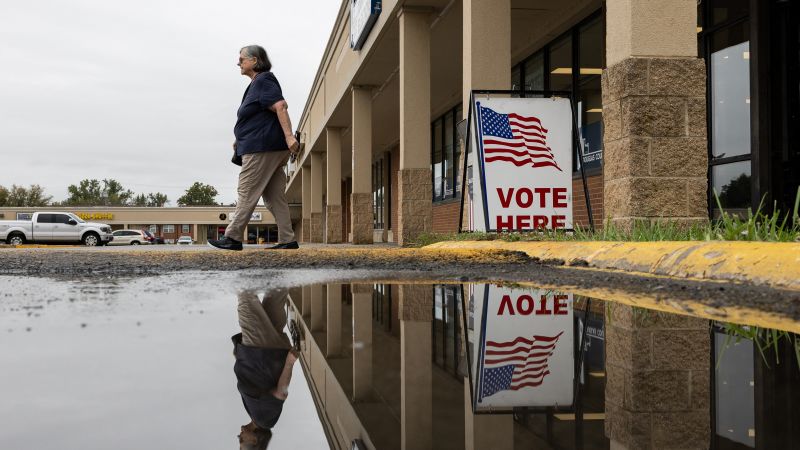
For people standing in outdoor lines or walking from transit stops and parking lots, even moderate rain can make voting less comfortable. The Election Day storm could impact the ease of getting to the polls, particularly for voters with limited transportation options or less flexibility during the day.
Thunderstorms and Strong Winds in the South
The strongest weather is expected along the system’s southern edge, where thunderstorms may develop from eastern Texas into Arkansas, Louisiana and Mississippi. A limited number of storms could become severe, with damaging wind gusts the main concern.
Lightning, brief downpours and approaching thunderstorms could temporarily complicate travel or outdoor activity near polling locations. Residents in affected areas should monitor local forecasts and weather alerts before heading out.
Strong winds are also expected farther north across much of the central US. Kansas could see gusts between 30 and 40 mph, creating difficult driving conditions for high-profile vehicles and an unpleasant walk for voters traveling on foot.
Weather May Influence Turnout, but It Is One Factor
Weather is only one element that can shape voter participation. Work schedules, transportation, access to polling places and early-voting availability also affect whether people can cast a ballot. Research has found that rainy or disruptive conditions can reduce turnout, while pleasant weather can make voting easier.
The impact will not be the same for every voter. People with firm plans to vote may continue despite the rain, while others may wait for a break in the weather. Where voting hours allow, checking the timing of rain bands may help voters choose a more manageable travel window.
The Election Day storm could impact multiple states at once rather than a single isolated area, making it notable for central US races. Still, voters can reduce weather-related obstacles by confirming their polling location, preparing for wet conditions and leaving enough time for travel.
Mild Conditions Expected Across Much of the East
Cold weather is not expected to be a major issue for most voters. High temperatures across much of the eastern half of the country are forecast to run 5 to 20 degrees Fahrenheit above normal.
The Southwest is expected to be somewhat cooler than average, while much of the East Coast and West should remain drier. A few nuisance showers are possible along parts of the Southeast coast, but they are not expected to match the broader central-US rain shield.
Election Day Weather FAQ
Should voters change their plans because of rain? Voters should follow local weather forecasts, allow more time for travel and use caution on wet roads. Rain alone does not prevent people from voting.
Where is severe weather most likely? The greatest thunderstorm risk is expected from eastern Texas into Arkansas, Louisiana and Mississippi, where isolated severe storms may produce damaging wind gusts.
Will cold temperatures affect voting? For much of the eastern United States, temperatures are forecast to be above normal. Rain and wind are expected to be more significant concerns than cold.
Can the forecast still change? Yes. Small shifts in the storm’s track and timing could change which communities see the heaviest rain, strongest winds or thunderstorms on Election Day.
Related Reading
Frequently Asked Questions
What is Election Day storm could impact voter?
Election Day storm could impact voter is the main topic of this guide. The article explains the context, practical details, and next steps readers should understand.
Why does Election Day storm could impact voter matter?
Election Day storm could impact voter matters because readers are looking for a useful answer, not just a short summary. Good content should match search intent and help them decide what to do next.