Charter plane crashes near remote Alaska radar site, killing all 8 on board

Daftar Isi
All Eight Aboard a Military-Chartered Flight Perish in Western Alaska Crash
Activelifezero.com – Every person aboard a twin-engine charter aircraft was killed when the plane went down near a remote Air Force radar installation in western Alaska on Thursday afternoon. Federal aviation authorities and military commanders confirmed the total loss of life, ending any hope of survival for the two pilots and six passengers who had departed Anchorage hours earlier.
The aircraft, a Cessna 441 operated under contract by Security Aviation, was en route to Cape Newenham — roughly 450 miles southwest of Anchorage — when it struck the ground around 12:15 p.m. local time. Preliminary data released by the Federal Aviation Administration placed the impact zone at or very near the Cape Newenham airstrip, a facility used almost exclusively by military units and vetted civilian charter operators.
The Flight and Its Passengers
Clint Johnson, who heads the National Transportation Safety Board’s Alaska regional office, identified the manifest as two pilots and six passengers. The Alaskan Command, which oversees U.S. military operations across the state, described the mission as a civilian-contracted transport carrying eight personnel. The U.S. Army Corps of Engineers Alaska District later confirmed in a written statement that two of its own employees were among those killed.
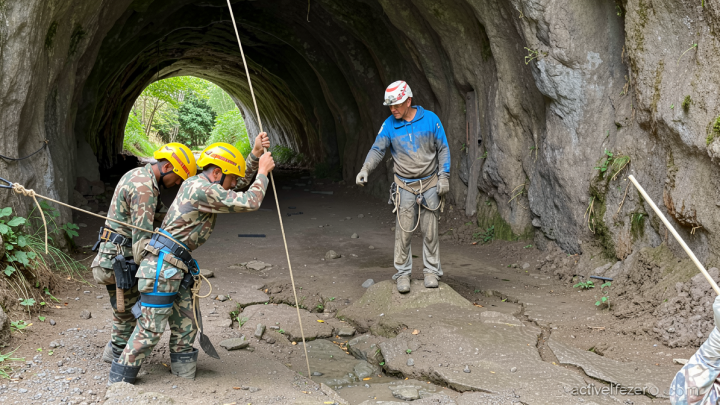
Search-and-recovery teams reached the wreckage site and verified that no one survived the impact. The command said the identities of all eight victims would be made public only after next-of-kin notifications were completed.
A Runway Built Into a Mountain
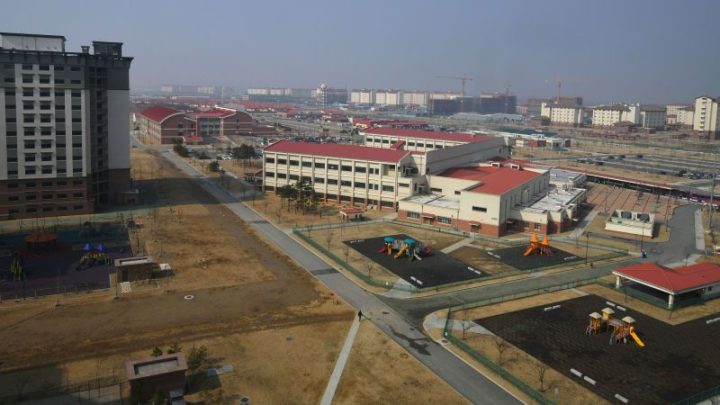
Cape Newenham Airport is not a conventional civilian airfield. It exists to give crews access to the Long Range Radar Site, a Cold War-era installation that continues to track ballistic missiles and other objects entering Earth’s atmosphere from the north. The runway itself is a gravel strip measuring close to 4,000 feet, carved into the flank of a mountain whose peak rises above 2,300 feet. FAA aeronautical charts flag steep terrain on both flanks of the strip and at its southern threshold, noting that once a pilot passes a certain decision point during approach, aborting the landing becomes, in the charts’ own language, “improbable.”
Only military aircraft and specifically approved charter flights are cleared to use the strip. That restriction underscores how unusual a civilian-contracted operation at the site is, and how tightly the airspace around the radar complex is managed.
Investigation Underway
The cause of the crash had not been determined as of the latest updates. The NTSB will lead the probe, with the FAA participating, in accordance with standard federal protocols for accidents involving civilian-registered aircraft. Investigators are expected to examine wreckage, flight data, weather records, and maintenance logs in the weeks ahead.
Military and Political Responses
US Air Force Lt. Gen. Robert Davis, who commands Alaskan Command, addressed the loss in a statement released shortly after confirmation of the fatalities.
“This is a devastating loss for our military family and the communities we serve. These individuals were dedicated professionals carrying out a vital mission in a demanding environment.”
Davis added that the command’s immediate focus was on supporting the families, friends, and unit teammates of the deceased, and expressed gratitude for what he called the “swift and tireless response of our search and recovery professionals.”
Alaska Senator Lisa Murkowski posted condolences on X, noting her personal familiarity with the operator.
“I’ve traveled extensively with Security Aviation throughout Alaska, and have met many of their experienced pilots. I appreciate the U.S. Coast Guard, NTSB, Alaska State Troopers, and the Rescue Coordination Center for responding to the site. Alaska is praying for those on board, their loved ones, and the team at Security Aviation.”
About the Operator and Aircraft
Security Aviation markets its fleet of Cessna Conquest aircraft as purpose-built for Alaska’s demanding flying conditions. The twin-engine, turbo-prop models are pressurized, accommodate up to nine passengers, and are rated to cruise at 330 mph at an altitude of 28,000 feet. The company’s website describes the type as “ideally suited for flights in Alaska with challenging weather and airport environments,” a characterization that gains added weight given the terrain constraints at Cape Newenham.
The crash marks one of the deadliest aviation incidents in Alaska in recent years and raises questions about the operational risks inherent in ferrying personnel to and from one of the state’s most isolated military installations. Until the NTSB releases its findings, the precise sequence of events leading to the loss of the aircraft remains unknown.
Related Reading
Frequently Asked Questions
What is Charter plane crashes near remote Alaska?
Charter plane crashes near remote Alaska is the main topic of this guide. The article explains the context, practical details, and next steps readers should understand.
Why does Charter plane crashes near remote Alaska matter?
Charter plane crashes near remote Alaska matters because readers are looking for a useful answer, not just a short summary. Good content should match search intent and help them decide what to do next.