What is the White House press pool, and why is it now under threat?

Daftar Isi
White House Press Pool Faces New Test After Media Bans
Activelifezero.com – Access to the American presidency has long depended on a practical compromise: a limited number of journalists are allowed to follow the president closely, then share what they see and hear with the broader press corps. That arrangement, known as the White House press pool, is now facing fresh uncertainty after President Donald Trump barred CNN, MS NOW and Politico from the White House.
The dispute reaches beyond the three organizations involved. Pool coverage is designed to ensure that the public can receive independent, firsthand reporting even when space, security and travel constraints prevent every outlet from attending an event. Removing individual participants can affect who is available to cover the president, particularly during fast-moving travel or tightly restricted events.
Why the pool exists
The pool system has operated in various forms since the presidency of Franklin D. Roosevelt. It emerged from a simple reality: the Oval Office, Air Force One and many presidential travel locations cannot accommodate hundreds of reporters, photographers and technicians at once.
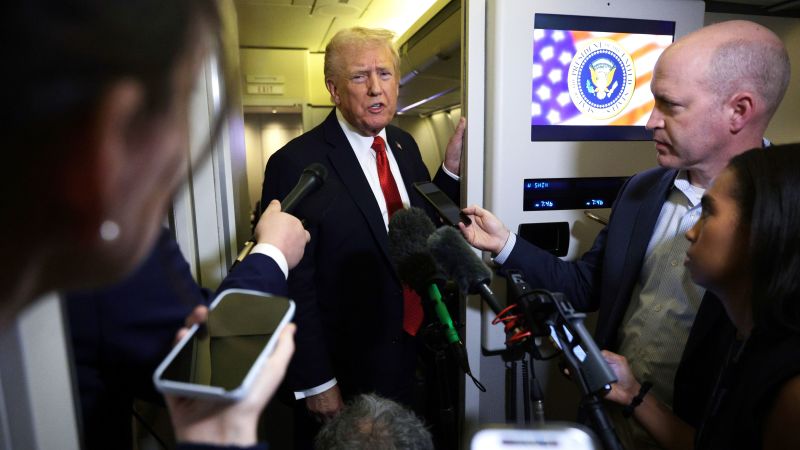
A smaller group therefore serves as the eyes and ears of the larger press corps. Pool members observe the president’s public remarks and movements, ask questions when opportunities arise, and distribute written reports, photographs, video and audio to other news organizations. The model also reduces the cost of maintaining large teams at the White House and on presidential trips, an important consideration for smaller outlets.
The arrangement requires cooperation. Journalists organize the coverage and agree on rotations, while the White House provides the access needed for pool members to enter restricted spaces. Although the mix of participating media has changed as television, radio, photography and digital reporting evolved, the core goal has remained consistent: independent witnesses should be present when the president acts or speaks.
A record of covering pivotal moments
Pool journalists have been present during some of the most consequential moments in modern presidential history. Reporters were in Warm Springs, Georgia, when Roosevelt died. They were in Dallas when President John F. Kennedy was assassinated, and outside the Washington Hilton when President Ronald Reagan was shot.
The system has also enabled coverage of presidential travel that would otherwise have been difficult to document. Pool members were aboard Air Force One during secret trips by George Bush, Barack Obama and Trump to distant war zones. Their presence did not eliminate security restrictions, but it ensured that journalists could record and relay major developments to the rest of the media.
Pool size changes depending on the location. Air Force One, for example, has 13 seats in its press cabin. Other settings may allow a larger group, while sensitive travel or emergencies can result in narrower access.
How participation has traditionally been organized
For much of the pool’s history, journalists largely controlled its makeup. The White House Correspondents’ Association selected print reporters responsible for sending dispatches to colleagues covering the presidency. Television and radio organizations rotated responsibility for recording the president and making that material available to other outlets.
News organizations then supplied the White House with the names of their representatives so travel, security and space logistics could be arranged. This system did not mean access was unlimited. Administrations have at times restricted pool capacity for security or operational reasons, but those limits were generally tied to circumstances rather than the exclusion of a particular outlet from its normal responsibilities.
After the September 11, 2001, attacks, the White House reduced the number of pool members traveling with President Bush to locations that were not publicly disclosed. Some journalists objected and argued that at least a small press presence should remain on Air Force One. Bush’s aides ultimately allowed half of the pool to continue traveling with the president.
President Joe Biden’s 2023 trip to Ukraine also involved unusually limited access because it was a secret wartime journey. A still photographer and a print reporter accompanied him on the train from Poland.
Past disputes over access
Presidents and their aides have periodically clashed with individual media organizations over access. During the Obama administration, Fox News was briefly left out of a set of interviews with then-TARP administrator Kenneth Feinberg that had been offered to the other four television pool networks. Objections from the other networks prompted the administration to restore Fox’s participation. The Obama White House did not attempt to prevent Fox from taking its turn as the daily television pool network.
Trump’s return to office in 2025 brought further changes. Wire services that had previously held regular pool positions, including Reuters and the Associated Press, no longer received daily slots, though they remained part of a rotation. The Associated Press sued after its access to locations including Air Force One and the Oval Office was restricted. A lower court found that Trump had improperly retaliated against the organization, while the case remains unresolved.
The White House also expanded the pool to include outlets that had not previously participated, including many with right-leaning audiences. Those changes altered the system’s traditional balance while preserving the broader idea of a rotating group assigned to provide shared coverage.
What the current bans could mean
The immediate question is how the White House restrictions will affect scheduled pool duties. CNN was set to serve as the television pool on Monday and had been assigned to accompany Trump on a planned trip to New York for the annual United Nations General Assembly.
If a network that is scheduled to provide pool coverage cannot do so, another outlet may need to fill the role. That can be difficult on short notice. Television coverage requires staff, equipment, travel arrangements and the financial ability to maintain continuous coverage. A system built around rotation can become strained if organizations are excluded after they have been assigned a duty.
The stakes extend beyond access for any one newsroom. The press pool is a shared mechanism intended to make presidential activity visible even when only a handful of people can physically be in the room. Its durability depends on whether the press corps can continue to place independent reporters, photographers and broadcasters beside the president when the public needs an account of what happened.
Related Reading
Frequently Asked Questions
What is What is the White House press?
What is the White House press is the main topic of this guide. The article explains the context, practical details, and next steps readers should understand.
Why does What is the White House press matter?
What is the White House press matters because readers are looking for a useful answer, not just a short summary. Good content should match search intent and help them decide what to do next.