Supreme Court rejects Trump’s plan to limit mail-in voting in midterms

Daftar Isi
Supreme Court Blocks Proposed Mail Ballot Changes Ahead of 2026 Midterms
Activelifezero.com – The Supreme Court has halted a Trump administration proposal that would have altered how mail ballots are handled nationwide only weeks before the 2026 midterm elections. The unsigned order, issued Monday, prevents the US Postal Service from gaining the authority to withhold potentially millions of ballots under a new federal procedure.
The dispute became one of the court’s most consequential emergency matters in recent years because election officials warned that putting the policy into effect so close to voting season could disrupt ballot distribution, confuse voters and create widespread disenfranchisement.
In its brief ruling, the court said the administration “is unlikely to succeed on the merits of its challenge.” The majority did not provide a detailed legal analysis. Justices Samuel Alito and Clarence Thomas dissented.
A Last-Minute Election Rules Dispute
The administration characterized the proposed postal rule as a limited regulatory adjustment designed to strengthen ballot security and make sure only qualified voters receive mail ballots. President Donald Trump has repeatedly attacked mail voting with unfounded claims of broad fraud, even though he has also voted by mail himself.
Opponents said the proposal went far beyond a routine postal update. Democratic-led states, voting-rights organizations and a bipartisan group of election administrators argued that the policy would place an unprecedented role in the hands of the Postal Service during an active election cycle.
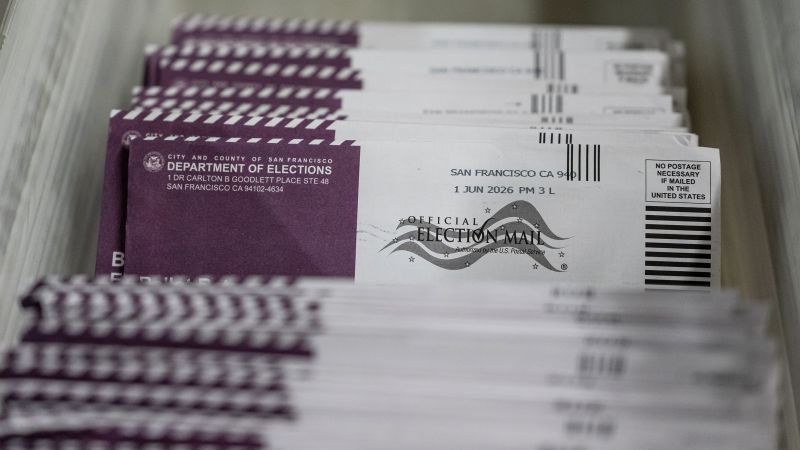
The practical concerns were central to the challenge. States would have been required to submit large volumes of voter data through an online portal that had not yet become operational. Election offices also would have needed to revise ballot envelopes already purchased, while some jurisdictions had begun mailing ballots to voters.
For election officials, the timing was as important as the substance of the rule. Changing procedures after printing, mailing and voter-notification schedules are underway can require updates to instructions, staff training and ballot tracking systems. Those complications can affect not only election offices but also voters who depend on mail ballots because of travel, disability, military service or distance from polling locations.
Kavanaugh Cites Lack of Time
Justice Brett Kavanaugh wrote separately to explain his view that the Postal Service may possess the underlying authority to adopt the proposal. Still, he concluded that state and local officials lacked enough time to put the rule into practice before the midterms.
“State and local election officials do not have sufficient time to reasonably implement the rule before the elections.”
His concurrence reflected arguments submitted by state and local officials who said the election calendar had advanced too far for an orderly rollout. It also leaves open the possibility that a similar plan could face a different outcome if pursued well before a future election.
That possibility matters politically and legally. With Kavanaugh indicating that he sees a potential source of postal authority, the administration could seek to revisit comparable changes outside the pressure of an imminent national election. Alito and Thomas were already prepared to allow the current rule to proceed.
Alito Says Federal Interest Outweighs Implementation Concerns
In dissent, Alito said he took the logistical problems identified by election officials seriously but did not believe they justified blocking the policy. He emphasized the government’s interest in enforcing the rule and in increasing the identification of federal ballot mail.
“The government has a strong interest in enforcing the rule, and implementing it will also ‘enhance the visibility of Federal Ballot Mail’ in order to better detect election fraud,” Alito wrote.
He contrasted that interest with the states’ warnings about the difficulties of launching the system close to Election Day.
“On the other side of the balance, the plaintiff States invoke the practical effects of implementing the rule close to the midterm elections. I take that problem very seriously, but it is not enough to convince me to deny the application.”
Alito described the administration’s request as an unlikely late-stage effort, while maintaining that the Postal Service has broad regulatory powers over mail.
“That Hail Mary pass is unlikely to be successfully completed here,” Alito wrote. “The Postal Service has broad authority to regulate the mail.”
States and Voting Groups Welcome the Order
A coalition of roughly two dozen Democratic-led states and voting organizations had challenged the policy, arguing that it represented an unconstitutional expansion of presidential power. They contended that the proposal was part of a wider effort to restrict mail voting despite the absence of evidence supporting claims of widespread fraud in mail ballot systems.
The challengers were joined by election administrators from both parties, former governors and other officials who urged the justices to avoid a late disruption to established procedures. Their arguments focused on the operational consequences: voter information systems, envelope inventories, mailing schedules and public guidance cannot be changed instantly without risking mistakes.
Colorado Secretary of State Jena Griswold, a Democrat, called the decision a defeat for an effort she viewed as an attempt to undermine the election.
“Trump’s attempt to sabotage the 2026 elections has failed,” Griswold said.
California Attorney General Rob Bonta, also a Democrat, described the ruling as a meaningful safeguard for the electoral system.
The decision was a “victory for our democracy and a powerful affirmation of the rule of law,” Bonta said.
What the Ruling Means
The immediate effect is that election officials can continue using their existing mail-ballot processes for the 2026 midterms rather than attempting a nationwide transition during the final stages of election preparation. The order does not resolve every question about the Postal Service’s authority or permanently foreclose future federal action.
Instead, the court’s decision underscores a recurring tension in election litigation: even when a proposed rule may raise substantial legal questions, courts must also weigh whether changing procedures close to an election would cause greater disruption than preserving the status quo. For voters, the ruling means that the mail-ballot systems already announced by their state and local election offices remain in place for this year’s midterms.
Related Reading
Frequently Asked Questions
What is Supreme Court rejects Trump s plan?
Supreme Court rejects Trump s plan is the main topic of this guide. The article explains the context, practical details, and next steps readers should understand.
Why does Supreme Court rejects Trump s plan matter?
Supreme Court rejects Trump s plan matters because readers are looking for a useful answer, not just a short summary. Good content should match search intent and help them decide what to do next.