Kamala Harris joins calls for ‘slowdown’ in AI development

Daftar Isi
Kamala Harris urges a slower, safer approach to frontier AI
Activelifezero.com – Former Vice President Kamala Harris is calling for a deliberate slowdown in the development of the most advanced artificial intelligence systems, arguing that the technology is moving too quickly for public safeguards to keep pace.
In a Monday post on X, Harris said recent comments from technology leaders reflected concerns already voiced by many researchers and members of the public. She emphasized that the United States can remain an AI leader while placing stronger limits around systems that could create serious safety risks.
The frontier of artificial intelligence is advancing at an alarming speed. Over the weekend, industry leaders voiced support for an idea that the American people and many AI researchers in their own labs have been calling for: We must responsibly slow the pace of frontier AI development.
Harris argued that a pause or reduction in the speed of cutting-edge AI work would help ensure the technology benefits the public rather than creating dangers beyond human control. She acknowledged AI’s potential to support major advances, including in medicine, but said those possibilities do not remove the need for enforceable protections.
A slowdown is critical in order to ensure AI serves the public interest.
Calls for federal and international rules
The former vice president said Congress should establish a federal body dedicated to AI oversight. Her proposal also includes a larger international effort, with the United States pursuing an agreement with countries such as China to restrict dangerous uses, slow the technology’s most consequential development, and create shared testing standards.
Harris framed the issue as both a safety question and a matter of national leadership. In her view, American innovation and public protection should advance together, rather than being treated as competing goals.
The United States must continue to lead the world in developing AI technology even as we seek to impose common-sense safety standards.
She added that the president should protect U.S. interests by seeking international commitments aimed at preventing harmful AI applications. The challenge is especially complicated because advanced AI tools are being developed by private companies, while their potential effects may reach workplaces, schools, health care systems, elections, national security, and daily online life.
AI regulation has become a more prominent political issue as generative tools rapidly gain new capabilities. Supporters of stronger rules contend that governments need independent ways to test powerful models, establish accountability when systems cause harm, and prepare for risks before they become difficult to contain. Critics of broad restrictions, meanwhile, often warn that limits could weaken the United States in its technological competition with China.
Trump rejects the case for a slowdown
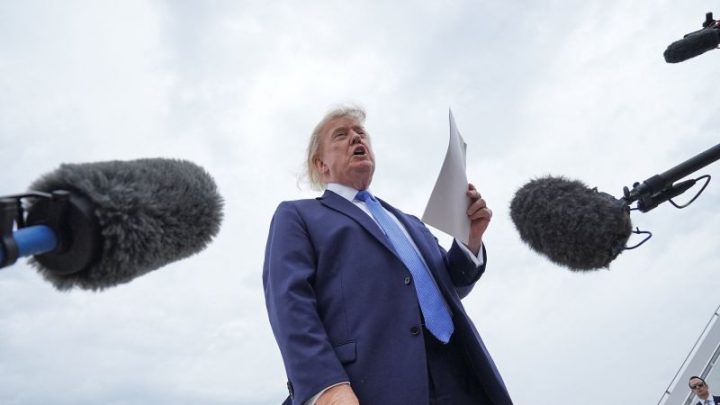
President Donald Trump has taken a sharply different position. In recent social media posts, he has dismissed warnings about AI safety as a “HOAX” tied to what he calls a “SICK conspiracy,” while stressing the importance of maintaining America’s competitive edge.
On Monday, Trump argued that existing criminal and regulatory authorities are sufficient and said a capable president is the principal safeguard needed for the industry.
The only control or “guardrails” that AI needs is a STRONG AND SMART (High IQ!) PRESIDENT, and the U.S.A. has that, in spades!
Trump also contended that opposition to AI and data centers benefits China, presenting the debate largely through the lens of economic and geopolitical competition. His view contrasts with calls from some technology executives, researchers, and Democratic political figures for new rules designed specifically for advanced AI systems.
AI emerges as a 2028 political issue
The debate is increasingly shaping early discussion around the 2028 presidential race. Harris is widely viewed as a possible contender after her unsuccessful 2024 presidential bid. Former President Barack Obama recently encouraged Democrats, including potential 2028 candidates, to make AI a central policy priority.
Speaking at a private fundraiser with House Minority Leader Hakeem Jeffries, Obama warned that the technology is advancing rapidly in private hands and could become dangerous without a stronger public response.
This is something that is moving very fast in private hands, and if we don’t get on top of it, I think can be dangerous.
Former Transportation Secretary Pete Buttigieg, another Democrat mentioned in conversations about 2028, has also urged immediate action. During an appearance on NBC’s “Meet the Press” on Sunday, he said Congress and the White House should confront the issue directly rather than allow development to proceed without meaningful boundaries.
AI is moving quickly. And for Congress to just sit on its hands, for the White House to do nothing real is something that is deeply dangerous to the American people and the world.
Buttigieg called for safeguards, rules, limits, and a “kill switch on rogue AI,” suggesting that regulatory frameworks could be revised regularly as the technology changes. His comments reflect a growing concern that static laws may struggle to address systems that can evolve much faster than traditional policymaking.
Industry voices add momentum
Pressure for a more cautious approach has also come from inside the AI sector. Over the weekend, Anthropic chief executive Dario Amodei published a lengthy essay supporting a slowdown in artificial intelligence development. In an interview on Saturday, he urged industry leaders to cooperate in avoiding “the wrong paths” and reducing the possibility that AI could harm humanity.
The emerging split is not simply over whether AI should be developed, but over who should set the pace and rules. Harris and other advocates of greater oversight argue that the public should have a stronger role in decisions with broad social consequences. The opposing argument holds that aggressive development is necessary to protect the country’s position against global rivals.
As the political debate intensifies, the central question is becoming clearer: whether policymakers can build effective guardrails quickly enough to match the accelerating reach of artificial intelligence.
Related Reading
Frequently Asked Questions
What is Kamala Harris joins calls for slowdown?
Kamala Harris joins calls for slowdown is the main topic of this guide. The article explains the context, practical details, and next steps readers should understand.
Why does Kamala Harris joins calls for slowdown matter?
Kamala Harris joins calls for slowdown matters because readers are looking for a useful answer, not just a short summary. Good content should match search intent and help them decide what to do next.