
How Trump made more than $1 billion on crypto when most of his coin’s investors lost money
Trump’s Crypto Windfall: A Tale of Gains and Investor Losses
How Trump made more than 1 billion – In the lead-up to his second term, President Donald Trump leveraged the burgeoning cryptocurrency market to launch a memecoin named $TRUMP, which quickly became a symbol of both his influence and the volatile nature of digital assets. While the coin’s value plummeted from its peak, Trump’s personal finances soared, highlighting a stark contrast between his financial success and the struggles of most investors. This story unfolds as a blend of opportunity, speculation, and the unique mechanics of the crypto space, where fortunes can shift in moments.
The Memecoin Boom and Its Unraveling
The $TRUMP memecoin was introduced in the days before Trump’s 2025 inauguration, tapping into the broader crypto enthusiasm of the time. At its height, the coin surged to a market cap of $15 billion, according to CoinMarketCap, before experiencing a dramatic decline. By the end of the year, its value had fallen to just $400 million—a staggering 97% drop. This sharp reversal left many early adopters with significant losses, yet Trump’s financial gains from the venture far outpaced those setbacks.
For Trump, the memecoin was not just a financial tool but a strategic move to consolidate his economic power. While the market value of the coin mattered little to him, the transaction fees and licensing income generated from its trading became a steady stream of revenue. His companies, including the Trump Organization, played a central role in structuring the coin, ensuring that he retained control over its profits.
How Trump’s Wealth Grew Amid Market Volatility
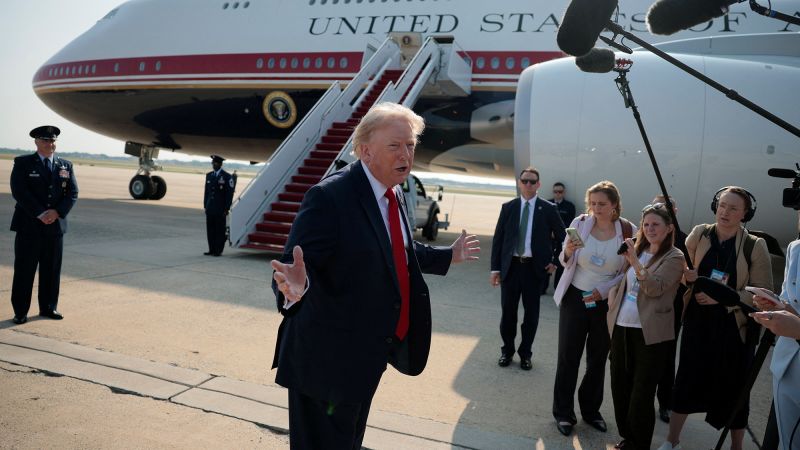
Despite the coin’s steep decline, Trump’s net worth increased by over $1 billion in 2025, driven largely by crypto-related gains. He attributed this surge to the broader stock market’s performance, stating,
“You know why I’m profiting, because the stock market’s going up. Everybody’s profiting.”
This claim, made during a press event at Joint Base Andrews before a trip to North Dakota, underscores his public narrative of shared prosperity. However, the reality is that crypto, not stocks, accounted for the majority of his wealth growth.
The S&P 500, for instance, delivered a 17.9% return in 2025, a figure that benefited widespread investors. Yet Trump’s gains were concentrated in the crypto sector, where his companies’ involvement created an edge. By managing tokens through affiliated entities like CIC Digital and Fight Fight Fight LLC, Trump ensured his family controlled 80% of the coin’s supply. This arrangement allowed him to profit from every transaction, whether buyers or sellers were involved.
The Business Model Behind the Coin
The $TRUMP memecoin was designed to maximize revenue through a combination of ownership control and speculative trading. Unlike traditional cryptocurrencies, which often derive value from utility or technology, memecoins like $TRUMP are primarily driven by community hype and cultural resonance. This makes them highly volatile, prone to rapid surges followed by sharp declines. A common tactic in this space is the “rug-pull,” where creators sell off their holdings after inflating the coin’s value.
To mitigate such risks, the $TRUMP and $MELANIA coins were engineered with a staggered release strategy. Rather than allowing creators to cash out immediately, the plan ensured that Trump and his associates could unlock their profits gradually over three years. This approach aimed to stabilize the coin’s value and reduce the chance of a sudden collapse. However, it didn’t prevent the market from tanking, leaving investors with little to show for their early investments.
Why Investors Bought In
The decision to invest in $TRUMP was influenced by a mix of factors. Many supporters saw it as a way to align with the president’s vision, while others were drawn by the novelty of the concept. The coin’s connection to Trump’s brand added a layer of social influence, making it an attractive option for those who believed in his economic policies. Additionally, the promise of exclusivity—such as the chance to attend a black-tie dinner hosted by Trump—drew in high-profile investors.
In May 2025, Trump rewarded the top 220 holders of $TRUMP with a private dinner, an event that underscored the coin’s status as a status symbol. Attendees, who had invested millions, were given a glimpse into the president’s inner circle, creating a unique incentive beyond financial gain. While this gesture may have solidified loyalty, it also highlighted the speculative nature of the investment.
The Ripple Effect of Trump’s Crypto Empire
Beyond $TRUMP, Trump’s crypto empire extended to other tokens managed by World Liberty Financial LLC, a firm co-led by his sons, Eric and Donald Trump Jr. These ventures collectively generated more than $526 million in revenue, further cementing the family’s financial foothold in the digital asset market. The success of these projects was not solely dependent on their intrinsic value but on the public’s appetite for association with Trump’s name.
Critics argue that the memecoin’s appeal was more about celebrity than substance. However, the mechanism of speculation—where investors buy into a coin’s potential for rapid appreciation—played a key role. Even as the market crashed, Trump’s companies continued to collect fees, ensuring that the president remained a key beneficiary. This model has sparked debates about whether the coin was a genuine investment or a vehicle for extracting value from eager supporters.
A Dual Narrative of Profit and Loss
For most investors, the story of $TRUMP is one of disappointment. The coin’s dramatic price drop has left many with losses, raising questions about the risks of backing a political figure in the crypto market. Yet, for Trump, the outcome was a resounding win. His ability to profit from the coin’s performance, regardless of its final valuation, demonstrates the power of leveraging influence in financial markets.
The contrast between Trump’s gains and his investors’ losses is a testament to the memecoin’s dual role as both a tool for wealth creation and a vehicle for political capital. While the coin’s market trajectory reflects the speculative nature of the space, its success in generating income for Trump’s family underscores the broader implications of blending politics with finance. As the crypto landscape continues to evolve, the $TRUMP case serves as a cautionary tale and a case study in the intersection of celebrity, technology, and market dynamics.
