
Ocasio-Cortez endorses Abdul El-Sayed in Michigan Senate race
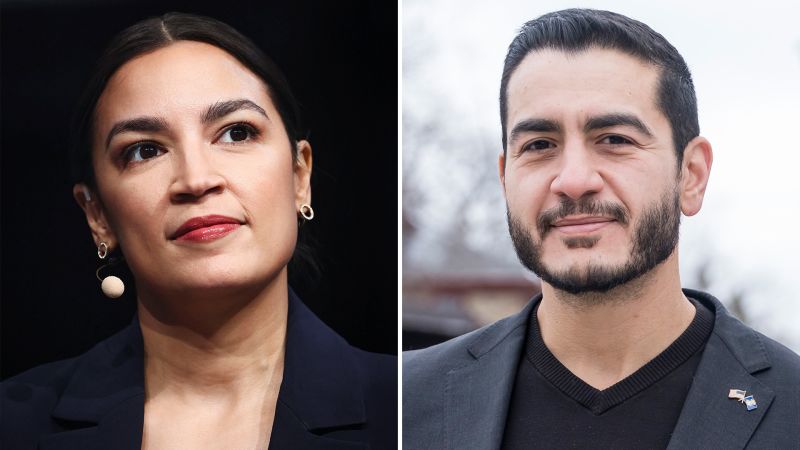
Ocasio-Cortez Backs Abdul El-Sayed in Michigan Senate Race
Ocasio Cortez endorses Abdul El Sayed – Democratic Congresswoman Alexandria Ocasio-Cortez has thrown her support behind Abdul El-Sayed in the pivotal Michigan Senate primary, marking a significant endorsement in a race that could shape the party’s strategy for the 2026 midterms. El-Sayed, a progressive candidate challenging the current senator, is seen by Ocasio-Cortez as the best choice to retain the seat in November. Her endorsement comes as the Democratic Party grapples with balancing its left-wing base and the need to appeal to broader voter demographics in a swing state that Donald Trump carried in 2024.
A Key Shift in Political Strategy
El-Sayed’s campaign has drawn scrutiny from party leaders for its radical stance on key issues, yet Ocasio-Cortez has defended his position, stating that his efforts to mobilize working-class voters have proven his viability. “He is building a winning coalition by putting forward an agenda that speaks directly to working people,” she said in a statement, emphasizing El-Sayed’s ability to connect with the grassroots. This endorsement is notable, as Ocasio-Cortez has been cautious in her support this cycle, contrasting with Sen. Bernie Sanders, who has openly championed several progressive candidates.
“After watching this campaign unfold for well over a year, it has become clear that Abdul El-Sayed is the strongest candidate to keep this seat in November,” Ocasio-Cortez said. “He is building a winning coalition by putting forward an agenda that speaks directly to working people.”
Ocasio-Cortez, who has sparked discussions about her potential presidential bid in 2028, has chosen her endorsements carefully this primary season. Her decision to back El-Sayed highlights a strategic pivot toward candidates who align with her progressive vision, even as she distances herself from some of her peers. For example, she recently refrained from endorsing her former chief of staff, Saikat Chakrabarti, after his unsuccessful campaign for a House seat in California. Similarly, she did not rally behind the two democratic socialists backed by Zohran Mamdani, who won in New York last week.
The Michigan Senate primary, scheduled for August 4, has become a focal point for Democrats aiming to regain control of Congress. The race features a diverse field, with El-Sayed representing the left wing, centrist Rep. Haley Stevens, and liberal state senator Mallory McMorrow. Stevens, backed by establishment Democrats, is considered a safer bet by some party figures, while El-Sayed’s passionate rhetoric has galvanized younger voters and activists.
El-Sayed’s Bold Stance on Israel
Support for Israel has emerged as a critical issue in the Michigan race, with candidates taking sharply different positions. El-Sayed has been vocal in his criticism, labeling Israeli Prime Minister Benjamin Netanyahu a “war criminal” and calling the military campaign in Gaza after Hamas’ October 7 attacks a “genocide.” His views align with those of Mallory McMorrow, who previously described the conflict as a “genocide” during a campaign event. Both candidates have expressed skepticism toward the American Israel Public Affairs Committee (AIPAC), signaling a potential realignment within the Democratic Party.
“Congresswoman Ocasio-Cortez has changed the trajectory of American politics and inspired a generation to believe that government really can work for working people,” El-Sayed said. “She has spent her career taking on the powerful on behalf of everyday people, and she has shown all of us what courageous, smart, values-driven leadership looks like.”
El-Sayed’s strong stance on Israel contrasts with Rep. Haley Stevens, who has received endorsements from AIPAC and maintains a more moderate position. Stevens has stated that she disagrees with characterizing Israel’s actions as genocide, framing the conflict as a necessary response to terrorism. This divergence in messaging reflects the broader ideological split within the Democratic Party, where progressive candidates push for bold policies while others seek to appeal to centrist voters.
Progressive Momentum and Establishment Concerns
The Michigan race is part of a larger trend of progressive candidates gaining traction across the country. In recent weeks, El-Sayed’s victory in New York, where he defeated an incumbent, has emboldened Democrats who advocate for more radical reforms. His endorsement by Maryland Sen. Chris Van Hollen further underscores this momentum, adding credibility to his campaign in a state with a historically diverse electorate.
However, some establishment Democrats remain cautious. Senate Minority Leader Chuck Schumer has argued that Stevens holds the “best chance” to win in Michigan, noting that her alignment with centrist donors and organizations like AIPAC could give her an edge. “We need to reelect every single front line member, common sense Democrats authentically committed to making life better for the American people,” Schumer said, while warning that El-Sayed’s progressive message might alienate moderate voters.
Despite these concerns, El-Sayed’s growing influence within the party suggests that his approach is resonating with key constituencies. His campaign has drawn support from progressive activists, union leaders, and young voters, many of whom are disillusioned with the current administration’s policies. “He is not just a candidate—he is a symbol of the change we need,” said a supporter at a recent rally, highlighting the grassroots energy behind his bid.
A Broader Battle for Democratic Unity
The Michigan Senate primary is emblematic of the internal tensions within the Democratic Party as it seeks to unify its base ahead of the November elections. While progressive candidates like El-Sayed and McMorrow have captured attention with their bold platforms, others, such as Stevens, are trying to bridge the gap between left and right factions. This dynamic is particularly important in a state with significant Arab American and Jewish communities, where voter turnout could determine the outcome.
El-Sayed’s campaign has focused on issues like healthcare, education, and climate change, framing them as urgent priorities for working families. His call to hold Netanyahu accountable has also tapped into the growing sentiment among voters in Detroit and surrounding areas, where Arab American communities have historically been influential. Meanwhile, Stevens has emphasized economic stability and pragmatic governance, positioning herself as a candidate who can win over a wider range of voters.
As the primary approaches, the race has become a test case for how Democrats can balance progressive ideals with the need to attract independent and moderate voters. The stakes are high, not only for Michigan but also for the party’s ability to secure a majority in the Senate. If El-Sayed wins, it could signal a shift toward more left-leaning leadership, while a Stevens victory might reinforce the party’s traditional strategy.
Ocasio-Cortez’s endorsement adds weight to El-Sayed’s campaign, leveraging her growing national profile to bolster his appeal. Her decision to support him also reflects a broader movement within the party to prioritize candidates who challenge the status quo. “She has shown all of us what courageous, smart, values-driven leadership looks like,” El-Sayed said, underscoring the significance of her backing in a race that could redefine the Democratic Party’s approach to governance.
The 9 Senate seats most likely to flip in 2026 are now under intense scrutiny, with Michigan’s race serving as a bellwether for national trends. As the party navigates this complex landscape, the choices made in primaries like this one will shape the trajectory of the midterm elections. With the primary just weeks away, the question remains: will El-Sayed’s progressive vision resonate with enough voters to secure the nomination, or will Stevens’ centrist strategy prevail?
