
Breakaway Catholic group excommunicated after defying warnings from Pope Leo
Breakaway Catholic Group Excommunicated After Defying Papal Warnings
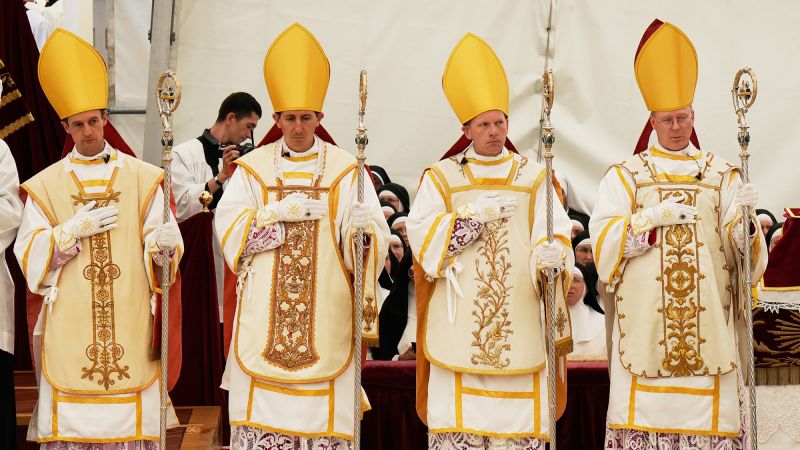
Breakaway Catholic group excommunicated after defying – The Vatican made a significant move on Thursday, declaring that priests and members of a schismatic Catholic group have been excommunicated for their refusal to comply with Pope Leo XIV’s directives. The decision followed the group’s ordination of four new bishops on Wednesday, an act that was carried out without papal approval and in defiance of the Pope’s repeated appeals to reverse the action. This move has sparked renewed tensions within the Catholic Church, marking a decisive step in the Vatican’s effort to reassert authority over the ultra-traditionalist faction.
Pope’s Directive and the SSPX’s Defiance
The Society of Saint Pius X (SSPX), a breakaway group rooted in traditionalist beliefs, chose to proceed with the ordinations despite clear warnings from Pope Leo XIV. The Pope emphasized that the group’s decision would disrupt the unity of the Church and carry severe consequences. The Vatican’s doctrinal office issued a formal decree on Thursday, stating that the four newly ordained bishops, along with the two who participated in the ceremony, are now excommunicated. Excommunication, a formal exclusion from the sacraments, was highlighted as a key punishment in the decree, with additional warnings directed at priests and lay members who formally align with the SSPX.
The decree underscores that any clergy or layperson who joins the group will automatically face excommunication, a stark reminder of the Vatican’s resolve to maintain doctrinal conformity. The action follows a pattern of conflict, as the SSPX has long resisted papal authority, particularly over reforms introduced in the 1960s. Cardinal Pietro Parolin, the Vatican’s secretary of state, expressed disappointment on Wednesday, calling the ordinations a “schismatic act” that undermines the Church’s unity and incurs “extreme gravity” as a sin.
Steps Toward Reconciliation
As part of the Vatican’s broader strategy to address the schism, the doctrinal office outlined specific measures for priests to be reinstated. These include writing a personal appeal to the Pope, signing a profession of faith, and committing to not publicly criticize the pontiff or his teachings. According to Vatican News, the process also involves adhering to additional conditions, such as reconciling with the Church’s current practices. While these steps offer a path to reconciliation, they emphasize the Vatican’s determination to enforce unity through disciplinary action.
The latest excommunication is more extensive than the 1988 sanctions, which were limited to the bishops involved in the earlier ordinations. In contrast, the current ruling extends to all members of the SSPX, including lay adherents. This marks a shift in the Vatican’s approach, as it now targets the group’s entire structure rather than focusing solely on its leadership. The decree also invalidates any sacraments, such as marriage or confession, conducted by the SSPX, further isolating the group from mainstream Catholic practices.
Historical Roots of the Schism
The SSPX traces its origins to 1970, when it was founded in Switzerland by Archbishop Marcel Lefebvre, a French prelate known for his staunch opposition to modernist changes in the Church. Lefebvre’s followers were drawn to the group’s commitment to traditional Catholic teachings, which they believed were being eroded by reforms introduced during the Second Vatican Council. The council, held in the 1960s, ushered in a period of modernization, including the use of vernacular languages in Mass and expanded views on religious freedom and ecumenism. These changes became a point of contention for the SSPX, who argue that they dilute the Church’s spiritual essence.
The group’s schism was formalized in 1988 when it ordained four bishops without papal consent, leading to their excommunication. This event set a precedent for the Vatican’s handling of dissent, but the current decree represents a more comprehensive effort. Pope Leo XIV has made church unity a central focus of his papacy, with a particular emphasis on the relationship between the Pope and bishops. In June, the Pope reiterated his stance to journalists, stating that the SSPX’s refusal to accept certain core teachings—such as the council’s approach to ecumenism and worship reforms—would necessitate disciplinary measures.
Impact on Church Practices and Identity
The Vatican’s latest ruling carries profound implications for the SSPX’s operations and its members’ status within the Church. By invalidating sacraments like marriage and confession, the decree challenges the group’s legitimacy as a functioning ecclesiastical body. However, the Vatican acknowledges the group’s role in nurturing traditionalist communities, noting that it will “welcome with sincere affection and active care all those who wish to return to full communion.” This dual approach reflects both the authority of the Pope and the Church’s desire to reconcile with those who have strayed.
The SSPX’s defiance is deeply tied to its interpretation of the Second Vatican Council’s reforms. Its members reject the council’s teachings on religious freedom, which they see as opening the door to Protestant and non-Christian influences. They also oppose the use of languages other than Latin in Mass, viewing this as a departure from sacred tradition. Lefebvre’s followers believe these changes have weakened the Church’s spiritual foundation, leading them to establish an alternative structure that prioritizes pre-Vatican II practices.
The excommunication of the four new bishops is a culmination of decades of tension between the SSPX and the Vatican. Despite the Pope’s efforts to engage with the group, the SSPX has remained steadfast in its position, arguing that the Church’s modernization has compromised its doctrinal integrity. The recent ordinations, which took place in defiance of the Pope’s warnings, have been described as a “sin of extreme gravity,” underscoring the seriousness of the schism.
Presence and Influence in the United States
The SSPX maintains a notable presence in the United States, with a headquarters in Missouri and a seminary for training priests in Dillwyn, Virginia. One of the newly ordained bishops on Wednesday, Father Michael Goldade, leads this seminary, highlighting the group’s active role in shaping traditionalist Catholic education in the country. Goldade, in a statement following the ordinations, criticized the “modernist church,” calling it a “desert that kills everything that it touches.” His words reflect the group’s belief that the Vatican’s reforms have led to a spiritual decline, reinforcing their commitment to preserving Catholic tradition.
While the Vatican’s decree has intensified the pressure on the SSPX, it also signals a strategic effort to reinforce the Church’s unity. The excommunication of the group’s leaders and members is not merely a punitive measure but a means to reassert the Pope’s authority and clarify the boundaries of acceptable Catholic practice. As the Church continues to navigate this conflict, the SSPX remains a symbol of resistance to modernization, challenging the Vatican’s vision of a unified and evolving faith.
