Friedrich Merz Fast Facts

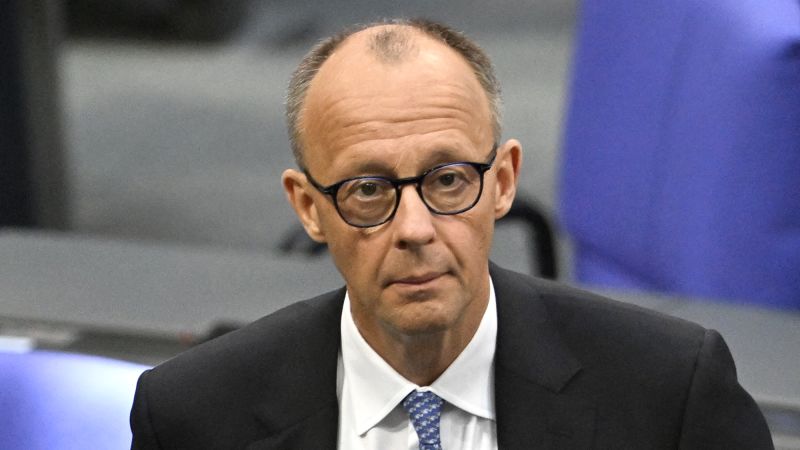
Friedrich Merz Fast Facts: Germany’s Chancellor
Activelifezero.com – These Friedrich Merz Fast Facts outline the career of Germany’s chancellor, a longtime Christian Democratic Union leader whose path to the country’s highest political office included electoral defeats, years away from parliament and a later return to national politics. Merz became chancellor in May 2025 after the CDU/CSU won the federal election and reached a coalition agreement with the Social Democrats.
Early life, family and legal career
Joachim-Friedrich Martin Josef Merz was born on November 11, 1955, in Brilon, Germany. His father, Joachim Merz, was a judge, and his mother was Paula Sauvigny. A Catholic, Merz completed military service from 1975 to 1976.
He married Charlotte Gass in 1981, and they have three children. Merz studied law at the University of Bonn and the University of Marburg, graduating in 1985. He worked as a judge at the Saarbrücken District Court from 1985 to 1986 before joining the German Chemical Industry Association as a lawyer, a position he held until 1989.
Outside his legal and political work, Merz is an amateur pilot, an interest that has remained part of his public profile.
CDU rise and return to parliament
Merz joined the CDU in 1972 and began his elected career in 1989, when he won a seat in the European Parliament. He entered Germany’s federal parliament, the Bundestag, in 1994.
His political ascent was interrupted in 2000, when Angela Merkel defeated him in a contest for leadership within the CDU. Merz left the Bundestag in 2009 and spent several years working in the private sector and in law before returning to parliament in 2021.
After unsuccessful bids for the CDU leadership in 2018 and 2021, he was elected party leader in January 2022. The role placed him in charge of rebuilding the center-right party after the Merkel era and preparing it for the next federal election.
Economic and migration positions
Friedrich Merz Fast Facts also include his emphasis on tougher migration policy and economic reform. He has argued that asylum seekers arriving from other European Union countries should be turned back at Germany’s land borders. He has also criticized liberal welfare policies and supported reducing welfare spending.
Before the February 2025 election, Merz described his objective as ending the practice of:
“paying people who are not willing to work.”
His calls for a simpler tax system date back years. In 2003, he said German tax rules should be easy enough to calculate on the back of a beer coaster, a remark that became closely associated with his preference for less complicated taxation.
Election victory and chancellorship
On February 23, 2025, the CDU and its sister party won Germany’s federal election, positioning Merz to seek the chancellorship. Coalition negotiations followed because Germany’s parliamentary system often requires parties to govern together.
Merz announced a coalition agreement with the Social Democrats, or SPD, on April 9, 2025. The deal united the conservative bloc with a center-left partner despite their differing policy priorities.
He was approved as chancellor on May 6, 2025. The parliamentary process was unusually difficult: Merz initially fell six votes short of the required support, but later won approval and became head of government.
FAQ
When did Friedrich Merz become Germany’s chancellor?
Merz became chancellor on May 6, 2025, after winning parliamentary approval following the CDU/CSU election victory and coalition agreement with the SPD.
Which party does Friedrich Merz lead?
He leads the Christian Democratic Union, commonly known as the CDU, one of Germany’s major center-right political parties.
What did Friedrich Merz do before becoming chancellor?
Before returning to frontline politics, he worked as a lawyer and held private-sector roles. Earlier in his career, he served in the European Parliament and the Bundestag.