Frustration grows as Houthis widen Middle East conflict with US unwilling to intervene

Daftar Isi
Houthi Advances Raise Pressure on Saudi Arabia as US Holds Back
Activelifezero.com – Frustration grows as Houthis widen their campaign in Yemen and along the Red Sea, intensifying concerns over Saudi Arabia’s security, commercial shipping and an already volatile Middle East. Recent advances on Yemen’s Red Sea coast have raised fears that another vital maritime corridor could face disruption during the US war with Iran and a global energy crisis.
The Iran-backed Houthis have seized a strategically important island in the Red Sea and captured key coastal towns. Their moves have prompted concern that they could seek greater control near the Bab al Mandeb Strait, the narrow waterway connecting the Red Sea and Gulf of Aden. The passage is essential for vessels traveling between Europe, Asia and the Middle East.
US Looks to Saudi Arabia to Lead
Despite the growing pressure, neither the United States nor Saudi Arabia has announced a clear plan to reverse Houthi gains. US officials recognize the group’s interest in the Bab al Mandeb Strait, but the Trump administration has signaled that it does not want American forces to carry out direct offensive attacks against the Houthis.
Instead, Washington has increased intelligence sharing and targeting assistance for Saudi Arabia. The approach puts greater responsibility on Riyadh and Saudi-backed Yemeni forces, even as doubts persist about whether those forces can halt the Houthi campaign without direct US military action.
Frustration grows as Houthis widen their reach because Saudi-backed government forces have fought the group for more than a decade in Yemen’s devastating civil war. Iran’s Islamic Revolutionary Guard Corps has supported and trained the Houthis. A United Nations-brokered truce in 2022 temporarily reduced violence, but recent clashes have returned with greater intensity.
Longstanding Limits of Saudi-Backed Forces
Saudi officials had expressed confidence in Yemeni government forces after years of military training, while Washington has argued that Riyadh has the intelligence and support it needs. Yet Houthi advances have exposed familiar weaknesses in the Saudi-backed campaign.
Former diplomats and people familiar with the region had warned that the Houthis could attempt to disrupt another major shipping route. American intelligence assessments had reportedly indicated for months that the group might pursue such a strategy after Iran’s actions earlier this year.
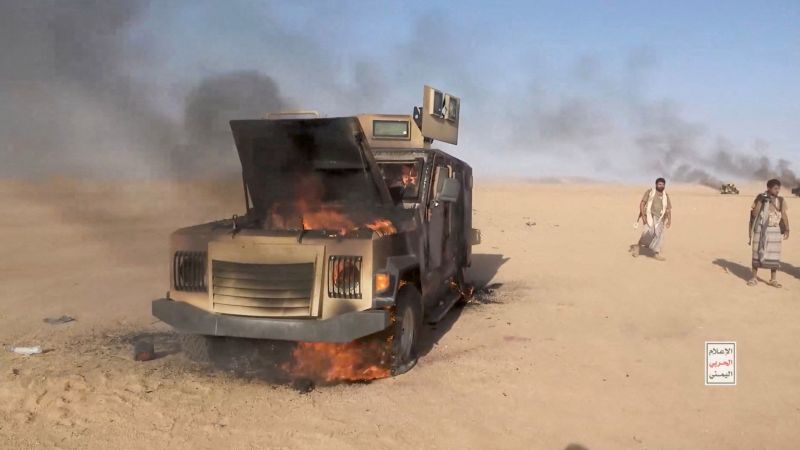
The concern is not limited to maritime trade. Frustration grows as Houthis widen the conflict toward Saudi territory, placing population centers and energy infrastructure under greater pressure. Saudi authorities accused the group of attempting to strike Mecca, while the Houthis said they had shot down a Saudi F-15 fighter jet.
Missiles, Drones and Threats to Riyadh
Alerts sounded across Riyadh over the past day, marking the first direct threat to the Saudi capital since the latest escalation began in July. The Houthis said they launched missiles and drones toward what they described as “sensitive” sites in Riyadh and an Aramco facility in Yanbu on Saturday.
Video showed a large plume of black smoke near Riyadh’s main airport, though the cause of the fire was unclear. Later Saturday, Saudi Arabia’s military said air defenses destroyed a Houthi ballistic missile launched toward Riyadh at dawn and stopped other attempted strikes elsewhere in the kingdom.
For Saudi Arabia, the attacks demonstrate that the conflict has expanded beyond Yemen’s battlefield and shipping lanes. The campaign now represents a direct threat to the kingdom’s security and to facilities linked to its energy industry.
Trump Rules Out Offensive US Strikes
President Donald Trump has drawn a clear boundary around American involvement. US forces will not take part in offensive kinetic action against the Houthis, according to a US official. Their role has remained focused on providing intelligence and targeting data to support Saudi operations.
“No offensive strikes,” a US official said.
The policy has concerned some Gulf and American officials, who believe Washington’s reluctance to use military force could encourage Iran to test US resolve toward its regional partners. Trump has described the situation differently, suggesting the Houthis do not want a direct confrontation with the United States and are allowing most maritime traffic to continue.
Frequently Asked Questions
Why does the Bab al Mandeb Strait matter?
The Bab al Mandeb Strait is a crucial shipping passage between the Red Sea and the Gulf of Aden. Disruption there can affect commercial shipping routes linking Europe, Asia and the Middle East, potentially adding pressure to global trade and energy markets.
What support is the United States providing Saudi Arabia?
The United States has expanded intelligence sharing and targeting assistance for Saudi Arabia. However, the Trump administration has said US forces will not conduct offensive strikes against the Houthis.
Why is Saudi Arabia especially concerned?
Saudi Arabia faces threats both from Houthi advances near key shipping routes and from missile and drone attacks directed toward its territory, including Riyadh and energy-related infrastructure.