Trump vows to create ‘AI Force’ and appoint czar amid calls to regulate technology’s development

Trump Vows to Create AI Force and Appoint AI Czar
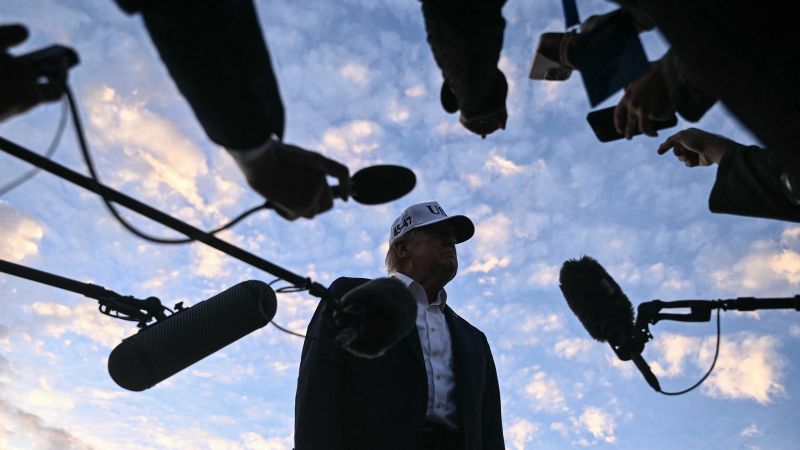
Activelifezero.com – Trump vows to create AI Force as part of a new federal approach to artificial intelligence, saying he also plans to appoint an AI czar. The president outlined the proposal in a Truth Social post, emphasizing US leadership in a fast-growing industry and competition with China.
Trump said he does not want the federal government to slow the development of artificial intelligence. Instead, he argued that existing criminal and civil justice tools can be used to address harmful or unlawful applications of the technology.
“We will not in any way hinder or stifle the Growth of this incredible Industry,” Trump wrote. “We are leading China, and the rest of the World, and I intend to keep it that way!”
What Trump’s Proposed AI Force Could Do
Details of the proposed AI Force have not been announced. It remains unclear whether it would be a military organization, a civilian initiative, an advisory group or an interagency effort coordinating AI policy across the federal government.
Trump compared the proposal to Space Force, the military branch created during his first term. Space Force was the first new branch of the US armed forces since the Air Force was established in 1947, but there is no indication that an AI Force would receive a similar structure or role.
The future AI czar’s responsibilities and possible candidates have also not been identified. Trump said the position would be announced in the near future and framed it as a role for highly qualified people.
“For this purpose, I am forming the AI Force, much like I did Space Force, which has been a tremendous SUCCESS, in my First Term,” Trump wrote. “To that end, I will be announcing, in the near future, the AI ‘Czar.’”
AI Growth, Infrastructure and Public Concerns
Trump vows to create AI Force while backing continued investment in the technology, which has become a major source of market optimism and business spending. Data-center expansion has supported manufacturing and construction activity, while also increasing demand for computing capacity and electricity.
Those developments have raised practical concerns for US communities. Residents and local officials are weighing the effects of data-center construction, energy use and infrastructure demands, while workers are watching how automation could reshape jobs across industries.
AI policy also reaches beyond technology companies. Decisions made by federal agencies can affect national security, consumer protection, education, labor, energy demand and the ability of US businesses to compete globally.
Pressure for AI Regulation Continues
Trump’s approach contrasts with growing calls for stronger safeguards and a possible slowdown in AI development. Democratic officials and some industry leaders have argued that government oversight is necessary as the technology advances rapidly.
Former President Barack Obama urged potential Democratic presidential candidates to make artificial intelligence a central part of their 2028 agendas. Speaking at Colgate University, Obama said voluntary restraint by companies could be helpful but should not replace public regulation.
“Government has to be regulating this,” Obama said.
Whether Trump’s proposed AI Force becomes a formal agency, advisory structure or broader policy effort will determine how much influence it has over the federal government’s approach to artificial intelligence.
FAQ: What Does This Mean for Americans?
What is the AI Force? Trump has proposed an AI Force, but its structure, authority and membership have not yet been defined. It could take several forms, including a civilian, military or interagency initiative.
Who will be the AI czar? No candidate has been announced. The role’s duties, powers and reporting structure also remain unclear.
Will the proposal regulate AI? Trump has said he supports addressing bad or illegal AI activity through existing criminal and civil justice systems, while opposing measures that he believes would hinder industry growth.
How could the plan affect local communities? Continued AI expansion may increase data-center development, electricity demand and infrastructure planning needs, while also intensifying debate over jobs, automation and consumer protections.