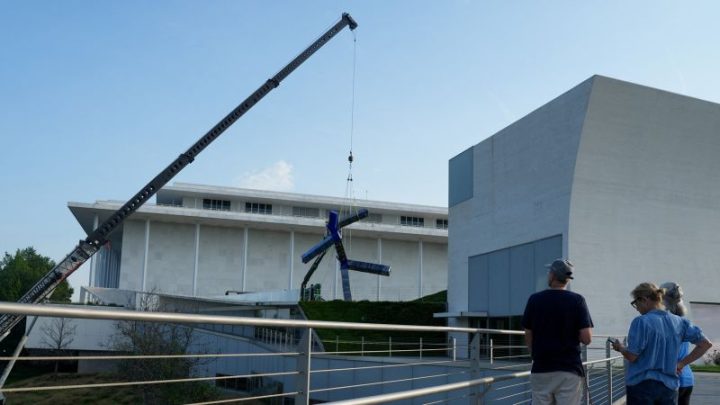
Judge rules FBI can’t abandon Biden-era plan to relocate headquarters to Maryland

Daftar Isi
Federal Court Halts FBI Headquarters Relocation to Reagan Building, Reviving Greenbelt Plan
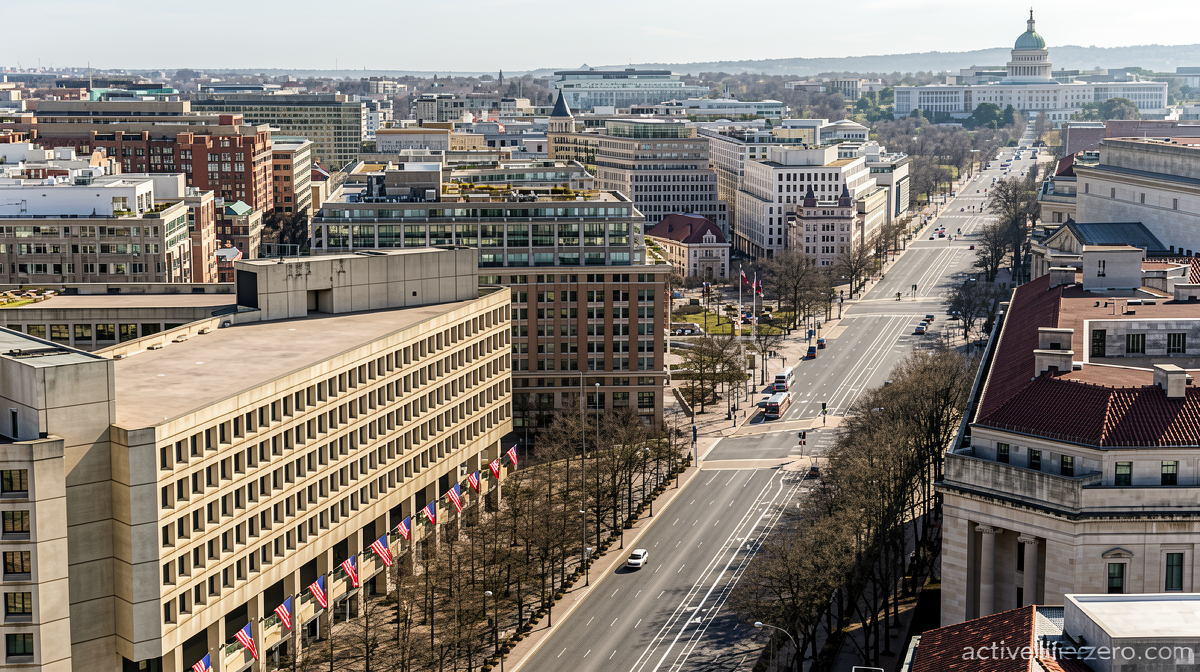
Activelifezero.com – A ruling handed down Monday by a federal judge in Washington, D.C., has thrown a major wrench into the Trump administration’s effort to redirect the FBI’s headquarters relocation away from suburban Maryland and into the Ronald Reagan Building in the nation’s capital. The decision effectively preserves a site selection made under the Biden administration in 2023, sending the agency’s future home back to Greenbelt, Maryland, in Prince George’s County.
The case pits the executive branch’s desire to consolidate federal agencies in downtown Washington against a long-running commitment — stretching back nearly fifteen years — to build a purpose-designed campus for the FBI outside the capital. At stake is not merely a building swap but hundreds of millions of dollars in congressional appropriations, the economic trajectory of an entire Maryland county, and the question of how far an administration can go in repurposing funds Congress allocated for a specific project.
The Legal Ruling
Judge Theodore Chuang, appointed to the bench by former President Barack Obama, concluded that the FBI and the General Services Administration exceeded their statutory authority when they announced in July 2025 that the agency’s headquarters would move from the aging J. Edgar Hoover Building to the Reagan Building just blocks away. Chuang sided with Prince George’s County and the state of Maryland, which filed suit in November after learning of the pivot.
In his opinion, Chuang found that the agencies’ decision to redirect $555 million — including $323 million that Congress had specifically appropriated for the Greenbelt construction project — toward the Reagan Building relocation was “arbitrary and capricious” and not in accordance with law. The judge emphasized that Congress attached conditions to those funds, and that the agencies lacked the power to unilaterally redirect them to a different site without legislative approval.
Economic and Practical Considerations
Chuang devoted a portion of his ruling to the downstream consequences for Prince George’s County, which had invested planning resources and community expectations in the Greenbelt project over more than a decade. He noted that if the Reagan Building plan proceeded, local residents and businesses would forfeit the substantial economic benefits anticipated from the new campus.
“If the Reagan Building project moves forward, Plaintiffs will lose the opportunity to have the substantial economic benefits that would have a positive impact not just on individual private parties, but on the community in Prince George’s County.”
The judge also observed that the agencies were still in early stages of any physical transition to the Reagan Building, meaning an injunction would impose limited immediate disruption on their operations.
Political Reactions on Both Sides
The ruling landed in the middle of a heated political fight that began almost immediately after Donald Trump took office. Shortly after his inauguration, the president publicly pledged to prevent the FBI headquarters from relocating to what he called “a liberal state.” Speaking at the Department of Justice in March 2025, he declared:
“We’re going to stop it. Not going to let that happen.”
Through 2025, the administration argued that the Greenbelt project “would have cost the taxpayers billions of dollars and taken years to construct.” FBI Director Kash Patel framed the Reagan Building option as a pragmatic alternative, stating that moving the headquarters there “is the most cost effective and resource efficient way to carry out our mission to protect the American people and uphold the Constitution.”
Agency Pushback
Both agencies responded to the ruling with pointed criticism. A GSA spokesperson told reporters the judge was making a “political decision designed to undermine” the president, and insisted the agency “will not pursue an inferior approach in cost, speed, and value” while it works to “ensure its agency partners, including the FBI, have workspaces to best accomplish their missions on behalf of the American people.”
An FBI spokesperson was blunter: “The court has chosen to impermissibly intervene for political reasons.” The Justice Department had been contacted for comment but had not responded as of publication.
Maryland’s Celebration
In Annapolis, Democratic Governor Wes Moore framed the decision as a vindication of years of state-level advocacy. In a Monday statement he wrote:
“President Trump tried to take from Maryland what Maryland had already won. He failed.”
Moore urged officials to move quickly: “Now it is time to stop the games and get to work building the world-class FBI headquarters that our public servants deserve, where it belongs: in Prince George’s County, Maryland.”
Background: Fifteen Years in the Making
The Greenbelt selection was not a sudden policy choice. Chuang noted in his ruling that the process had been underway for nearly fifteen years before the Biden-era GSA finalized the site in 2023. The Hoover Building, completed in 1934 and long considered a landmark of federal architecture, has suffered decades of deferred maintenance. Its structural and systems deficiencies made a full-scale renovation prohibitively expensive, pushing the question of relocation to the forefront of agency planning.
The Ronald Reagan Building, by contrast, is a large, modern structure in downtown Washington that previously housed the United States Agency for International Development — now defunct — and currently accommodates other federal tenants, including U.S. Customs and Border Protection. The administration’s argument rested on the premise that occupying existing space would save time and money relative to constructing a new campus in Maryland.
That argument, however, ran into the wall of congressional appropriations law. Because Congress earmarked $323 million specifically for Greenbelt construction, the agencies could not simply redirect those funds without a new legislative act. Chuang’s ruling underscores a recurring principle in administrative law: agencies may not treat congressional spending decisions as optional line items to be reassigned at the discretion of a new administration.
What Comes Next
The agencies have not indicated whether they will appeal the decision to the D.C. Circuit Court of Appeals. If they do, the question of whether the relocation can proceed — and on what timeline — will remain unresolved for months or longer. In the interim, the Greenbelt project retains its legal footing, and Prince George’s County’s planning offices can continue advancing site preparation, environmental review, and community engagement activities that had been paused pending the outcome of the litigation.
For the FBI, which employs roughly 54,000 agents and support staff worldwide, the headquarters question is ultimately about operational continuity. Whatever the final destination, the agency must maintain uninterrupted investigative and protective functions during any transition. The court’s ruling does not eliminate that obligation; it merely insists that the destination be chosen within the bounds of the law Congress wrote.
Related Reading
Frequently Asked Questions
What is Judge rules FBI can t abandon?
Judge rules FBI can t abandon is the main topic of this guide. The article explains the context, practical details, and next steps readers should understand.
Why does Judge rules FBI can t abandon matter?
Judge rules FBI can t abandon matters because readers are looking for a useful answer, not just a short summary. Good content should match search intent and help them decide what to do next.