US strikes Iranian rocket launchers, marking first attack in a month

Daftar Isi
- First US Bombardment of Iranian Territory in Over a Month Targets Rocket Launchers on Larak Island
- Tehran Vows Retaliation and Calls the Strike a “Strategic and Deadly Mistake”
- The Strait of Hormuz: Why Every Mine and Every Launcher Matters
- Economic Pressure Replaces Kinetic Action — For Now
- Related Reading
- Frequently Asked Questions
First US Bombardment of Iranian Territory in Over a Month Targets Rocket Launchers on Larak Island
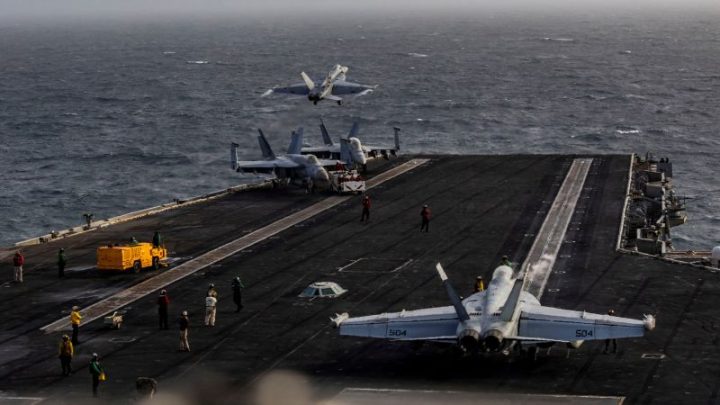
Activelifezero.com – After more than a month of relative military silence between Washington and Tehran, American forces returned to the offensive on Sunday, striking two rocket launcher positions on Iran’s Larak Island. The attack came as personnel on the island were reportedly in the process of preparing to fire rockets loaded with naval mines toward the Strait of Hormuz, according to a US official briefed on the operation. Captain Tim Hawkins, the public voice of US Central Command, confirmed that two launchers were hit during the strike.
The timing was deliberate. Just days earlier, US Central Command announced it had finished sweeping sea mines from the strait’s international shipping lanes — a task that had consumed considerable naval resources and carried enormous risk to commercial vessels. The fresh strike on Larak Island effectively signaled that Washington would not tolerate renewed attempts to mine the waterway, even if those attempts were still in their preparatory stages.
What Happened on the Ground
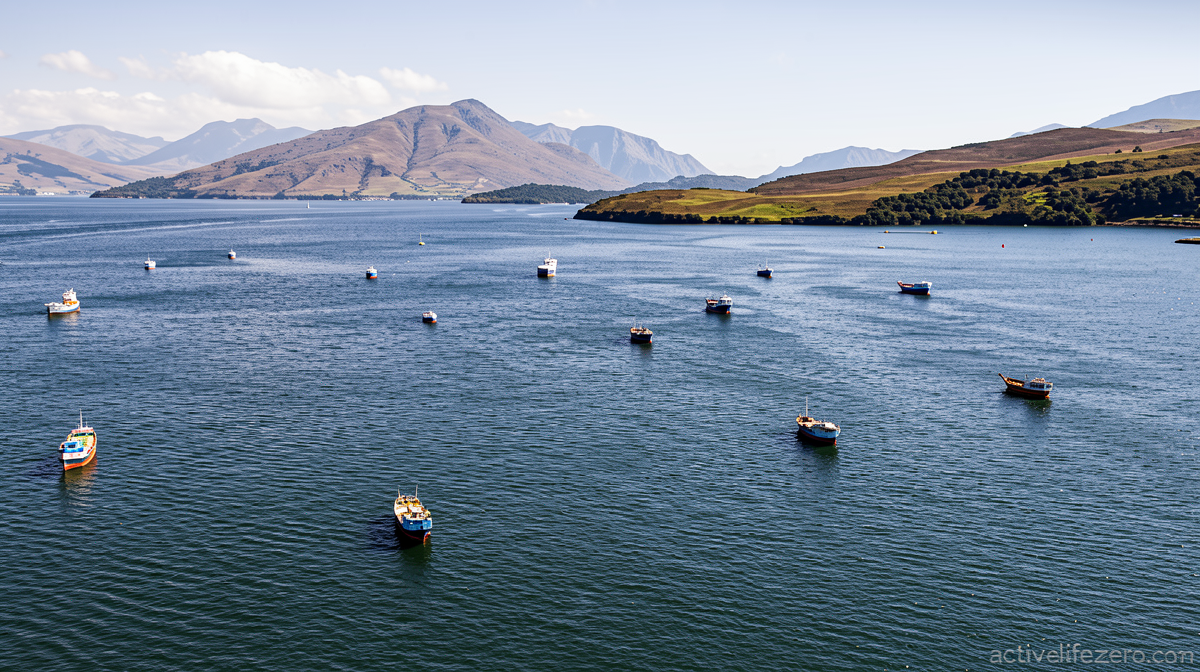
Residents in the vicinity of Larak Island described hearing a loud explosion on Sunday, as relayed through Iran’s semi-official Fars News Agency. The island sits in close proximity to the narrowest point of the Strait of Hormuz, the chokepoint through which roughly one-fifth of the world’s daily oil and liquefied natural gas supply transits. Its geography makes it an ideal staging ground for short-range rocket and mine-laying operations aimed at disrupting tanker traffic.
A US official emphasized that American forces continue to watch the surrounding waters and airspace with sustained attention. The official stated:
“U.S. forces are monitoring the area closely and remain prepared to protect the free flow of commerce through this essential waterway.”
When reached for additional comment, the White House directed inquiries to US Central Command rather than issuing its own statement.
Tehran Vows Retaliation and Calls the Strike a “Strategic and Deadly Mistake”
The Iranian response was swift and pointed. The Islamic Revolutionary Guard Corps, the armed wing that has long served as the principal instrument of Iran’s external military posture, issued a statement on Sunday vowing retaliation. The IRGC characterized the strike as an act of aggression by what it termed a “US-Zionist enemy,” and asserted that the bombardment produced casualties among both Iranian military personnel and civilians on the island.
In a brief statement broadcast through the state-run IRIB television network, an IRGC spokesperson described the operation as:
“a strategic and deadly mistake” by the Trump administration.
The phrasing carried deliberate weight. By labeling the strike a “mistake” rather than merely an act of war, the IRGC framed the incident as evidence of American overreach and poor judgment — a narrative designed to rally domestic support and justify a proportional or disproportionate response in the days ahead.
The Strait of Hormuz: Why Every Mine and Every Launcher Matters
The Strait of Hormuz is not merely a regional waterway; it is one of the most consequential energy arteries on the planet. Approximately 20 million barrels of crude oil per day, along with substantial volumes of LNG and refined petroleum products, pass through its roughly 33-mile-wide channel between Iran and Oman. For decades, the strait has sat at the intersection of military posturing, diplomatic negotiation, and commercial risk. A single well-placed mine or a salvo of short-range rockets can force insurers to spike war-risk premiums, reroute tankers around the Cape of Good Hope, and send global energy prices into sharp, unpredictable swings.
That is precisely the calculus both sides have been running since the conflict escalated. Iran’s repeated mining of the waterway has been designed to raise the cost of American naval presence and to leverage the strait’s economic importance in any future negotiation. Washington’s mine-clearing operations and now its kinetic strikes on launcher positions represent the mirror-image strategy: deny Tehran the ability to impose that cost.
Diplomatic Channels and Mediation Efforts
Even as shells landed on Larak Island, a parallel diplomatic track remained open. Iran and Oman were continuing discussions over a proposed framework to normalize maritime traffic through the strait. Regional mediators, most notably Qatar, have lent their diplomatic weight to those talks. Iranian officials have consistently tied the question of safe navigation through the strait to wider negotiations with Washington and to broader regional security arrangements, suggesting that any maritime deal would be inseparable from a larger settlement.
Yet the White House, speaking on Thursday, stated plainly that no ongoing negotiations exist between the United States and Iran concerning the six-month war. The strikes on Sunday thus arrived in a diplomatic vacuum — a fact that complicates any near-term de-escalation and raises the probability that both sides will interpret the next incident through a purely military lens.
Economic Pressure Replaces Kinetic Action — For Now
In recent weeks, President Trump has shifted the center of gravity of American strategy away from further bombardment and toward sustained economic strangulation. Last week he asserted that American financial strength would push Iran “toward a very big victory,” a formulation that pointed to sanctions, asset freezes, and trade restrictions rather than additional air campaigns.
The Treasury Department has amplified that message by threatening a new round of punishing sanctions aimed at third countries that continue to trade with or extend credit to Tehran. Officials have described the initiative as an “economic D-Day,” a phrase meant to convey both the scale and the intended finality of the pressure campaign.
“Iran has been notified that any ship or boat placing new mines will be immediately and systematically destroyed.”
That Tuesday declaration from the president, paired with the Sunday strike on Larak Island, sketches the administration’s current doctrine: economic coercion as the primary instrument, backed by a credible and demonstrated willingness to use force the moment Tehran tests the boundaries of that coercion. The question now facing regional markets, shipping insurers, and allied governments is whether the next test will come in the form of another launcher on a small island, or in the form of a new tanker struck by a mine in the dark hours of the strait.
Related Reading
Frequently Asked Questions
What is US strikes Iranian rocket launchers marking?
US strikes Iranian rocket launchers marking is the main topic of this guide. The article explains the context, practical details, and next steps readers should understand.
Why does US strikes Iranian rocket launchers marking matter?
US strikes Iranian rocket launchers marking matters because readers are looking for a useful answer, not just a short summary. Good content should match search intent and help them decide what to do next.