Iranian women defy efforts by hardliners to enforce wearing of hijab

Daftar Isi
Iran’s Hijab Showdown: Women Push Back as Hardliners Tighten the Noose
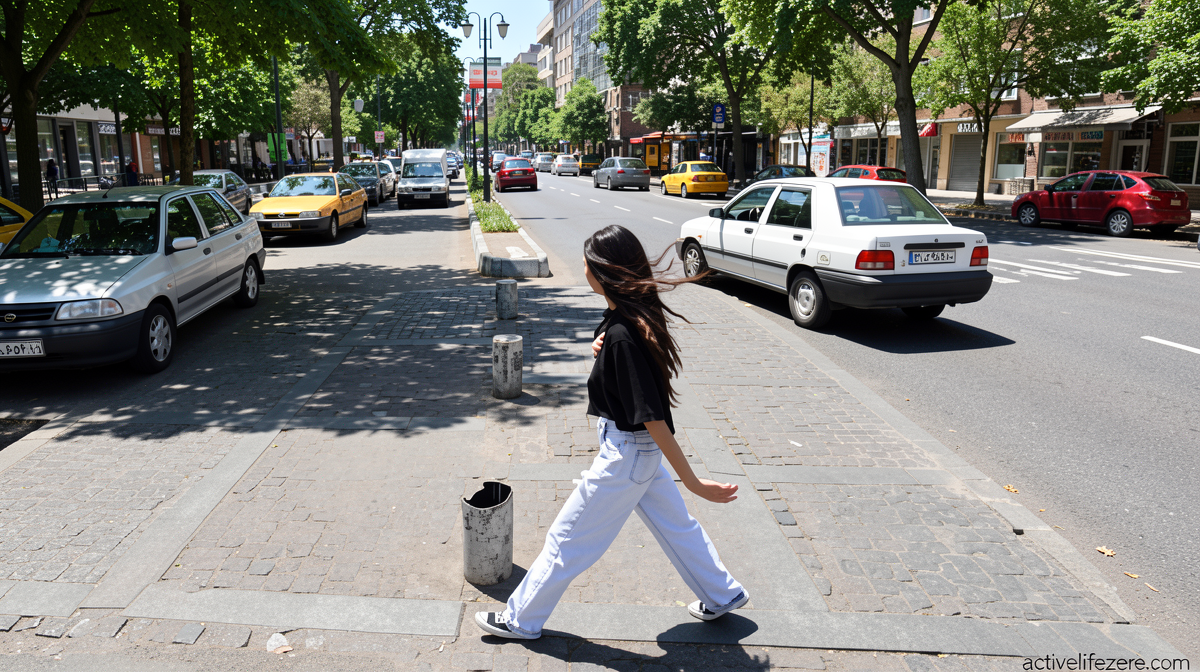
Activelifezero.com – Across Tehran’s café-lined boulevards and the shopping districts of Isfahan, a quiet civil disobedience has taken root. Iranian women walk unveiled, shoulders bare, hair unbound — a daily act of defiance that has become so widespread it now shapes the country’s internal political calculus. Yet the tolerance window appears to be narrowing. In recent weeks, authorities have begun closing businesses, blocking social media accounts, and issuing prosecutorial threats aimed at restoring what conservative clerics frame as a matter of Islamic decency and national identity.
A Wartime Pause That Is Ending
For much of this year’s conflict with the United States, the hijab question effectively went dormant. Women without headscarves appeared openly at pro-government rallies and on state television. In one widely shared clip, a woman carrying the Iranian flag declared her pride in her husband’s military service — no veil in sight, no reprimand following. The regime’s attention was consumed by existential framing of the war, the economic aftershock, and the reorganization of the security apparatus under Mojtaba Khamenei’s leadership. Internal security forces had, by their own admission, more urgent matters to manage.
That reprieve is now expiring. State-run outlets have ramped up coverage of shops and restaurants shuttered for failing to police patrons’ clothing. A review of Iranian media coverage at the close of last month surfaced enforcement actions in at least six cities, Tehran among them. The messaging is deliberate: the state wants the public to see that the rule still exists, even if its application has been uneven.
The Enforcement Machinery in Motion
On July 19, human rights organization HRANA documented the closure of at least seven cafés and restaurants in Tehran for not enforcing mandatory hijab requirements. The group also tracked a growing list of social media accounts suspended for public dress-code violations. HRANA noted that prosecutors routinely invoke nebulous charges — “violation of norms,” “violation of modesty,” “failure to observe Islamic decency” — to pursue alleged offenders. In one case this month, a boutique was shut down simply “due to unveiling,” with no further explanation offered.
The Tehran Prosecutor’s office escalated its posture on Monday, announcing it would pursue “serious action” against what it termed “indecency” violations at specific cafés and restaurants, as well as at retail outlets selling clothing it deemed “unconventional” or inappropriate. In eastern Iran’s South Khorasan Province, the chief prosecutor confirmed that ten cafés had been closed over alleged breaches of “social norms and mandatory hijab rules.”
Shadows of Woman, Life, Freedom
The current standoff cannot be understood without the memory of 2022. Four years ago, the death of Mahsa Amini — a young woman detained by police on suspicion of improper dress — detonated the Woman, Life, Freedom movement. The uprising was crushed with extraordinary brutality. Amnesty International, in a late-2024 assessment, described the Iranian authorities as waging “war on women and girls through an increasingly violent crackdown on those defying draconian compulsory veiling laws.”
Yet the suppression did not erase the shift in public behavior. Despite recurring warnings and sporadic enforcement sweeps, open non-compliance has become normalized, particularly among younger generations. The state now faces a dilemma: enforce the rule and risk reigniting mass unrest, or continue to look away and concede that the regulation is effectively dead letter.
High-Profile Punishments and Clerical Pressure
The regime has used select prosecutions to signal that consequences still exist. In June, singer Parastoo Ahmadi, along with eight members of her band and production team, received sentences of 74 lashes each in Qom, plus a two-year travel ban. The trigger was a 2024 event she livestreamed on YouTube, during which she appeared with uncovered hair and bare shoulders. The formal charge read: “offending public decency through the production and publication of vulgar and immoral content on cyberspace platforms.”
Clerical voices amplify the pressure. Mohammad Javad Haj Ali Akbari, who leads Friday prayers in Tehran, has asserted that organized efforts exist to promote what he calls “nudity,” and that some individuals are paid to appear in public in “improper” dress. State television has joined the chorus: a Tehran Municipality-produced program called “Park Way” has devoted multiple episodes to women’s dress, with one installment declaring that “unconventional behaviors should not be exhibited by anyone in public places such as parks.”
Hossein Shariatmadari, editor of the influential Kayhan journal, has written that enforcing the hijab is simultaneously a legal obligation and a religious duty incumbent on officials. The framing matters — it converts a cultural preference into an article of faith, making non-enforcement a form of dereliction.
Women Turned Against Women
A less visible tactic has also emerged: mobilizing women themselves to demand compliance. At a small rally in Isfahan this week, female participants were urged to police one another’s dress in public spaces. The strategy echoes earlier revolutionary-era campaigns in which women’s committees patrolled streets and markets, but the current iteration carries the added weight of wartime nationalism — dissent is easier to frame as disloyalty when the state is selling an existential struggle.
The broader implication is structural. Iran’s hardline leadership, freshly consolidated under Khamenei’s successor, needs a domestic narrative of unity and discipline. The hijab, stripped of its original theological argumentation, has become a convenient symbol: enforce it and you demonstrate that the revolution’s social project remains alive; ignore it and you concede that four years of protest have hollowed out a cornerstone of the regime’s identity. For now, the crackdown is calibrated — loud enough to deter, quiet enough to avoid another Mahsa Amini moment. But the calibration window is closing, and the women walking unveiled through Tehran’s streets know it.
Related Reading
Frequently Asked Questions
What is Iranian women defy efforts by hardliners?
Iranian women defy efforts by hardliners is the main topic of this guide. The article explains the context, practical details, and next steps readers should understand.
Why does Iranian women defy efforts by hardliners matter?
Iranian women defy efforts by hardliners matters because readers are looking for a useful answer, not just a short summary. Good content should match search intent and help them decide what to do next.