A new app is bringing Vine back, with a very 2026 twist

Daftar Isi
The Six-Second Loop Is Back: Divine Aims to Revive Vine’s Spirit in a Post-AI Feed Era
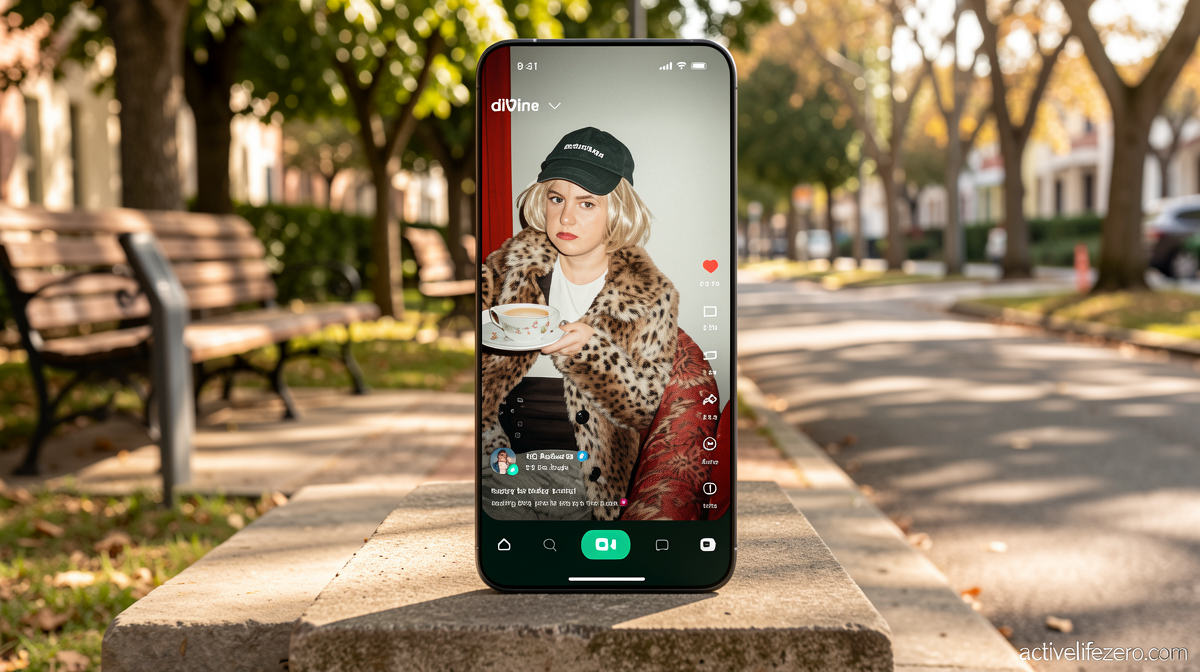
Activelifezero.com – A quiet but pointed counter-current is forming in social media. After nearly a decade of silence, the format that once defined a generation’s online humor — the rapid-fire, six-second looping clip — is being resurrected by a new platform called Divine. The app went live last week following roughly nine months of internal development and beta testing, and it arrives at a moment when many users are openly fatigued by algorithmically curated, machine-generated content flooding their timelines.
Divine’s pitch is straightforward: a scrolling feed of short, human-made videos capped at six seconds each, paired with a searchable archive containing more than two million preserved clips from the original Vine platform. The project carries no formal affiliation with Vine’s former parent company, X (formerly Twitter), yet its design philosophy is unmistakably rooted in what made that earlier service culturally significant.
Vine’s Brief, Explosive Life
To understand why Divine’s launch generates genuine excitement among a certain demographic, one has to recall what Vine actually was. Launched in 2012, it was among the first mobile applications to let ordinary people record, edit, and share ultra-short video clips without professional production tools. Twitter acquired the company just months after its debut for approximately $30 million, a sum that seemed modest at the time but proved prescient given the cultural footprint the app left behind.
Vine’s six-second constraint forced creators into a compressed comedic grammar: setup, punchline, loop. That structure spawned an enormous vocabulary of internet references, launched the public careers of figures like Logan Paul and Shawn Mendes, and cultivated a particular brand of absurdist, low-stakes creativity that felt distinctly human. When Twitter announced in 2016 that it would wind down the service — a decision driven partly by the competitive pressure from Instagram’s own short-video features — the internet treated the shutdown almost as a small cultural funeral. Volunteer archivists scrambled to preserve as many clips as possible before the servers went dark, and that salvaged corpus is now the backbone of Divine’s historical library.
What Divine Does Differently
The app’s founder, who operates under the handle “Rabble,” is a former early employee of Twitter and built the project with financial backing from Jack Dorsey, Twitter’s original co-founder. Rabble has been explicit about one non-negotiable design choice: Divine will not permit users to publish AI-generated video content. The reasoning, articulated in an interview, centers on preserving a space where creativity feels genuinely authored by a person.
“I want to see things that are creative and are human and that are weird … there’s a way in which AI generates this sort of mediocrity.”
That stance places Divine in a small but growing cohort of platforms pushing back against what users increasingly call “AI slop.” Pinterest and LinkedIn have both introduced measures to flag or limit machine-generated posts in response to subscriber complaints, and Divine’s approach is more categorical: multiple detection systems are deployed to screen uploads before they reach the feed.
Transparency, Choice, and Decentralized Infrastructure
Beyond content policy, Rabble frames the project as a response to a broader loss of user agency on mainstream networks — a frustration sharpened, in many people’s experience, by the controversial sale of X to Elon Musk. Divine attempts to address that anxiety on several fronts simultaneously.
First, the platform publishes a detailed, plain-language explanation of the algorithm powering its “For You” recommendation page. Second, users are not locked into a single feed; they can switch among algorithmic variants tuned to different interests — animal content, fashion and style, or simply the most-viewed clips on the app. Third, and perhaps most structurally significant, Divine is built atop a decentralized digital infrastructure comparable to the architectures underlying Mastodon and Bluesky. In practical terms, that means a user’s profile and content can be migrated to another compatible platform without starting from scratch, and the underlying technology is open-sourced so that independent developers can spin up their own communities without ever posting to Divine itself.
“I look forward to a place where we can have a better idea of what healthy social media is, and where people think that it doesn’t have to be this sort of nightmarish hellscape. I think this idea of not having human agency over how we make our own norms and rules has created a toxic culture.”
Early Traction and the Nostalgia Economy
By the time of launch, Divine had already accumulated roughly 100,000 registered users. Early content skews toward callbacks to 2010s meme formats and affectionate tributes to the platform’s original community. This week the app announced its first commercial brand partnership, with Taco Bell, signaling that the project intends to sustain itself beyond pure nostalgia.
Divine is not operating in a vacuum. In a recent documentary, the current owners of MySpace disclosed plans to revive that long-dormant social network, and the broader pattern is hard to miss: a cohort of internet users, burned by years of opaque moderation, engagement-optimized algorithms, and corporate ownership changes, is actively seeking smaller, more legible, more user-governed spaces. Whether Divine’s decentralized architecture and anti-AI content policy can translate that goodwill into durable daily usage remains to be seen. What is clear is that the six-second loop, once dismissed as a passing fad, has found a new audience willing to defend its right to exist — on human terms.
Related Reading
Frequently Asked Questions
What is A new app is bringing Vine?
A new app is bringing Vine is the main topic of this guide. The article explains the context, practical details, and next steps readers should understand.
Why does A new app is bringing Vine matter?
A new app is bringing Vine matters because readers are looking for a useful answer, not just a short summary. Good content should match search intent and help them decide what to do next.