Iran’s latest warning to the US signals the hardliners are just getting started

Daftar Isi
Iran’s Latest Warning: Tehran Goes Offensive
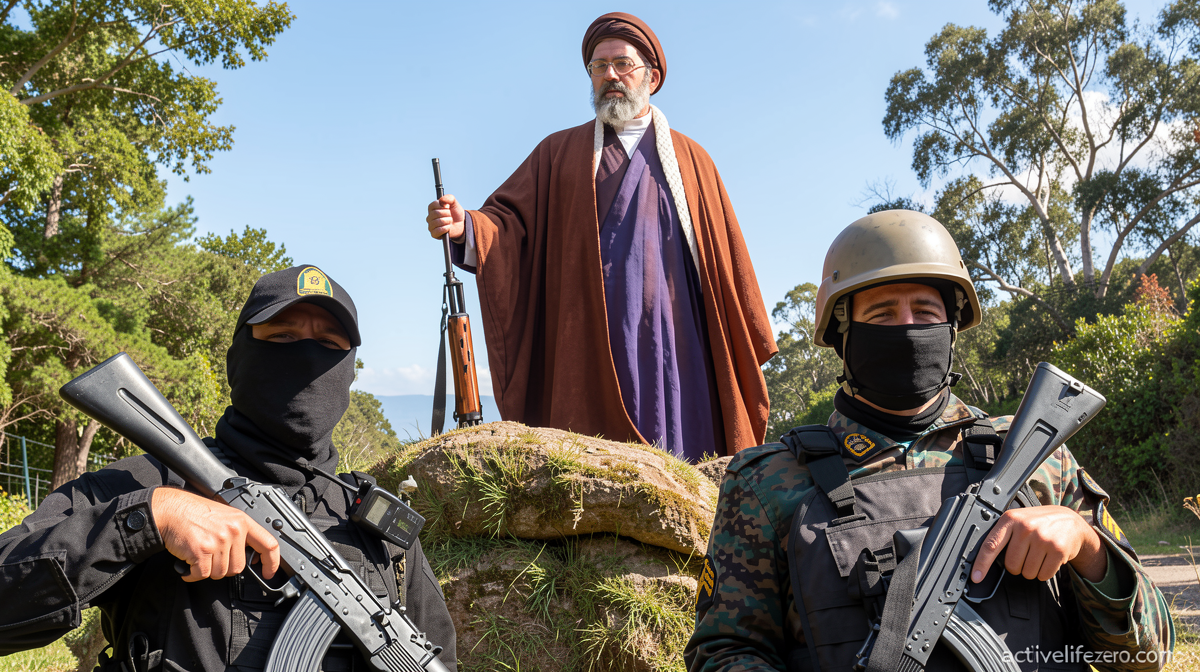
Activelifezero.com – Iran’s latest warning to Washington marks a decisive break from the cautious posturing that defined the first months of the conflict. US President Donald Trump, who launched the war roughly six months ago, has oscillated between insisting Tehran is “begging” for a deal and threatening renewed strikes. In response, Iran’s hardline leadership is now crafting and publicizing its own blueprint for sustained confrontation with the United States, centering what one senior official described as “offensive operations” alongside defensive measures to neutralize incoming threats.
A Shift Toward Offensive Posture
The hardening of tone arrives at a critical juncture: the US-Iran Memorandum of Understanding, designed to end hostilities, is set to expire while the question of who controls the Strait of Hormuz remains unresolved. Analysts say Tehran’s military commanders believe they occupy a strong bargaining position and can continue adapting weapons systems to close the capability gap with more powerful adversaries. The posture also points toward deeper mobilization of allied forces in Yemen, Iraq, and beyond.
The pivot was formalized last week through a series of decrees issued in the name of Supreme Leader Mojtaba Khamenei that reorganized Iran’s security leadership. Adviser Mohammad Mokhber declared that “the strategy of shifting the war to an offensive posture if Iran’s conditions are not met will undoubtedly transform the balance of power in the world.” Mohsen Rezaie, newly installed as head of the Supreme National Security Council, hails from an IRGC faction that, in the words of George Washington University assistant professor Sina Azodi, holds “the only way to get concessions from the US is the continuation of fighting, exerting pressure on the US and a steady dose of pain on Donald Trump.”
The decree confirming Ahmad Vahidi as IRGC chief explicitly called for heightened readiness for “strong offensive operations against the enemy.” Hamidreza Azizi of the Clingendael Institute in the Netherlands characterized Vahidi’s mandate as a clear directive to revise military strategy in a more assertive, offensive direction. Days later, political deputy Brig. Gen. Yadollah Javani told the semi-official Fars news agency that “Iran’s actions are defensive, although they may also take on an offensive aspect in the future.” Another Vahidi adviser, Mohammad Reza Naqdi, told state broadcaster IRIB that the IRGC is building the capacity to conduct operations “on enemy soil” and to “launch attacks against the enemy in an intelligent, selective, and targeted manner”—language that implies renewed targeting of US military installations across the region.
Escalation Risks and Regional Spillover
A new generation of more maneuverable ballistic missiles fitted with cluster warheads, combined with innovative drone employment, signals that Tehran has adapted its tactics rapidly over recent months. H.A. Hellyer, senior associate fellow at the Royal United Services Institute in London, noted that “the regime has withstood the US/Israeli barrage and retaliation from the Gulf Arab states, and they are still standing.” He added that Tehran now seeks to convert that resilience into “permanent political advantage in the region as opposed to letting the initiative waste away over time.”
Trita Parsi of the Quincy Institute for Responsible Statecraft observed that “Tehran believes it has the military edge and is openly discussing going on the offensive instead of merely responding to American attacks,” which would let Iran wrest control of the war’s scope, geography, and timing from Washington. Azizi warned that the current no-war-no-peace stalemate, compounded by deepening economic strain, “may prompt the Iranian leadership to escalate in order to push Trump either to remove the naval blockade or to agree to an arrangement on terms more favorable to Iran.” He added that Tehran may calculate the costs of another war to be lower than the costs of gradual capability erosion under simultaneous sanctions and blockade pressure.
On the ground, the doctrine is already visible. Houthi militants in Yemen have threatened Saudi shipping and struck Saudi oil refineries, while Iranian-backed militias in Iraq have targeted Saudi oil infrastructure. Tankers operated by the UAE’s state oil firm ADNOC have been hit in recent weeks in persistent but unpredictable strikes designed to keep oil prices elevated. IRGC officials have also spoken openly about sabotaging the undersea cables traversing the Gulf—another asymmetrical lever in what Azizi calls a preparation for both short- and long-term scenarios.
“By that, Iran will not only have wrested control of the scope and geography of the war from the US, but also its timing.” — Trita Parsi, Quincy Institute
Frequently Asked Questions
What does Iran’s latest warning actually change on the ground? It signals a formal shift from reactive defense to proactive offensive operations, including the possibility of strikes on US military facilities in the region and continued asymmetric attacks on Gulf shipping and infrastructure.
Why is the timing tied to the MoU’s expiration? With the Memorandum of Understanding set to lapse and the Strait of Hormuz question unresolved, Tehran’s leadership views the window as an opportunity to extract concessions while its military position remains strong.
Who are the key figures driving the new posture? Supreme Leader Mojtaba Khamenei issued the reorganization decrees; Mohsen Rezaie now leads the Supreme National Security Council; Ahmad Vahidi heads the IRGC; and advisers Mohammad Mokhber and Mohammad Reza Naqdi have publicly articulated the offensive doctrine.
How are regional allies involved? Houthi forces in Yemen and Iranian-backed militias in Iraq have already escalated attacks on Saudi shipping and oil infrastructure, extending Tehran’s reach without requiring direct Iranian troop deployments.