UK in ‘new era of national security’ as AI supercharges rising threats, security chief warns

Daftar Isi
Britain Faces a Sharply Changed Security Landscape, MI5 Chief Says
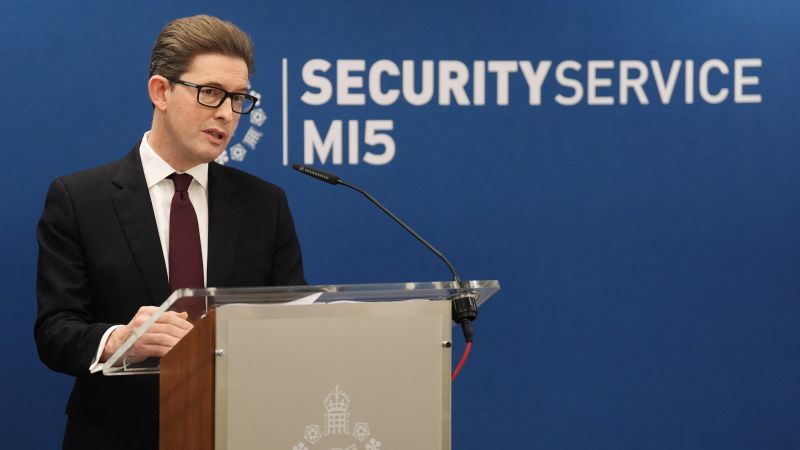
Activelifezero.com – The United Kingdom is confronting a far more volatile security environment than it experienced in the decades after the Cold War, with hostile states, terrorist groups and emerging technologies combining to create more complex risks, MI5 director general Ken McCallum has warned.
In his annual assessment of threats to the country, McCallum said the balance of MI5’s work has shifted dramatically. Countering activity by foreign states now demands resources on a scale similar to the service’s counterterrorism operations, a change he described as central to a “new era of national security.”
“These days our terrorism and state threats operational missions are pretty much of equal scale; that in itself is a huge shift across recent years,” McCallum said.
He urged Britain to strengthen its resilience against a broad range of so-called hybrid threats, identifying Russia, Iran and China as the principal hostile states of concern. Such operations can fall short of open military conflict while still seeking to disrupt infrastructure, intimidate communities, obtain sensitive information or weaken public confidence.
McCallum said the methods involved include arson, sabotage, cyberattacks, coercion and violence. The warning reflects the challenge facing security services: attacks can be carried out through proxies, criminal networks or digital systems rather than by traditional intelligence officers alone.
Artificial intelligence adds new risks
Artificial intelligence is already making some threats more potent, especially in the cyber sphere, McCallum said. MI5 is creating an AI Threat Assessment Center as part of its response to the growing role of the technology in national security.
Cybersecurity is one immediate concern because AI can help attackers automate aspects of their operations, improve deception and identify weaknesses more rapidly. McCallum also highlighted the potential for AI to assist in the development of destructive biological weapons, though he said that risk has not yet materialized.
“Comparatively low sophistication actors may have a capability uplift in the AI era” if effective government “guardrails” are not put in place, McCallum warned.
The concern is not limited to highly capable state-backed groups. Easier access to powerful tools could allow less sophisticated actors to attempt activities that previously required greater specialist knowledge, making prevention, detection and public preparedness increasingly important.
State-threat cases have risen sharply
MI5 is now committing more resources to state threats than it did at any point during the Cold War, McCallum said. The service’s caseload involving foreign-state activity has quadrupled over the past decade.
“You might be surprised to know that in 2026, MI5 is devoting more resource to countering state threats than during the Cold War,” he said. “Over the last decade, our state threats caseload has quadrupled.”
McCallum said the heightened threat level should not be viewed as a short-lived development. Instead, Britain and its allies must prepare for sustained pressure across physical, digital and economic domains.
Russia remains the most pressing state adversary, he said, citing Moscow’s increasingly aggressive use of hybrid tactics against European countries. Examples he referred to included a cyberattack on Polish energy infrastructure and an alleged attempt to destroy a cargo plane in Germany using an explosives-laden drone.
In Britain, a man was charged last month under the National Security Act over allegations that he was preparing to sabotage a drone factory in Swindon. McCallum said these incidents illustrate the way state-linked activity can reach beyond conventional espionage.
At the same time, he argued that Russia’s actions do not demonstrate strategic strength. More than 1,000 Russian officials and staff have been expelled from host countries since Moscow began its full-scale invasion of Ukraine in 2022, significantly reducing its traditional espionage capacity.
Russia has been forced “to pay criminals to do their bidding,” McCallum said.
Iran-linked plots and concerns over military targets
Iran has also sought to broaden its hybrid campaign through comparable methods, McCallum said. More than 50 people have been arrested in connection with Iran-linked plots, with most of those cases focused on British Jewish communities.
He also raised concerns about Iranian interest in more heavily protected sites, including military facilities. McCallum referred to last month’s incident at RAF Fairford but declined to provide additional information while investigations continue.
The Fairford episode was “not unique,” he said. “There have been other examples, not just in the UK, but around the world.”
Prime Minister Andy Burnham has said Iran’s Islamic Revolutionary Guard Corps was “almost certainly” behind a suspected plan involving the British airbase used by US forces. Senior Iranian officials have strongly rejected the allegation. Several men, including a British-Iranian dual national, were arrested in connection with the suspected plot and later released on bail.
Following the incident, the United States moved its long-range bombers from the United Kingdom back to bases in the United States after an unspecified new threat emerged.
China espionage warning and continuing terrorism risk
McCallum also accused China of conducting espionage in Britain. His remarks followed an MI5 warning issued to the academic community two weeks earlier and a case this year that resulted in the first convictions for national security offences linked to Beijing.
Academic research, particularly in advanced technologies such as artificial intelligence, can carry national-security implications when knowledge with possible military, intelligence or strategic applications is targeted by foreign actors. McCallum’s comments underline the importance of universities, researchers and technology organizations recognizing those risks.
Despite the increased focus on state threats, terrorism remains one of MI5’s foremost responsibilities. McCallum said an attack in the United Kingdom is “highly likely,” reinforcing the message that the country’s security services must address several serious challenges at once.
The central task, he indicated, is no longer simply responding to isolated threats. Britain must remain alert to overlapping pressures from terrorism, espionage, cyber activity, sabotage and rapidly developing technology in an era where the boundary between domestic security and international confrontation is increasingly blurred.
Related Reading
Frequently Asked Questions
What is UK in new era of national?
UK in new era of national is the main topic of this guide. The article explains the context, practical details, and next steps readers should understand.
Why does UK in new era of national matter?
UK in new era of national matters because readers are looking for a useful answer, not just a short summary. Good content should match search intent and help them decide what to do next.