Looming rock collapse threatens Swiss village as thawing permafrost destabilizes the Alps

Daftar Isi
Swiss Alpine Village Watches a Mountain That May One Day Come Down
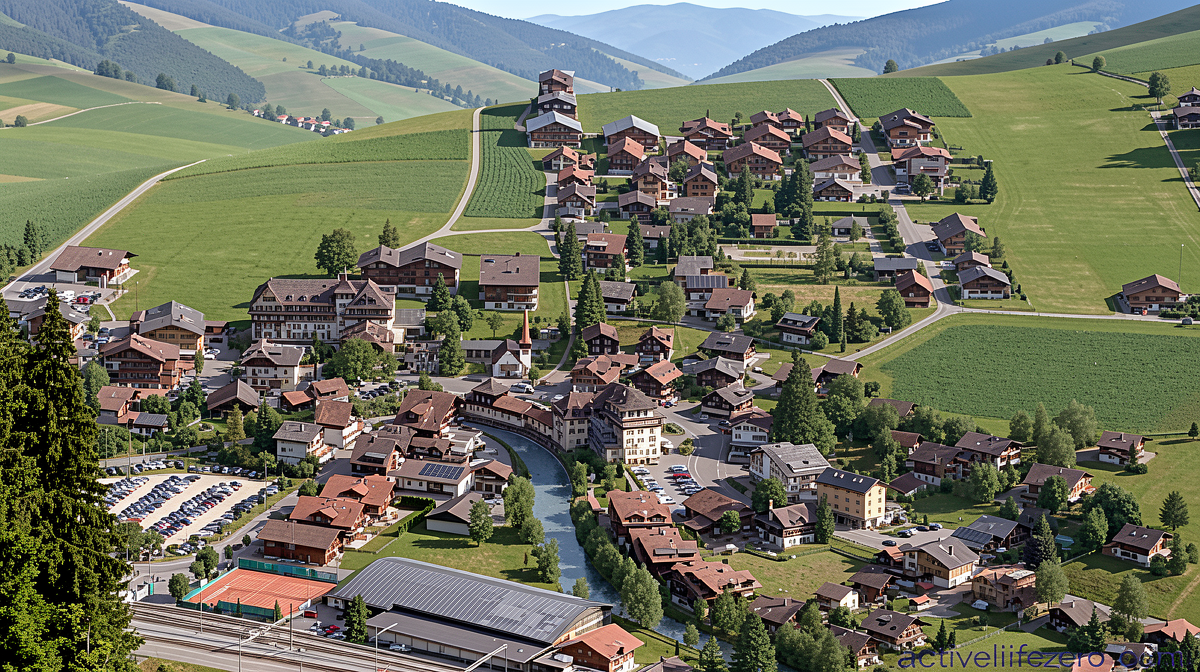
Activelifezero.com – Perched in a valley of Bern canton where cowbells echo off granite ridges and glaciers still cling to high-altitude shelves, the village of Kandersteg carries a quiet anxiety that its 1,300 residents have learned to live alongside. Above the settlement, a vast rock formation known as Spitze Stei hangs over the valley floor, and geologists warn that a full collapse of the unstable section — estimated at between 15 and 20 million cubic meters — would unleash a landslide of a scale comparable to the catastrophe that buried the neighboring village of Blatten in May 2025.
The Blatten event, which struck the Loetschental valley, sent enormous plumes of dust into the sky and coated nearly every structure in the settlement with thick mud. Residents had been moved out beforehand as a precaution, but the sheer force of the rock-and-ice mass thundering down the mountainside underscored how quickly Alpine terrain can transform from scenic backdrop to lethal hazard.
A Village That Knows the Risk but Has Not Been Evacuated
Kandersteg itself is not under immediate evacuation order. Authorities have drafted contingency plans and maintain continuous monitoring of the Spitze Stei face, but daily life continues. Locals describe a state of watchful calm rather than panic.
“You are aware that it’s happening, but not afraid,” said Brigitte Jüni, a resident of the village. She noted that officials have taken every precaution within their power. “But then it’s nature. It’s nature and you never know,” she added.
Rudolf Isler, another local, drew a clear distinction between the Kandersteg situation and the Blatten disaster. He pointed out that small stones have been falling from the Spitze Stei face for years, giving residents long familiarity with the slope’s behavior.
“This isn’t the same case as in Blatten. It’s a different situation,” Isler said. “We are not afraid of the Spitze Stei rock. It’s been many years seeing stones falling from up there. The problem here is about global warming and rising temperatures.”
Permafrost: The Invisible Glue Going Soft
The mechanism driving increased instability across the Swiss Alps is not simply surface erosion. Beneath the visible rock and soil lies permafrost — frozen sediment, ice-laced debris, and water-locked mineral matrix that for millennia has acted as a structural adhesive binding mountain slopes together. As global temperatures climb, that adhesive softens and liquefies, removing the internal cohesion that once kept vast rock masses in place.
Markus Stoffel, a professor of climate change and natural risks at the University of Geneva, explained the physics in plain terms. Ice embedded within unconsolidated debris and fractured rock behaves, while frozen, like cement filling the pores and joints of a slope. When it melts, the slope loses its internal locking and becomes progressively more prone to failure.
“In the mountains and in the unconsolidated debris, there is lots of ice,” Stoffel said. “Once this ice is melting, it acts like a cement. These mountain slopes will become increasingly unstable.”
The same warming that thaws permafrost also accelerates glacier retreat. In the Swiss Alps, glaciers have been shrinking for decades, and their retreat removes the buttressing effect that ice once provided to valley walls. The combined loss of both permafrost cohesion and glacial support means that slopes which stood stable for centuries now face conditions they have never encountered in the instrumental record.
Gradual Breakdown Versus Catastrophic Failure
Experts monitoring the Spitze Stei assess that the most probable failure mode is progressive: the rock mass breaking down in stages over years or decades, shedding smaller fragments and debris flows rather than detaching as a single monolithic block. Continuous sensor arrays, periodic geological surveys, and satellite-based deformation tracking all feed into that assessment. Still, the volume at stake — up to 20 million cubic meters — means that even a partial failure could generate a debris flow capable of overwhelming valley infrastructure.
Evacuation routes, shelter locations, and communication protocols are already mapped and rehearsed. The village’s position in a narrow valley, flanked by steep green slopes and capped by sharp peaks, makes rapid egress possible but time-sensitive, which is precisely why monitoring intensity remains high.
What the Alps May Look Like in Coming Decades
Nathan Solothurnmann, a climate and energy specialist with Greenpeace Switzerland, frames the Kandersteg situation as a preview of a broader pattern. As permafrost retreats and glaciers thin across the range, landslides and avalanches will occur with greater frequency and in locations previously considered stable.
“Maybe even one day we will have to abandon certain valleys or certain villages because it’s becoming impossible to live there,” Solothurnmann said. “Or the measure you will need to take to protect infrastructure is so expensive, the efforts are so big, that it’s not worthwhile anymore living there.”
For now, Kandersteg endures. Its residents go about their routines beneath the watching eye of Spitze Stei, aware that the mountain above them is slowly changing its internal architecture. The question is no longer whether the slope will shed material — it already does, in small doses — but whether the pace of change will outstrip the capacity of engineering, monitoring, and community resilience to keep pace with it.
Related Reading
Frequently Asked Questions
What is Looming rock collapse threatens Swiss village?
Looming rock collapse threatens Swiss village is the main topic of this guide. The article explains the context, practical details, and next steps readers should understand.
Why does Looming rock collapse threatens Swiss village matter?
Looming rock collapse threatens Swiss village matters because readers are looking for a useful answer, not just a short summary. Good content should match search intent and help them decide what to do next.