New premium airplane seats have a big problem — and it could be getting worse

Why New Premium Airplane Seats Have a Growing Problem
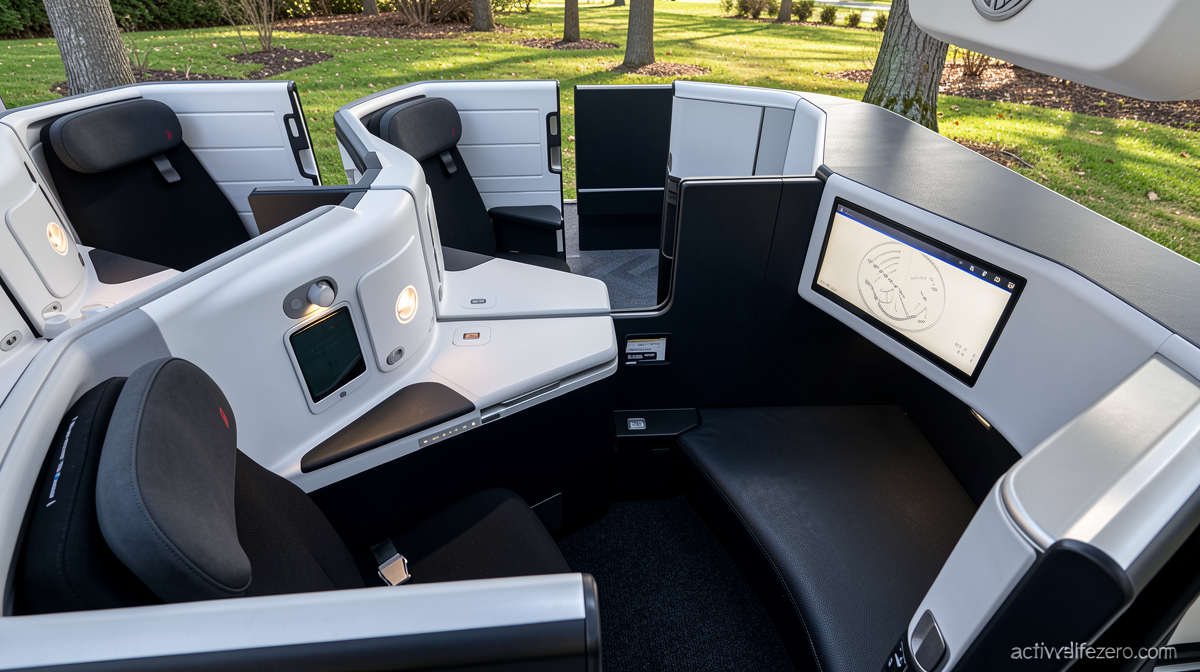
Activelifezero.com – New premium airplane seats have become increasingly difficult to certify, creating a paradox where luxury cabins sit empty despite passenger demand. Travelers boarding state-of-the-art aircraft like the Airbus A350 may find themselves surrounded by unoccupied business-class suites. KLM’s Amsterdam-Toronto route exemplifies this issue, with premium pods featuring lie-flat beds and sliding privacy doors potentially remaining vacant at cruising altitude. The root cause lies not in weak demand, but in aviation regulations that have grown more stringent as cabin designs incorporate sophisticated features.
Regulatory Bottlenecks Slow Production
This certification challenge extends across the global aviation industry. Carriers worldwide struggle to introduce premium products that meet heightened passenger expectations for personal space, connectivity, and entertainment. Major airlines including American Airlines, Lufthansa, Riyadh Air, and Singapore Airlines all face extended approval timelines for customized cabin configurations. The situation marks a significant departure from aviation’s past. During the era of the 1990 film “Home Alone,” first-class passengers occupied generously proportioned recliners. British Airways transformed this landscape in 2000 by introducing the world’s first lie-flat seating configuration. Today’s premium cabins resemble sophisticated living spaces more than traditional aircraft seating.
Lufthansa’s Allegris suites and Swiss Airlines’ Senses configuration both represent comprehensive cabin transformations, incorporating seat heating, cooling systems, and individualized climate management. However, each technological addition creates separate regulatory requirements that must be satisfied before deployment. Industry specialists calculate that certifying contemporary premium seating requires a minimum of six additional months compared to pre-pandemic standards, when average lead times spanned one to two years.
Expert Perspectives on the Challenge
Ben Minicucci, Alaska Airlines’ chief executive, explained the complexity during a May statement regarding the carrier’s debut business-class suites:
By the time you imagine it, design it, test it, get it certified, get it built — it is a lengthy three-year process. We approved this design on a new product last year and now it’s getting the seat manufacturers aligned.
The challenge intensifies because airlines deliberately avoid standardization, preferring distinctive designs that differentiate their brands. Mark Hiller, chief executive of seat manufacturer Recaro, noted this counterintuitive approach:
Another industry that is in a booming ramp-up phase, you want to scale it — you would go for standardization. Instead, airlines are insisting on custom designs to stand out. The interest and need for differentiation are driving the demand and really lead to bottlenecks in the industry.
Safety Standards and the Privacy Revolution
Federal aviation authorities have adopted more rigorous positions regarding crashworthiness evaluations for customized seating arrangements. FAA Administrator Bryan Bedford communicated to The Wall Street Journal in May that premium configurations frequently fail human factors testing for impact scenarios. The heightened emphasis on passenger privacy substantially contributes to certification delays. Andrew Nocella, United Airlines’ chief commercial officer, observed this transformation earlier this year:
If you went back 10 years ago, there were very few walls in the business-class cabin and today there are a lot. I do think that the evolution of the cabins has made certification very complicated.
United Airlines successfully navigated these regulatory complexities, introducing updated Polaris suites equipped with privacy doors on Boeing 787 aircraft less than twelve months after their 2025 announcement. Nocella emphasized that close collaboration with safety inspectors and equipment manufacturers enabled this accelerated timeline. For most carriers, however, each additional wall, elevated door mechanism, and integrated technology component generates supplementary testing requirements and documentation.
Frequently Asked Questions
Why are new premium airplane seats having certification problems? Aviation authorities have adopted more rigorous crashworthiness evaluations for customized seating arrangements, requiring additional testing for each new feature added to premium cabins.
How long does certification take for new premium seats? Industry specialists calculate that certifying contemporary premium seating requires a minimum of six additional months compared to pre-pandemic standards, when average lead times spanned one to two years.
Which airlines are affected by these delays? Major carriers including American Airlines, Lufthansa, Riyadh Air, Singapore Airlines, KLM, Alaska Airlines, and United Airlines all navigate extended approval timelines for their customized cabin configurations.
What is causing the certification bottleneck? Airlines prefer distinctive custom designs over standardization to differentiate their brands, while each additional wall, door mechanism, and technology component generates supplementary testing requirements.