Inside one of the largest malls in the world, a new museum tells a tale of life on the sea

Daftar Isi
A Pacific Trade Story Takes Shape Inside Manila’s Mall of Asia
Activelifezero.com – Amid the crowds, shops and restaurants of Manila’s Mall of Asia, a new cultural attraction offers a striking change of pace. Museo del Galeon brings visitors into the world of the Manila galleons, the ships and sailors that connected Asia, Mexico and Europe centuries before modern globalization took hold.
The setting is deliberately unexpected. Mall of Asia is among the Philippines’ largest shopping and entertainment destinations, with more than 660 stores and dining venues in its main building. Visitors may pass a marching band playing Taylor Swift music before arriving at a quieter first-floor museum entrance. Inside, the noise falls away and the focus shifts to the sea routes that helped shape Manila’s historic role in international commerce.
A full-scale ship at the center
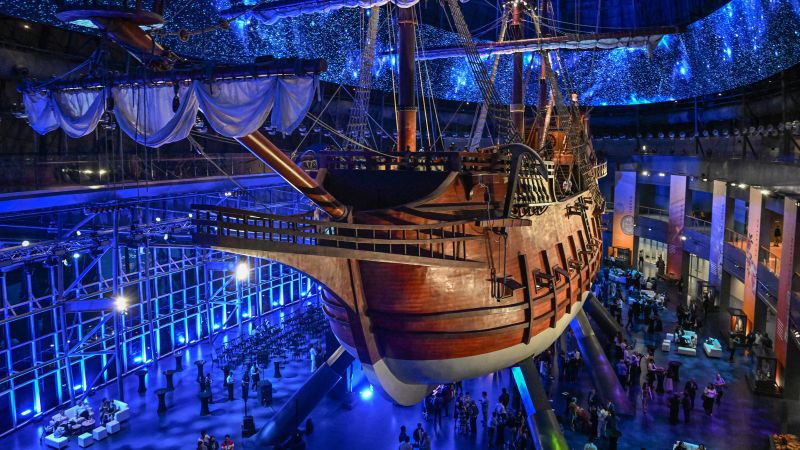
After taking an escalator from the ticket area, visitors come face to face with the bow of the Galeon Espiritu Santo. The installation recreates a vessel that crossed the Pacific between 1603 and 1618. Standing almost 100 feet high and stretching more than 130 feet in length, the reconstruction dominates the exhibition space beneath a vast ceiling designed to resemble a night sky.
Its scale evokes the conditions faced by a crew of roughly 200 people during voyages between Manila and Acapulco, Spain’s Pacific trading center in what is now Mexico. The Espiritu Santo completed 10 trips on that route, part of an exchange that moved Asian goods eastward and American silver westward.
Porcelain, silk and spices from Asia were traded in Acapulco for silver from the New World. From Mexico’s Pacific shoreline, Asian merchandise continued overland by mule to the Atlantic coast, where it was loaded aboard other ships bound for European markets and royal courts. The museum describes the system in simple terms:
“It is considered one of the earliest global trade networks in history.”
Over 250 years, 181 ships completed 798 crossings on the Manila galleon route. While the number of vessels was limited compared with present-day shipping, exhibition maps show a connection between those historic sea lanes and routes used by Filipino maritime workers now. One major difference is the Panama Canal, which removed the need to transport goods across Mexico by land.
Filipino workers at the heart of the maritime world
The museum’s opening comes with a reminder of the Philippines’ continuing importance to global shipping. Filipino seafarers account for an estimated 25% to 30% of crews on ships worldwide, including tankers, bulk carriers and cruise vessels. Their role has deep roots in the archipelago’s long history of shipbuilding, navigation and ocean travel.
During the galleon era, Filipino workers made up about two-thirds of the crews. Ships could carry anywhere from 50 to 400 people, depending on their size and the stage of a journey. The vessels were not merely symbols of overseas trade; they depended on the labor, knowledge and endurance of the people who built and sailed them.
The original Espiritu Santo was constructed in Cavite, on a peninsula south of Manila that reaches into Manila Bay. Builders used hardwoods from Luzon, including teak, molave and lanang. Studies indicate that as many as 2,000 trees could be required for a single ship, illustrating the immense material demands of galleon construction.
Most workers in the shipyards were Filipino. Historical accounts also show that specialized craftspeople, including carpenters and blacksmiths, arrived from Japan, China and other places. Museum displays examine the organization of a Cavite shipyard and the stages involved in taking a massive vessel from construction to launch.
The Espiritu Santo shown at Museo del Galeon is a modern fiberglass replica. It was built in Pampanga, north of Manila, then dismantled into sections and transported by truck for reassembly inside the mall. The practical challenge of installing such a large structure mirrors, in a contemporary form, the logistical effort once needed to build and supply vessels capable of crossing the Pacific.
An experience designed for the senses
Museo del Galeon uses more than scale to tell its story. Visitors can explore the subject through sight, touch and smell. A spice display presents six stations marked with the invitation to “smell me,” allowing guests to connect the aromas in large jars with food traditions and places around Asia.
On the galleon’s deck, English-language touchscreens explain how sailors navigated open water with the sun, stars and relatively basic instruments. The challenge was especially severe because the Manila galleon trade began more than a century before a dependable marine clock made longitude much easier to calculate. Mariners could consequently find themselves far from their intended position after weeks at sea.
Even without a moving deck, ocean spray or tropical heat, the exhibit aims to make that uncertainty tangible. LED screens around the upper reaches of the museum create an enveloping Pacific scene, while the towering ship gives visitors a physical sense of the journey’s scale. Standing beneath the recreated stars, it is easier to imagine the isolation of a voyage across one of the world’s largest oceans.
For travelers in Manila, the museum provides a compact introduction to a defining chapter of Philippine and global maritime history. It also places today’s Filipino seafarers in a much longer story: one in which people from the islands have long helped move goods, knowledge and communities across the world’s waters.
Related Reading
Frequently Asked Questions
What is Inside one of the largest malls?
Inside one of the largest malls is the main topic of this guide. The article explains the context, practical details, and next steps readers should understand.
Why does Inside one of the largest malls matter?
Inside one of the largest malls matters because readers are looking for a useful answer, not just a short summary. Good content should match search intent and help them decide what to do next.