US Air Force flight to Antarctica turns back after space activity warning

Daftar Isi
Antarctic Logistics Flight Diverts After Russian Missile Launch Warning Over Southern Ocean
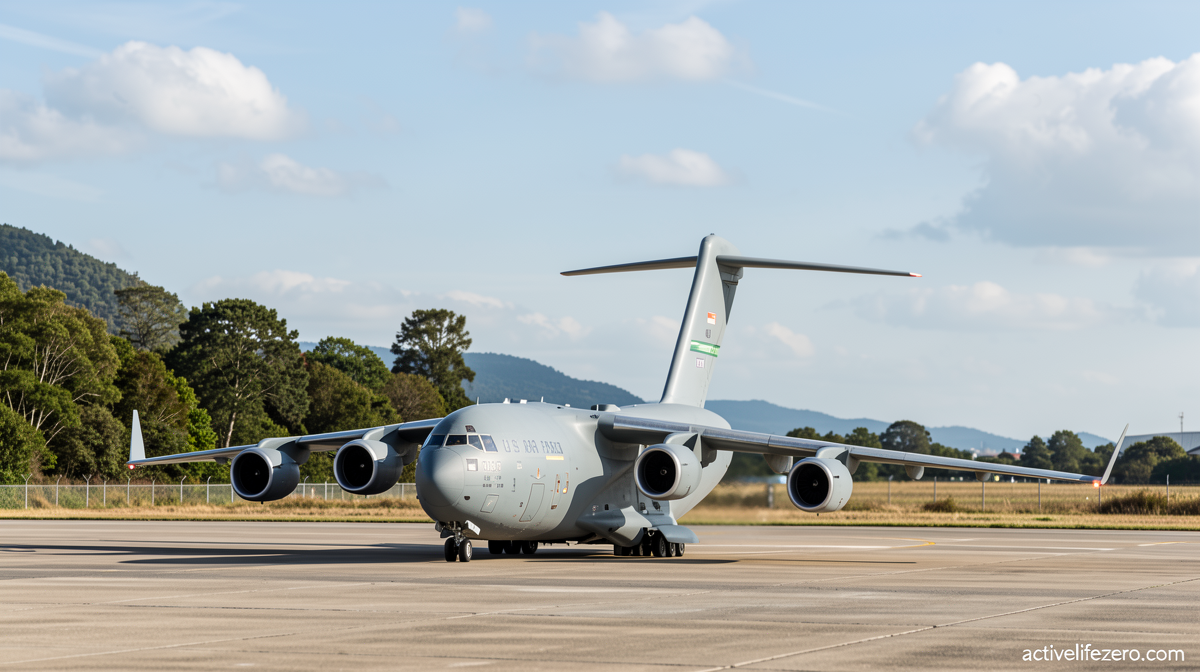
Activelifezero.com – A United States Air Force transport aircraft heading south toward the Antarctic continent made an unplanned turnaround over New Zealand’s airspace after authorities flagged a potential collision risk linked to a planned Russian missile launch. The diversion, confirmed by New Zealand’s Civil Aviation Authority (CAA), unfolded during the annual Winter Fly-in window — the narrow logistical corridor through which personnel, scientific equipment, and resupply cargo move between the South Island and two Antarctic research stations ahead of the austral summer field season.
The Turnaround in Numbers
Flight-tracking data from Flightradar24 places the aircraft — a C-17 Globemaster III operating under the military call sign ICE28 — departing Christchurch Airport at approximately 9:00 a.m. local time on Tuesday, its heading oriented southward toward the Ross Sea sector. The aircraft touched back down at Christchurch just before 11:30 a.m., meaning the round trip consumed roughly 150 minutes of flight time before the crew elected to reverse course.
The CAA confirmed in a statement released Tuesday that it had issued a NOTAM — a Notice to Airmen, the standard instrument through which air-traffic authorities broadcast time-limited hazards to pilots — after receiving notification of space activity from Russia’s State Air Traffic Management Corporation. A follow-up statement on Wednesday clarified that the notified activity was specifically a planned missile launch carrying an “associated potential hazard to international airspace” within New Zealand’s Oceanic Flight Information Region.
What the Oceanic FIR Covers
New Zealand’s Oceanic FIR spans approximately 30 million square kilometres of airspace over the Pacific Ocean and the Tasman Sea, making it one of the largest contiguous airspaces administered by any single authority in the world. Much of that volume sits over international waters, where no single nation holds sovereignty and where the CAA’s regulatory reach is limited to advising aircraft operators rather than compelling them to alter course.
“We put in place a danger area and issued a NOTAM to alert aircraft operators to the potential hazard. This does not prevent aircraft from flying through the area, operators make their decisions based on the information available,” the CAA stated in its Wednesday communication.
The authority added that its jurisdiction over the southern reaches of the FIR is inherently constrained: “Much of our Oceanic FIR is over international waters, where we have limited control over activities.” In practical terms, this means the CAA can flag a hazard and publish the advisory, but the final go/no-go decision rests with the flight crew and the operating command of the aircraft.
WINFLY: The Antarctic Logistics Window
The disrupted flight was scheduled during the Winter Fly-in (WINFLY) period, an annual operational window in which regular air service resumes between Christchurch and two Antarctic bases: McMurdo Station, the United States Antarctic Program’s primary logistics hub on the Ross Ice Shelf, and Scott Base, New Zealand’s year-round research outpost on the Ross Island coast. WINFLY represents the critical resupply and personnel-rotation phase preceding the austral summer, when field teams deploy across the continent for months of continuous daylight research.
During this window, C-17s and other heavy-lift transports shuttle scientists, construction materials, fuel, food, and spare parts southward on a compressed schedule. A single diverted flight compresses an already tight timetable, potentially delaying the arrival of crew members or mission-critical equipment at stations that operate with limited runway capacity and extreme weather constraints.
Space Activity and Airspace Safety
Missile launches and orbital insertions generate debris fields, spent booster stages, and re-entry corridors that can intersect high-altitude flight paths. International practice, codified through ICAO and bilateral agreements, requires the launching state to notify affected air-traffic authorities of the planned activity so that NOTAMs can be published and pilots briefed before departure. In this instance, Russia’s State Air Traffic Management Corporation fulfilled that notification obligation to New Zealand’s CAA, which then translated the advisory into the standard NOTAM format visible to all operators in the FIR.
The CAA noted that the NOTAM does not constitute a mandatory reroute; it is an informational hazard advisory. Operators weigh the probability of intersection against mission requirements, fuel margins, and alternative routing before deciding whether to proceed, hold, or turn back. In this case, the US Air Force crew opted for the conservative option and returned to Christchurch.
Outstanding Questions
As of publication, the US Air Force, the US Antarctic Program, and Russia’s State Air Traffic Management Corporation had not issued public statements addressing the specific launch parameters, the exact altitude band of the hazard, or whether the diverted cargo and personnel would be re-tasked on a subsequent WINFLY sortie. The CAA’s role in the incident was limited to receiving the foreign notification, publishing the NOTAM, and maintaining situational awareness over its FIR.
For the roughly 1,000 to 1,500 personnel who rotate through McMurdo and Scott Base each austral year, the disruption of even a single heavy-lift sortie during WINFLY can ripple through weeks of downstream scheduling. The episode underscores how the intersection of space-launch activity and polar logistics — two domains that rarely share operational calendars — continues to demand real-time coordination across national boundaries and over some of the least-governed airspace on Earth.
Related Reading
Frequently Asked Questions
What is US Air Force flight to Antarctica?
US Air Force flight to Antarctica is the main topic of this guide. The article explains the context, practical details, and next steps readers should understand.
Why does US Air Force flight to Antarctica matter?
US Air Force flight to Antarctica matters because readers are looking for a useful answer, not just a short summary. Good content should match search intent and help them decide what to do next.