‘Uncharted territory’: Second-largest reservoir in US plunges to a record low

Daftar Isi
Uncharted territory: US reservoir hits record low
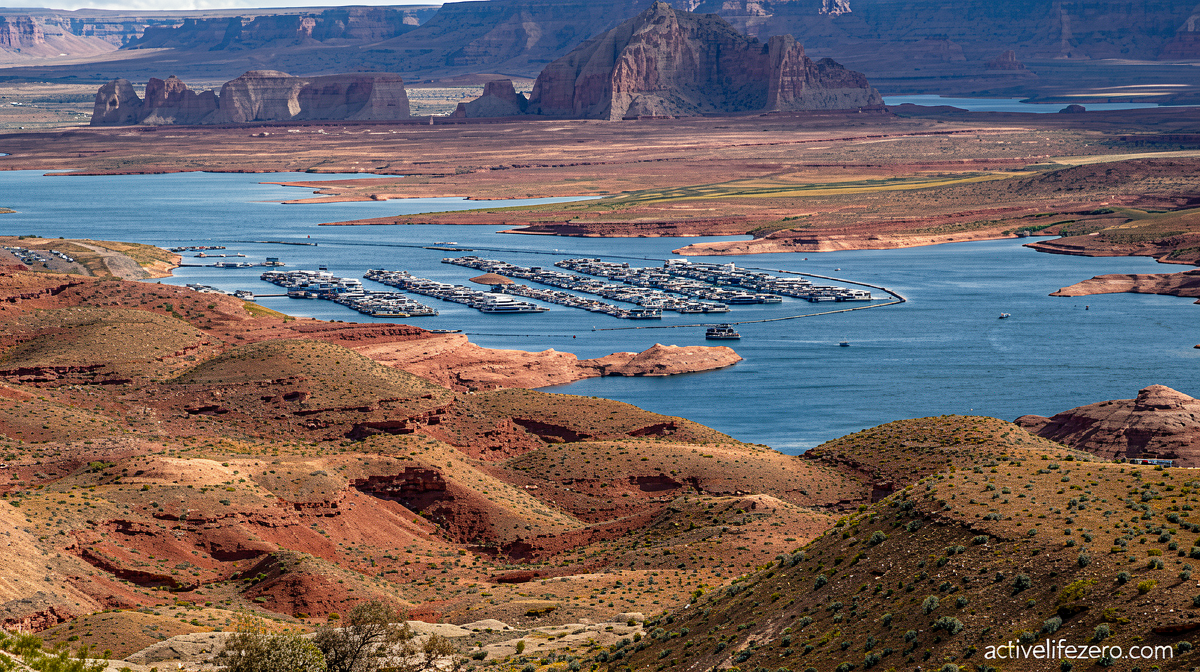
Activelifezero.com – Lake Powell, the second-largest reservoir in the United States, has slipped below every level previously recorded, plunging the Colorado River basin into uncharted territory. The water body that supplies drinking water and hydropower to millions across the American West registered 3,519.91 feet on Saturday, edging past the prior record of 3,519.92 feet set in April 2023, according to figures released Sunday by the US Bureau of Reclamation. The reading marks the latest chapter in a multi-decade drought that has reshaped the hydrology of the Southwest.
A reservoir inches from losing its power
The new low sits fewer than 30 feet above the elevation at which the Glen Canyon Dam can no longer spin its turbines. The timing is stark: just nine days earlier, Lake Mead — the nation’s largest reservoir — fell to its lowest mark since it was first impounded roughly nine decades ago. Jack Schmidt, director of the Center for Colorado River Studies at Utah State University, summed up the situation bluntly: “We are in uncharted territory.”
“I would expect draconian steps to decrease water use to prevent this from occurring. But who knows?” — Jack Schmidt, Utah State University
Together, Mead and Powell — effectively a single reservoir bisected by the Grand Canyon — hold just under 60 percent of all water currently stored in the Colorado River basin. The river itself, born in Rocky Mountain snowpack and discharged into the Gulf of California in Mexico, has been contracting for more than two decades. It delivers water to approximately 40 million people and irrigates over 5 million acres of cropland spanning California, Arizona, Nevada, New Mexico, Wyoming, Colorado, and Utah. Climate-driven warming and sustained over-allocation have already shaved roughly 20 percent off the river’s stored volume since 2000.
From minimum power pool to deadpool
Constructed in the 1950s and begun filling in 1963, the Glen Canyon Dam reservoir took 17 years to reach its full-pool elevation of 3,700 feet. Each spring, snowmelt runoff temporarily lifts the water between May and July before the level recedes through autumn, leaving the familiar “bathtub ring” scars on the canyon walls. This year, however, last winter’s snowpack was among the driest and warmest ever recorded for the western United States, leaving the reservoir starved of its usual seasonal replenishment.
The dam’s eight turbines generate enough electricity annually to supply nearly 500,000 households across Colorado, Utah, Wyoming, New Mexico, Arizona, Nevada, and Nebraska. Brad Udall, a senior water and climate research scientist at Colorado State University, warned that the reservoir could reach “minimum power pool” at 3,490 feet within the year unless “extraordinary measures” — such as sharply curtailed releases from Powell and upstream storage — are implemented. Beyond that threshold lies “deadpool” below 3,370 feet, where water can no longer pass through the dam at all.
A Bureau of Reclamation spokesperson stated that the agency and the Department of the Interior remain “committed to reducing the collective risk of both Lake Powell and Lake Mead falling below critical elevations to protect critical infrastructure to continue to meet the water and hydropower needs of the basin.” Experts do not anticipate household taps running dry in the near term; the crisis unfolds slowly, and many water managers have already taken preparatory steps. Sarah Porter, director of the Kyl Center for Water Policy at Arizona State University, noted that cities such as Phoenix and Tucson “are extremely aware that they are first in line for cuts” and have secured backup supplies. For Tribes and smaller river communities, however, purchasing alternative water sources may prove far less feasible. The seven basin states now await a federal plan, expected within days, that will prescribe the exact allocation reductions required through the coming decade.
Frequently Asked Questions
What does “minimum power pool” mean for Lake Powell? At 3,490 feet above sea level, the water head across the Glen Canyon Dam turbines drops below the threshold needed to generate electricity. Until that point is reached, the dam continues producing power, but the margin is shrinking rapidly.
How close is Lake Powell to deadpool conditions? Deadpool begins below 3,370 feet. The record low of 3,519.91 feet still leaves roughly 150 feet of buffer, but without significant snowpack recovery or reduced upstream releases, experts warn the trajectory could accelerate.
Will households in the Southwest lose their water supply? Not in the immediate term. The Colorado River crisis is slow-moving, and municipal utilities have been planning for decades. The more acute near-term risk is to hydropower generation and to agricultural allocations rather than to urban tap water.
What is the federal government expected to do next? After years of failed interstate negotiations, federal authorities are preparing to issue a binding plan specifying the precise water-use reductions each of the seven basin states must adopt. The announcement is anticipated within days of the record-low reading.