
New discovery may have been Stonehenge prototype
New Discovery May Have Been Stonehenge Prototype
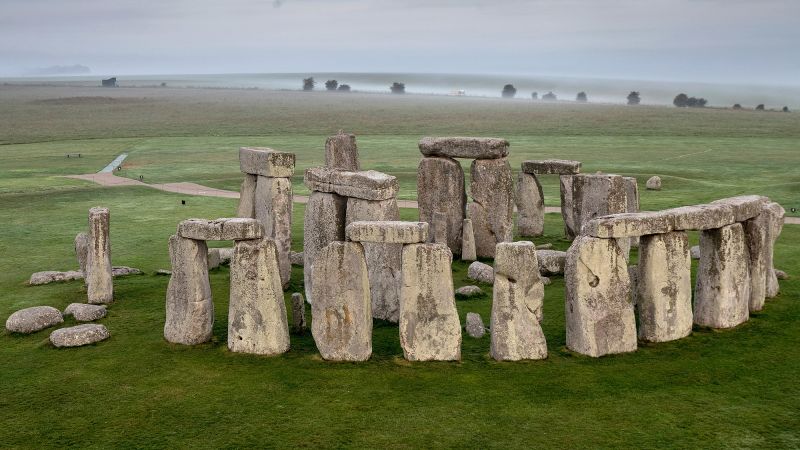
New discovery may have been Stonehenge – Archaeologists have uncovered a 5,000-year-old structure in southwest England that might have served as a precursor to Stonehenge, according to recent findings. The discovery, made near Bulford in Wiltshire, offers insights into the ancient practices of prehistoric communities and their connection to celestial events. This site, located just 5 kilometers from the iconic monument, has sparked excitement among researchers, who believe it could shed light on the origins of Stonehenge’s astronomical alignment.
The Solstice Alignment
The structure, consisting of two wooden poles positioned 120 meters apart, would have aligned with the sun’s movement during the solstices. This same alignment is observed in the stones of Stonehenge, suggesting a possible link between the two sites. Wessex Archaeology, the British firm behind the project, reported that the poles were placed into pits over 5,000 years ago, coinciding with the construction of the first earthworks at Stonehenge. The famous stone arrangement, however, was not completed until 500 years later, indicating a gradual evolution of the monument.
Phil Harding, the lead archaeologist on the project, emphasized the importance of solar observations in prehistoric societies. “The sun was incredibly important to these communities, and they could plot its midsummer rising with remarkable precision,” he explained in a statement. The discovery, he added, is “one of the greatest finds of my career” due to its early date and potential role in the development of Stonehenge’s design.
Reconstructing the Ancient Sky
Fabio Silva, a skyscape archaeologist involved in the study, used detailed reconstructions of the Neolithic sky, landscape, and horizon to verify the alignment. By analyzing the position of the sun relative to the earth’s axial tilt, Silva demonstrated how the poles would have marked the solstices. This method revealed that the structure’s design was intentional, reflecting an understanding of astronomical patterns.
“This discovery helps us see Stonehenge not as a standalone creation, but as part of a larger, ongoing dialogue between people, the land, and the sky,” Silva stated. The findings challenge previous assumptions about the timeline of Neolithic monuments, positioning Bulford as a key site in the region’s prehistoric history. The alignment of the poles suggests that early builders may have used this location as a prototype for later constructions, such as the famous stone circle.
Artifacts and Symbolism
Alongside the wooden poles, researchers found various artifacts that hint at the site’s cultural significance. These included pottery fragments, animal bones, charcoal, and worked flints. Such items indicate that the area was a gathering place for people, likely used for seasonal celebrations. One particularly rare artifact—a disc-shaped knife—was deliberately placed at the site, possibly as a symbolic representation of the sun disc.
“The presence of this knife suggests a deliberate act of placing it here, which may have carried spiritual or ritualistic meaning,” said the statement. The combination of physical remains and astronomical evidence points to a deeper connection between human activity and celestial events. The site appears to have been used not just for practical purposes, but as a space for marking time and honoring natural cycles.
Broader Implications for Neolithic Studies
The discovery has broader implications for understanding the Neolithic period in England. Susan Greaney, an archaeology lecturer at the University of Exeter not involved in the research, called the findings “intriguing.” While full details of the study haven’t been published yet, she noted that the site’s alignment with solstices is part of a significant middle Neolithic settlement at Bulford.
“It highlights the eastern part of the Stonehenge landscape as a crucial area where people both lived and built monuments,” Greaney told CNN. This suggests that the region was a hub of activity, with multiple structures developed over time to serve different functions. The early date of the Bulford site, she added, provides a new context for the evolution of monumental architecture in the area.
The team’s use of radiocarbon dating techniques played a critical role in determining the structure’s age. By analyzing organic materials found at the site, they confirmed that the wooden poles were installed around 5,000 years ago. This places the structure within the same timeframe as the first earthworks at Stonehenge, yet its design predates the stone circle by several centuries. The findings raise questions about the motivations behind Stonehenge’s eventual construction and whether its builders drew inspiration from earlier prototypes like Bulford’s.
Researchers believe the alignment of the structure with solstices reflects a shared cultural or spiritual practice among Neolithic communities. The ability to track the sun’s movement with such accuracy implies a sophisticated understanding of astronomy, even in the absence of written records. This could mean that prehistoric societies used such structures to mark time, guide agricultural activities, or conduct rituals tied to the changing seasons.
Further analysis of the site’s artifacts may provide additional clues about its function. While the disc-shaped knife stands out as a potential symbol of the sun, other items like pottery and flints could indicate daily life, trade, or craftsmanship. The proximity of Bulford to Stonehenge also raises the possibility that the two sites were part of a network of Neolithic monuments, each contributing to a collective understanding of the cosmos.
Harding and Silva’s work underscores the importance of interdisciplinary approaches in archaeology. By combining radiocarbon dating, sky reconstructions, and artifact analysis, they’ve created a more comprehensive picture of prehistoric activity. The discovery not only adds to the growing body of knowledge about Stonehenge but also highlights the ingenuity of early builders in creating structures that harmonized with natural phenomena.
As more details emerge, the Bulford site could redefine our understanding of Neolithic society. Its alignment with solstices, coupled with the presence of symbolic artifacts, suggests that these communities viewed the sky as an integral part of their world. The findings also emphasize the role of the landscape in shaping human behavior, with natural features like hills and rivers playing a part in the design of ancient monuments.
For now, the discovery remains a testament to the ingenuity of prehistoric people. While the exact purpose of the structure is still under investigation, its alignment with the solstices and the deliberate placement of artifacts hint at a deep connection between human activity and the environment. The Bulford site may have been a small, early step in the journey toward Stonehenge, offering a glimpse into the minds of those who built it and the culture that shaped their work.
