
Hegseth announces review of US forces in Europe and again criticizes NATO allies
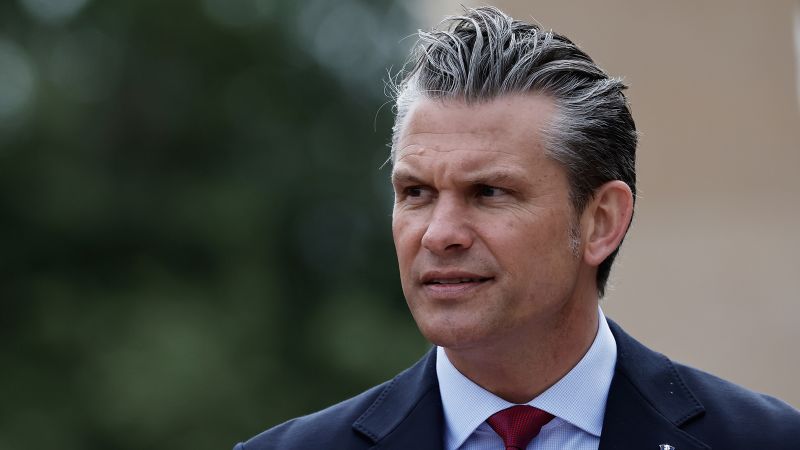
Hegseth Announces Review of US Forces in Europe, Reiterates Criticism of NATO Allies
Hegseth announces review of US forces – On Thursday, the US Defense Secretary, Pete Hegseth, unveiled plans for a six-month evaluation of America’s military presence in Europe. This move aligns with the combative stance adopted during the Trump administration, as Hegseth emphasized the need for NATO to shift its focus toward a more robust defense of the continent. The announcement comes amid growing concerns about the strategic balance within the alliance and the readiness of European members to shoulder greater responsibilities.
US Force Posture Under Scrutiny
Hegseth’s review aims to assess the positioning and capabilities of US forces across Europe, particularly their role in reinforcing collective security. During a meeting with NATO defense ministers in Brussels, he stated that the initiative would ensure the alliance moves “irreversibly” toward a European-centric defense structure. “This will be a real review,” he said, “designed to ensure NATO is moving fast and irreversibly toward Europe stepping up to take primary responsibility for the defense of Europe.” His remarks underscore a renewed push to prioritize military readiness over diplomatic posturing.
The review will examine America’s force posture and basing arrangements, Hegseth noted, framing it as a step to reorient NATO as a “real military alliance” focused on hard power. “It’s a review that some countries will fail and others will pass with flying colours,” he added, suggesting that not all European allies meet the expected standards of commitment. This critique echoes longstanding grievances from the Trump administration, which accused Washington’s allies of relying too heavily on US military spending.
NATO’s Adjusted Force Model
The timing of Hegseth’s announcement coincides with recent shifts in NATO’s strategic framework. Earlier this week, NATO Secretary-General Mark Rutte confirmed that the US had reduced its contributions to the alliance’s force model—a joint planning system that dictates how member states allocate military resources. However, Rutte sought to downplay the implications, stating, “We have looked at the division of labor in the context of conventional forces and we see that European allies and Canada are ready, willing and able to do more.”
According to Rutte, the adjustment reflects a recalibration of commitments rather than a retreat from NATO’s collective defense mission. “Based on this, the United States has adjusted its pledges to the NATO force model,” he explained, asserting that the US remains “committed” to the alliance through its nuclear capabilities. Despite the troop reductions, the US maintains a strategic advantage, with its nuclear umbrella serving as a deterrent against potential threats. This stance, however, has sparked debates about the sustainability of NATO’s defense structure in the absence of full military collaboration from all members.
Historical Context of US-NATO Tensions
The current review builds on a pattern of criticism from the Trump administration, which frequently targeted NATO allies for their perceived lack of dedication. Hegseth joined former President Donald Trump and other officials in accusing European partners of freeloading on US military commitments. Last month, the defense secretary abruptly canceled two planned deployments to Europe, including the removal of personnel from key positions. The Pentagon revealed that it would withdraw approximately 5,000 troops from Germany over the next year, a decision that has intensified concerns about US strategic presence in the region.
These cuts followed a public clash between Trump and German Chancellor Friedrich Merz, who had criticized the US for being “humiliated” by Iran during prolonged negotiations. In response, Trump threatened further reductions, emphasizing the need to trim commitments in light of perceived slowness in diplomatic progress. Hegseth’s review also targeted the cancellation of a future deployment of a missile-specialized battalion, highlighting the administration’s prioritization of flexibility over fixed military obligations.
European Allies’ Response and Increased Spending
While the US has scaled back its direct involvement, European nations have taken steps to bolster their own defense capabilities. Last year, these countries collectively pledged to increase military spending to 5% of their gross domestic product by 2035—a significant jump from the previous 2% target. This commitment signals a growing determination to reduce dependence on US support and take a more active role in regional security.
Despite the administration’s reductions, the review aims to realign NATO’s priorities with the current geopolitical landscape. Hegseth argued that the initiative would force European allies to demonstrate their capacity for leadership, ensuring the alliance remains effective in countering emerging threats. The six-month evaluation will likely scrutinize not only troop numbers but also the integration of allied forces, the efficiency of joint operations, and the balance between defense spending and strategic investments.
As the review progresses, its outcome could shape the future of NATO’s military structure and the distribution of responsibilities among member states. While the US remains a critical player, the initiative reflects a broader effort to shift the alliance’s focus toward European autonomy. For now, the dialogue between Washington and its European partners continues, with both sides navigating the complexities of shared security and diverging interests.
Hegseth’s actions are part of a larger strategy to ensure NATO remains a formidable force capable of deterring aggression. By emphasizing the need for Europe to take the lead, he seeks to address concerns about the alliance’s ability to respond swiftly to crises. The review also provides an opportunity to reassess the role of US military hardware in Europe, which has been a focal point of previous critiques.
As the US evaluates its forces, the question remains: will this review strengthen NATO’s cohesion, or will it expose deeper fractures in the alliance? With European allies increasing their spending and the US adjusting its commitments, the coming months will be pivotal in determining the trajectory of transatlantic defense cooperation.
Quotes from Hegseth and Rutte highlight the ongoing tension between US and European perspectives on NATO’s role. “It’s a review that some countries will fail and others will pass with flying colours,” Hegseth said, while Rutte emphasized the readiness of European nations to take on more responsibility. These statements reflect a dynamic relationship where both sides strive to redefine the alliance’s priorities in an evolving security environment.
By focusing on force posture and basing, the review underscores the importance of military presence in maintaining deterrence. The US and its allies now face the challenge of reconciling differing views on defense spending with the practical needs of a unified military response. As the review unfolds, the stakes for NATO’s future capabilities and its ability to adapt to new threats will become increasingly clear.
