
A SpaceX rocket was on a collision course with the moon. Here’s what could happen
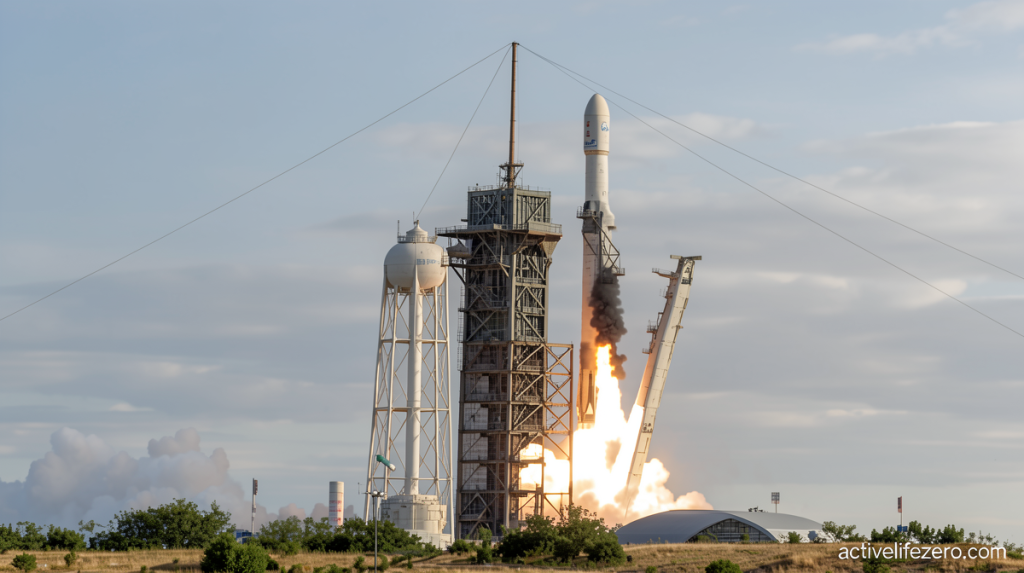
SpaceX Rocket Stage Set to Strike the Moon in Unplanned Cosmic Collision
Activelifezero.com – A massive fragment of a SpaceX rocket is hurtling toward the lunar surface in what scientists describe as an unplanned but scientifically valuable encounter. The second stage of a Falcon 9 booster, weighing approximately four tons, is traveling at speeds exceeding 5,000 miles per hour as it approaches Earth’s natural satellite. This celestial collision was anticipated to occur in the early hours of Wednesday morning, though confirmation remained pending as the event unfolded. The rocket component has been drifting through the vacuum of space since January 15, 2025, when the Falcon 9 launched carrying two commercial robotic landers destined for the Moon. While the primary booster stage completed its mission and returned safely to Earth, the upper stage continued its journey as an orbital workhorse, propelling the landers toward their destination before being left to wander through space.
What Happens When a Rocket Meets the Moon
Scientists predict the impact will generate a crater measuring between 65 and 90 feet across, equivalent to 20 to 30 meters in diameter. The collision will occur near Einstein Crater on the lunar surface, according to a preprint study developed by an international team of researchers that includes NASA scientists. The impact timing was calculated for 2:35 a.m. Eastern Time on Wednesday. While the event won’t be visible to casual observers on Earth—located approximately 225,623 miles away—astronomers positioned telescopes across the Americas to capture the moment.
If you imagine the moon is a clock, it’ll sort of roughly hit where the 10 would be. But that part of the moon is lit right now, so the bright flash will be muted by that brightness of the moon itself.
Dr. Paul Wiegert, a professor of astronomy and physics at Western University in London, Ontario, provided this assessment. He noted that while the impact itself may be difficult to detect visually, the debris plume generated by the cylindrical rocket could be illuminated by sunlight, making it potentially observable through telescopes.
From Rocket Launch to Lunar Collision
The journey of this rocket stage illustrates the different approaches used for space missions. For missions operating in low-Earth orbit, where the International Space Station circles our planet, operators typically allow upper stages to burn up in Earth’s atmosphere.
But for high energy missions, we need to perform a different maneuver to ensure the second stage itself is safe per the appropriate rules and regulations. We did that here for the Ispace and Blue Ghost missions’ second stage, and what has happened is essentially a mixture of solar activity and gravity forces have put it on a path towards the moon.
Julianna Scheiman, director of NASA Science and Dragon Programs at SpaceX, explained this process during a Monday news conference. The combination of solar activity and gravitational forces gradually altered the rocket stage’s trajectory, eventually placing it on a collision course with the Moon. The Falcon 9 carried two distinct landers on its mission. The Blue Ghost lander, developed by Texas-based Firefly Aerospace, achieved a successful soft landing on the Moon in March 2025. Meanwhile, Ispace’s Resilience lander, developed by the Tokyo-based company, experienced a landing failure several months after its launch.
Scientific Value of an Unplanned Impact
This accidental collision offers researchers a unique opportunity to study the Moon’s surface composition and behavior under impact conditions. Scientists can analyze the debris plume and resulting crater to gain insights into lunar geology that would otherwise require dedicated missions. The impact also provides practical data for future lunar operations. As NASA advances its Artemis program to establish a sustained human presence on the lunar surface, understanding how objects interact with the Moon becomes increasingly important. The Moon lacks Earth’s protective atmosphere, meaning space debris accumulates differently and poses different challenges for future infrastructure. NASA’s Center for Near Earth Object Studies, which primarily monitors asteroids and other objects that might threaten Earth, also tracks occasional lunar impacts. The agency confirmed the upper stage’s trajectory and stated that the booster would continue to be monitored for both training purposes and scientific observation of the impact site.
Looking Ahead: Managing Lunar Debris
As more missions target the Moon, the accumulation of space debris in lunar orbit represents an growing concern. Unlike Earth, where atmospheric drag gradually removes orbital debris, objects in lunar orbit can remain for extended periods, potentially creating hazards for future missions. The Falcon 9’s second stage, estimated at 8,818 pounds or 4,000 kilograms, joins a growing collection of human-made objects orbiting and resting on the Moon. Independent astronomers tracked the rocket using publicly available data, while NASA’s CNEOS independently confirmed the impact trajectory.
There is no danger to Earth. NASA will continue to track the booster for training purposes, as well as later observe the impact site for scientific purposes.
This statement from NASA emphasizes that while the collision is unplanned, it presents valuable opportunities for understanding both the Moon and the challenges of managing space debris as humanity expands its presence beyond Earth.
Related Reading
Frequently Asked Questions
What is A SpaceX rocket was on a collision?
A SpaceX rocket was on a collision is the main topic of this guide. The article explains the context, practical details, and next steps readers should understand.
Why does A SpaceX rocket was on a collision matter?
A SpaceX rocket was on a collision matters because readers are looking for a useful answer, not just a short summary. Good content should match search intent and help them decide what to do next.
