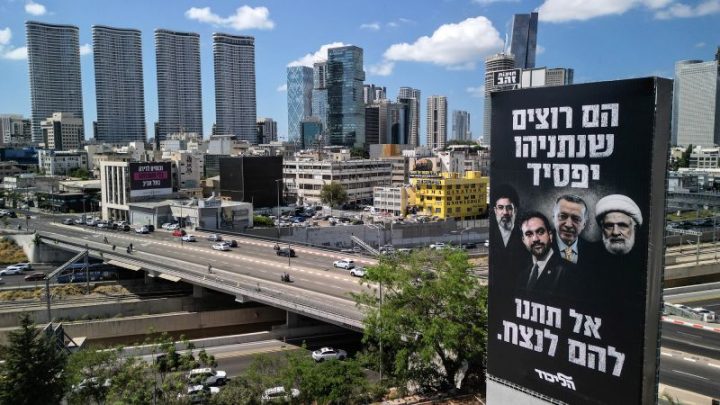
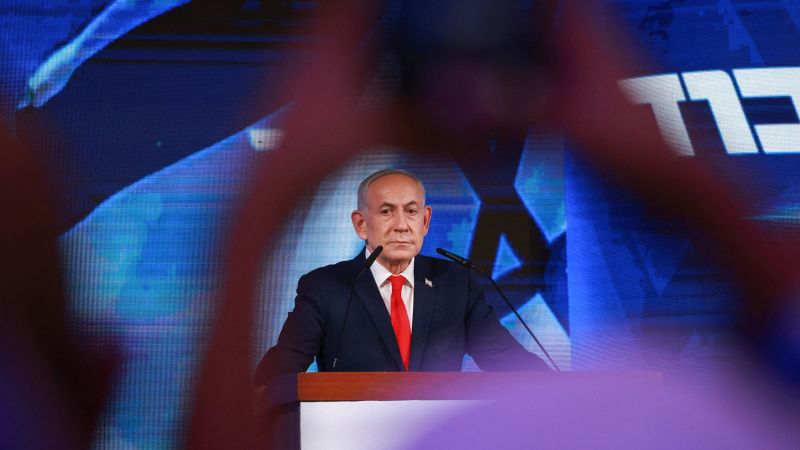
Netanyahu is the ultimate survivor. But can he survive this time?

Daftar Isi
Israel’s Election Leaves Netanyahu Facing Another Fight for Survival
Activelifezero.com – Israel entered a new period of political uncertainty after an election that weakened Benjamin Netanyahu’s governing camp without delivering a decisive victory to his opponents. With most ballots counted by Wednesday night, the prime minister’s Likud party remained the largest single force in the 120-member Knesset. Yet the numbers left Netanyahu short of the majority needed to form a government, opening a potentially lengthy struggle over who can assemble a workable coalition.
Likud was projected to win 26 seats, while the collection of right-wing parties aligned with Netanyahu appeared headed for 53 seats. That is eight below the 61-seat threshold required to control the Knesset. The result does not amount to a clear defeat for Netanyahu, whose political career has repeatedly survived moments when his exit seemed imminent. But it also deprives him of the straightforward path to power that his bloc had hoped for.
The coming negotiations could determine whether Netanyahu extends a premiership shaped by more than three decades at the center of Israeli politics, or whether his rivals finally succeed in forcing a change at the top.
An Opposition Majority With Deep Divisions
On its face, the opposition has a numerical advantage, with roughly 67 seats spread across parties that oppose Netanyahu. In practice, that figure conceals serious disagreements over ideology, identity and political strategy.
Gadi Eisenkot, Netanyahu’s principal challenger and a former Israel Defense Forces chief of staff, won 21 seats. But Jewish parties opposed to Netanyahu together hold only 48 seats, leaving them dependent on support from Arab parties to reach a governing majority.
Raam and the Joint List are expected to secure a combined 19 seats, a record total that reflects strong participation by Arab voters, or Palestinian citizens of Israel. The turnout was seen partly as a reaction to four years under a far-right national security minister, during which crime in Arab communities rose sharply.
Raam is an Islamist party with major support among Israel’s Bedouin population. Its leader, Mansour Abbas, made history after the 2021 election by becoming the first Arab politician to join an Israeli governing coalition.
The Joint List, which is projected to be the larger of the two Arab parties, brings together several factions: the Communist Hadash party, the secularist Taal movement and the nationalist Balad faction. On Wednesday, the alliance said it was prepared to work politically with others and pledged to use every available effort to end Netanyahu’s rule.
“Do everything in its power to bring Netanyahu’s rule to an end.”
Yair Golan, who leads the left-wing Democrats party, urged his allies to treat Arab parties as part of the wider anti-Netanyahu camp. He rejected what he described as Netanyahu’s “racist division between Jewish and Arab votes.”
That approach faces resistance within the opposition itself. Two of Eisenkot’s right-wing partners, Naftali Bennett and Avigdor Liberman, have objected to a government that relies on Arab parties. Neither had issued a new public statement on the issue after polling ended, leaving one of the election’s most important questions unresolved.
Netanyahu’s Strategy May Be to Block, Not Build
For Netanyahu, the immediate objective may be less about constructing his own coalition than preventing his rivals from forming one. The arithmetic gives the opposition a possible route to power, but a Jewish-Arab partnership would be politically difficult and highly vulnerable to defections.
Netanyahu’s camp has already signaled its intent to challenge the legitimacy of that possibility. After campaigning against Arab parties throughout the race, Likud accused them on Wednesday of “stealing the election” through bribery, threats, violence and forgery. The language echoed election-fraud claims advanced by US President Donald Trump, Netanyahu’s closest international ally.
The Central Elections Committee said it was examining the complaint. However, it had already rejected thousands of election-day complaints submitted by various parties.
Netanyahu’s political strength has often rested on his capacity to exploit divisions among opponents, negotiate relentlessly and turn uncertainty into leverage. Individual lawmakers could become targets of pressure as coalition talks unfold, particularly if they are being asked to back or tolerate a government supported by Arab parties.
Security Concerns Shadow Coalition Talks
The political standoff is also unfolding against a backdrop of concern that a security escalation could reshape the timetable for forming a government. Opposition figures fear that Netanyahu could use a crisis to delay or obstruct the emergence of a new coalition.
Before the election, Netanyahu had pushed Trump to support a joint military strike on Iran. Washington did not move forward at that stage, in part because Israeli military chief of staff Eyal Zamir warned that such action could interfere with the vote. Operational plans were said to be prepared, with any final decision dependent on Trump’s approval and potentially delayed until after the US midterm elections.
The prospect has intensified anxiety among Netanyahu’s opponents, who argue that a caretaker government should exercise particular restraint. Eisenkot appealed to Israel’s security leadership on Tuesday night to remember Netanyahu’s temporary status while coalition negotiations remain unresolved.
“Netanyahu is a caretaker prime minist”
The incomplete remark reflected the urgency surrounding the post-election moment. Israel now faces weeks, and perhaps months, of bargaining in which every seat and every alliance could prove decisive.
Netanyahu has repeatedly defied predictions of political collapse. This election offers his rivals their clearest opening in years, but turning that opening into a government will require them to bridge divides that have long shaped Israeli politics. Until they do, Netanyahu remains without a majority but not without power—or a path to survive once more.
Related Reading
Frequently Asked Questions
What is Netanyahu is the ultimate survivor But can?
Netanyahu is the ultimate survivor But can is the main topic of this guide. The article explains the context, practical details, and next steps readers should understand.
Why does Netanyahu is the ultimate survivor But can matter?
Netanyahu is the ultimate survivor But can matters because readers are looking for a useful answer, not just a short summary. Good content should match search intent and help them decide what to do next.