Rare Nanotyrannus sells at auction for $47.3 million, becoming second most valuable fossil ever

Daftar Isi
Rare Nanotyrannus Sells at Auction for $47.3 Million
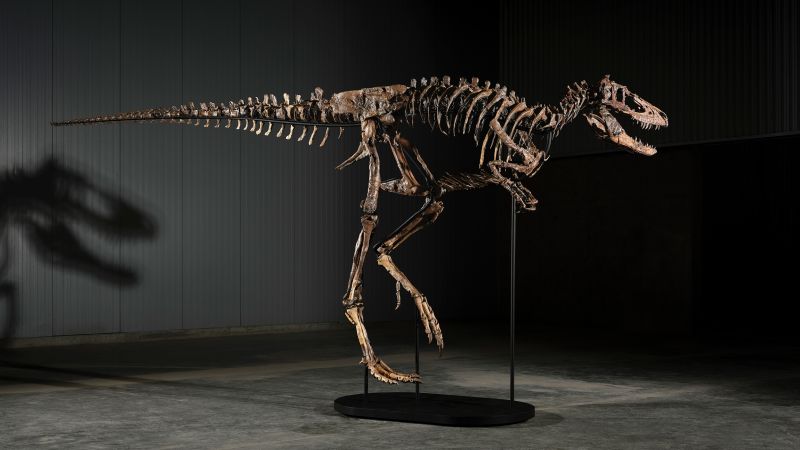
Activelifezero.com – Rare Nanotyrannus sells at auction for $47.3 million, making the dinosaur skeleton named Jodi the second most valuable fossil ever sold. Six bidders competed for about 12 minutes at a New York auction, pushing the final price far above the presale estimate of $6 million to $9 million.
The sale came close to the fossil-auction record set in July, when Gus, an unusually complete Tyrannosaurus rex skeleton, sold for $50.1 million. Jodi’s exceptional price reflects both its preservation and the rarity of relatively complete Nanotyrannus remains.
Why the Jodi Skeleton Matters
Only three relatively complete Nanotyrannus skeletons are known to science. Jodi includes 191 bone elements and an almost complete skull, offering important evidence in the long-running debate over whether Nanotyrannus was a distinct dinosaur or a young T. rex.
Recent research has moved the discussion toward recognizing Nanotyrannus as a separate species. Although smaller than T. rex, it was still a substantial predator. Jodi stands 9.6 feet tall and measures 19.6 feet from head to tail.
Its bone development and size indicate that the animal was an adult when it died. That detail is especially significant because it may help researchers better distinguish Nanotyrannus from juvenile tyrannosaurs.
Discovery in Montana’s Hell Creek Formation
Jodi was discovered in 2019 by Montana rancher Jodi Pierson and was later named in her honor. Commercial paleontologist Clayton Phipps, often known as the “Dinosaur Cowboy,” excavated the fossil.
The skeleton came from the Hell Creek Formation, a fossil-rich area spanning parts of Montana, Wyoming, North Dakota and South Dakota. The formation preserves animals and plants from the final chapter of the dinosaur era, before the mass extinction of non-avian dinosaurs.
Rare Nanotyrannus sells at auction after discoveries from Hell Creek helped shape more than a century of tyrannosaur research. One of the earliest T. rex skeletons was found there in 1902, and the region has continued to yield fossils that alter scientific understanding.
Other Known Nanotyrannus Specimens
Another important specimen, Jane, was also recovered from Hell Creek deposits. Jane is held by the Burpee Museum of Natural History in Rockford, Illinois, where it remains available to visitors and researchers.
Phipps also discovered the Dueling Dinosaurs fossils nearby in 2006. Now housed at the North Carolina Museum of Natural Sciences in Raleigh, the fossils appear to preserve a Triceratops and a smaller tyrannosaur together. The smaller tyrannosaur has since been identified as Nanotyrannus.
Private Sale Raises Scientific Concerns
Some original parts of Jodi’s skeleton were missing and replaced with sculpted and 3D-printed elements to create a more complete display mount. The auction sale also included reproduction rights, allowing the buyer to make replicas for museums or private collectors.
The purchaser has not been identified. That has raised concerns among paleontologists, who worry that a scientifically important specimen could become inaccessible for research, publication and public viewing.
“We’ve really just found out that Nanotyrannus is real, and now one of the best skeletons is about to be sold to the highest bidder,” said Steve Brusatte, a professor of paleontology and evolution at Scotland’s University of Edinburgh.
FAQ: The $47.3 Million Nanotyrannus Sale
What made Jodi so valuable?
Jodi is one of only three relatively complete Nanotyrannus skeletons known to science. Its nearly complete skull, 191 bone elements and evidence that it was an adult increased its scientific and collector value.
Where was the fossil found?
Jodi was found in Montana’s Hell Creek Formation, which also extends into Wyoming, North Dakota and South Dakota.
Can the public see Jodi?
The new owner has not been disclosed, so it is not yet known whether the skeleton will be placed on public display. Other Nanotyrannus fossils, including Jane in Illinois, remain accessible through museums.