
Israel to withdraw from two areas in Lebanon under newly signed agreement
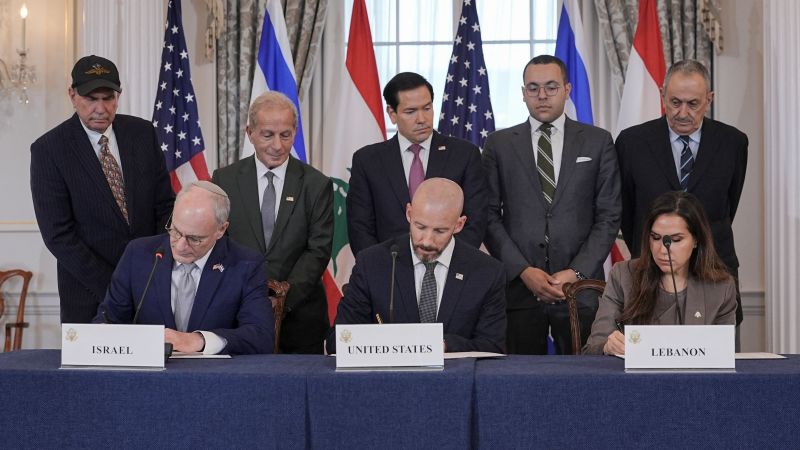
Israel and Lebanon Reach Historic Framework Agreement in Washington
Israel to withdraw from two areas – Following a four-day negotiation period in Washington, D.C., Israel and Lebanon have signed a framework agreement that outlines the gradual withdrawal of Israeli forces from two regions in southern Lebanon. Prime Minister Benjamin Netanyahu announced the move, stating that the Israeli Defense Forces (IDF) will vacate specific areas, transferring them to the Lebanese military. This development marks a significant step toward resolving long-standing tensions between the two nations, though it remains part of a broader effort to achieve a comprehensive peace deal.
A Trilateral Accord for Regional Stability
The agreement, brokered with the involvement of the United States, represents a trilateral effort between Israel, Lebanon, and Washington to establish a foundation for lasting peace. A senior Israeli official emphasized that the deal is intended to facilitate future negotiations, aiming to address deeper disputes that have persisted for decades. Meanwhile, Lebanon’s Ambassador to the U.S., Nada Hamadeh Moawad, hailed the accord as a pivotal moment, stating it would be the “first step on the road to restoring Lebanese sovereignty and territorial integrity.”
Geographic Details and Strategic Implications
Netanyahu detailed the withdrawal plan, specifying that the IDF will reduce its presence in areas north and south of the Litani River. These regions, currently under Israeli occupation, are central to the conflict. The southern sector, in particular, has been a focal point for Israeli military operations, with the government citing the need to maintain control over strategic locations. In a pre-recorded statement on Friday evening, Netanyahu described the movement as a deliberate ceding of sites the IDF “does not need” in Lebanon, signaling a strategic shift in the region’s dynamics.
US Role in Mediating the Talks
The U.S. State Department has been instrumental in facilitating the fifth round of discussions between Israel and Lebanon, part of the Trump administration’s initiative to bridge the gap between the two nations. Despite their lack of formal diplomatic ties, the talks have been guided by U.S. mediation, reflecting Washington’s commitment to regional stability. At the signing ceremony, Secretary of State Marco Rubio framed the agreement as the “beginning of the beginning,” acknowledging its importance while cautioning that “there’s a lot of work ahead.”
Pilot Program and Ceasefire Context
Lebanon’s Armed Forces will assume control of the vacated regions as part of a pilot program introduced under the latest ceasefire agreement. This program is designed to test the feasibility of long-term territorial handover and could serve as a model for future negotiations. The pilot phase also aligns with the broader goal of establishing a framework for mutual security, reducing the likelihood of renewed hostilities in the area.
Symbolic Withdrawals and Military Stance
CNN previously reported that Israel is exploring symbolic withdrawals from occupied territories in southern Lebanon as a gesture of goodwill toward the Lebanese government. On Thursday, the IDF announced a temporary reduction in its forces, though the statement did not explicitly mention withdrawing from any territory. This ambiguity was noted by analysts, who questioned whether the move would lead to permanent changes or remain a tactical adjustment. The Israeli defense minister, however, asserted that the military would not retreat from Lebanon unless compelled by external pressures.
Netanyahu’s Perspective on Iran
Netanyahu framed the agreement as a major victory for Israel, emphasizing that the country will retain control of its occupied areas as long as Hezbollah remains armed. “This is also a major blow to Iran,” he added, suggesting that the deal undermines Tehran’s influence in the region. He argued that Iran has sought to pressure Israel into withdrawing through force, and the accord signals that the U.S., Israel, and Lebanon are asserting their independence from such external interference.
Lebanese President’s Gratitude and Political Context
Lebanese President Joseph Aoun expressed appreciation for the Trump administration’s role in hosting the negotiations, calling the agreement a step toward reclaiming full sovereignty over Lebanese land. His remarks appeared to target Iran’s growing influence through Hezbollah, which has long been a key player in the region’s conflicts. Aoun’s statement underscored the desire to reduce foreign interference in Lebanon’s internal affairs, a sentiment shared by many within the country.
Hezbollah’s Opposition and Criticism
The agreement has drawn sharp criticism from Hezbollah, which is backed by Iran. Hassan Fadallah, a member of Lebanon’s parliament and Hezbollah representative, denounced the deal as a betrayal of Lebanese interests. “Whoever shakes hands with the enemy is a criminal like them,” Fadallah stated during an interview with the pro-Hezbollah news channel Al-Mayadeen. He urged the Lebanese government to “retract these negotiations and all the decisions they have made against their people,” highlighting the group’s resistance to any compromise that could weaken Hezbollah’s position.
Broader Implications for the Region
Analysts suggest that the framework agreement could set a precedent for future regional cooperation, particularly between Israel and Lebanon. However, the success of this initiative hinges on the ability to address lingering issues, such as Hezbollah’s military presence and Iran’s involvement. The agreement also raises questions about the balance of power in the Middle East, with the U.S. positioning itself as a mediator between two historically adversarial nations. For Lebanon, the deal offers hope of reclaiming its southern territories, though challenges remain in ensuring lasting peace and security.
A Developing Story with Regional Relevance
As the agreement takes effect, the situation in southern Lebanon remains fluid. The IDF’s decision to withdraw from two areas has been met with mixed reactions, with some viewing it as a necessary concession and others as a strategic retreat. The pilot program’s implementation will be closely watched, as it could influence the broader peace process. For now, the deal stands as a symbolic yet meaningful step toward reducing hostilities, with both nations and the U.S. vying to shape the region’s future. This developing story is expected to evolve as more details emerge, particularly regarding the next stages of negotiations and the role of international actors in the conflict.
“This is none of your business,” Netanyahu remarked, directly addressing Iran’s aspirations to dominate the region through Hezbollah. “We are not just securing our interests; we are ensuring the security of the entire Lebanese people.”
With the agreement signed, the focus now shifts to its implementation and the potential for further progress. The success of this framework will depend on continued dialogue, the willingness of both sides to compromise, and the role of the U.S. in maintaining momentum. For Lebanon, the cession of occupied areas represents a long-awaited opportunity to assert sovereignty, while for Israel, it signals a strategic realignment in its regional posture. As the pilot program begins, the international community will be monitoring the outcomes closely, with hopes that this step paves the way for a more stable and secure Middle East.
